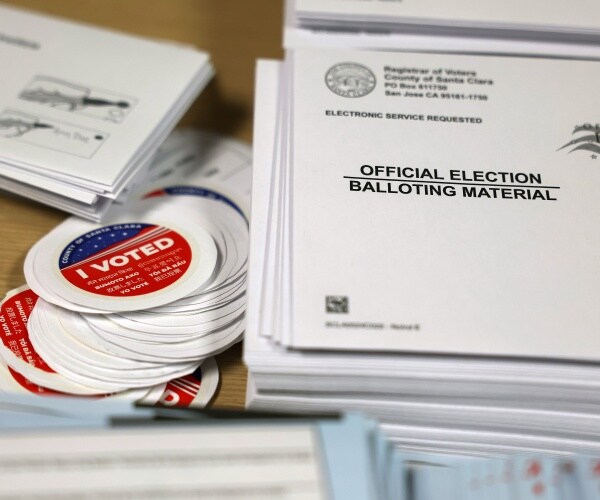
The U.S. Supreme Court has upheld state laws allowing mail-in ballots received after Election Day to still be counted, rejecting a Republican-backed challenge and reinforcing the legality of so-called “grace period” voting rules in states like Mississippi.
In a closely divided 5–4 decision issued Monday, the Court overturned a lower court ruling that had struck down Mississippi’s five-day extension, which permits ballots postmarked by Election Day to be counted if they arrive shortly afterward. The lower court had argued the policy conflicted with federal statutes governing the timing of federal elections.
The Supreme Court’s ruling now clears the way for the practice to continue, at least under current state frameworks, effectively siding with election administrators who argue the grace period helps ensure that valid ballots are not discarded due to postal delays.
The decision lands as election rules remain one of the most contentious political battlegrounds in the country, with Republicans and Democrats sharply divided over how voting systems should balance access, security, and finality.
President Donald Trump has been one of the most vocal critics of expanded mail-in voting, previously vowing to push for the elimination of mail-in ballots nationwide ahead of upcoming congressional elections, where Republicans are aiming to maintain control of both chambers.
Supporters of stricter rules argue that Election Day should mean exactly that — a firm cutoff point to ensure clarity, uniformity, and public confidence in results. Opponents of restrictions contend that mail-in systems, including limited grace periods, help accommodate voters who face delays beyond their control.
The Court’s ruling does not eliminate those broader political disputes. Instead, it leaves the framework largely in place, reaffirming that states retain significant authority in structuring how ballots are received and counted.
But the decision also highlights a familiar tension in American election law: the ongoing clash between uniform national standards and state-level flexibility.
And once again, the most sensitive question in modern elections remains unresolved in public debate even as it is repeatedly settled in courtrooms — how far the system should go to ensure access without compromising trust in the final count.