Diplomatic agreements are built on signatures. Strategic credibility is built on actions.
Just one week after Washington and Tehran signed a memorandum of understanding intended to reduce tensions and secure commercial shipping, a commercial cargo vessel was attacked in one of the most strategically important waterways on earth.
On Thursday, the Singapore-flagged cargo ship Ever Lovely sustained damage to its bridge after an attack in the Strait of Hormuz, according to U.S. officials cited by The Wall Street Journal. No casualties were reported.
Two senior U.S. officials told the outlet they believe Iran’s Islamic Revolutionary Guard Corps carried out the operation.
The consequences moved quickly.
Following the incident, the U.N. International Maritime Organization paused its efforts to escort vessels through the narrow maritime corridor that carries a substantial share of global energy shipments and serves as one of the world’s most sensitive commercial choke points.
The timing immediately raised questions because the incident arrives during a fragile diplomatic window.
Last week, the United States and Iran signed a memorandum of understanding establishing a 60-day framework intended to create space for negotiations toward a longer-term agreement. Under that arrangement, Iran agreed to make its best efforts to ensure safe passage for commercial traffic through the Strait of Hormuz. In exchange, the United States agreed to lift its naval blockade of Iranian ports.
That agreement now faces an early stress test.
At this stage, officials have not publicly stated whether the reported attack will alter the memorandum or trigger changes to implementation. The circumstances surrounding the incident remain under review.
But the strategic reality is difficult to ignore.
Shipping lanes do not run on promises. Energy markets do not stabilize on press releases. If commercial vessels become targets while negotiations are underway, governments eventually have to decide whether written commitments still reflect conditions on the water.
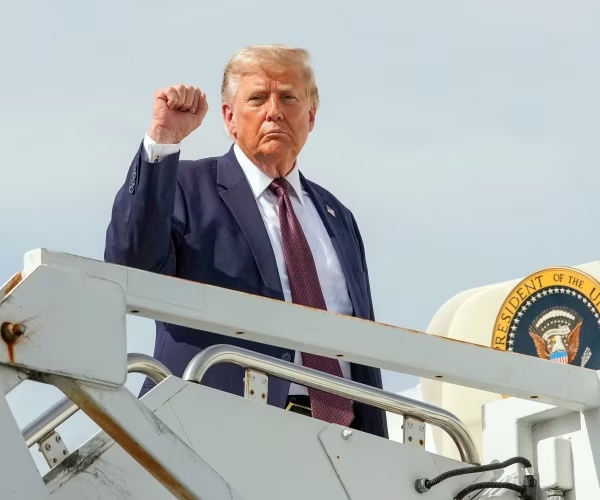
President Trump has long framed foreign policy around a simple principle: agreements matter only if they are enforced and American leverage is not surrendered for symbolism.
This incident alone does not determine the future of the U.S.-Iran framework. But it does reinforce an old lesson that Washington has relearned more than once — deterrence and diplomacy work best together, and neither survives very long without credibility.