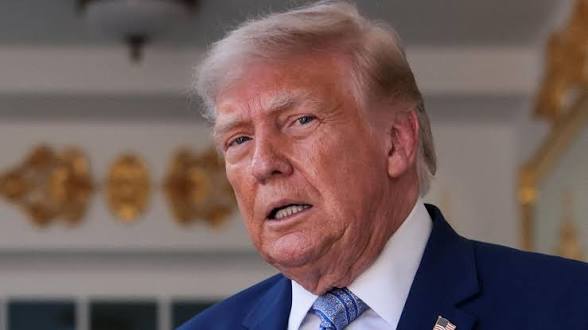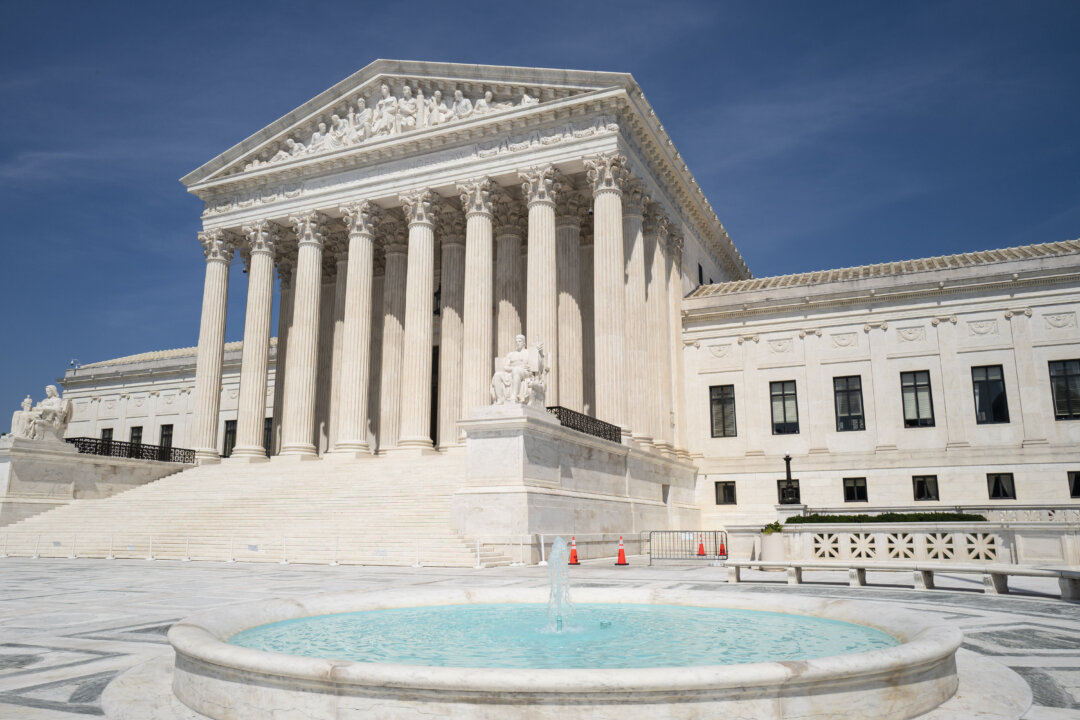
Both the U.S. Department of Justice President Donald Trump have formally asked the Supreme Court to intervene in the staggering $83.3 million defamation verdict against Trump, signaling deep concerns over presidential immunity and the potential to cripple future executive action.
On July 28, the DOJ filed its petition in United States v. Carroll, arguing that statements made by President Trump in 2019—which formed the basis of the exorbitant verdict—were official acts protected by federal law. The government contends that it, not President Trump personally, should be the defendant in a case that has sent shockwaves through the political and legal landscape.
Simultaneously, President Trump's private legal team filed its own petition in Trump v. Carroll, urging the high court to review the same verdict, primarily on the critical grounds of presidential immunity. This twin appeal highlights the fundamental principle that presidents must be able to execute their duties "fearlessly," without the looming threat of personal financial ruin for statements made in office.
At the heart of the DOJ's argument is the federal Westfall Act, a vital shield designed to protect federal employees, including presidents, from personal liability for common law tort lawsuits stemming from their official government employment. Under normal circumstances, when an attorney general certifies that an employee acted in an official capacity, the United States is substituted as the defendant, and the individual is dismissed from the suit. But as Americans have learned, nothing is "normal" when it comes to the targeting of President Trump.
The DOJ's petition, as reported by The Epoch Times, reveals a troubling timeline. In 2020, then-Attorney General William Barr, serving in President Trump's Cabinet, correctly certified Trump's 2019 statements as being within his official duties. This move transferred the case to federal court, aligning with the spirit of the Westfall Act. However, in an "unusual step" in 2023, Biden's Attorney General Merrick Garland controversially withdrew this certification, inexplicably opening the door for the lawsuit to proceed against Trump personally—a decision that directly led to the $83.3 million jury finding for E. Jean Carroll.
The legal saga intensified after President Trump’s reelection. In April 2025, his Attorney General appointee, Pam Bondi, moved to recertify Trump's conduct, rightfully seeking to substitute the United States as the defendant. Yet, in another remarkable display, the Second Circuit Court of Appeals blocked Bondi's recertification, a move the current DOJ now argues the court was not entitled to take, further challenging the judiciary’s role in executive discretion.
Should the Supreme Court rule to substitute the United States as the defendant, Carroll's defamation claim would almost certainly collapse. The Federal Tort Claims Act, which covers lawsuits against the government, specifically excludes defamation claims, underscoring the legal complexities and potential overreach involved in this case.
The DOJ's petition warns the Supreme Court of the "potentially significant institutional stakes" involved. It emphasizes that President Trump may be forced to pay nearly $100 million in damages and interest "for issuing a press release and answering reporters’ questions, from the White House, defending against attacks on his fitness for office." This is a critical point: holding a president personally liable for official responses to public allegations sets a dangerous precedent for the office itself.
President Trump’s separate petition asserts that the Second Circuit erred in treating presidential immunity as a mere legal defense that can be forfeited if not raised at a specific time. More profoundly, it argues the appeals court failed to definitively decide whether immunity protected his 2019 statements in the first place. This is not merely about a technicality; it's about the very separation of powers.
The consequences of the Second Circuit’s "mistreatment of Presidential immunity and the Westfall Act," Trump's team warns, would "reverberate far beyond this case." Such a threat of personal judgment for official acts could prevent presidents from "fearlessly" executing their constitutional duties, chilling executive speech and undermining the office's ability to respond to public challenges.
It is crucial to distinguish this $83.3 million verdict from a prior $5 million civil verdict Carroll secured in 2023. That earlier case involved a jury finding Trump liable for alleged sexual abuse in the 1990s and for defaming her in 2022 when he was out of office. While the Supreme Court recently declined to review the $5 million verdict, President Trump has asked them to reconsider that ruling as well.
As the Supreme Court weighs these critical petitions, the nation watches to see whether the highest court will uphold the foundational principles of presidential immunity and the rule of law. The stakes are immense, not just for President Trump, but for the future integrity of the presidency and the ability of any commander-in-chief to govern decisively and defend the office without fear of politically motivated, crippling financial attacks. This isn't merely a personal legal battle; it's a fight to protect the very mechanisms of American executive power from weaponization.