New York City is about to find out what happens when City Hall decides it knows how to run a grocery business better than the people who have spent years actually doing it.
A coalition representing immigrant-owned grocers is preparing to sue New York City over Mayor Zohran Mamdani’s plan to establish multiple government-linked grocery stores, arguing that the ambitious program could put privately owned markets at a serious disadvantage.
The lawsuit was expected to be filed Monday morning after the coalition’s efforts to resolve the dispute without going to court failed to produce a solution.
Kenneth Roldan, president of the Multicultural Business Coalition, made one more appeal for City Hall to reconsider.
“Although we have not heard from you since May 2026, we are open to resolving this matter amicably with more sensible solutions to feed working class people with nutritious essential food items at affordable prices,” Roldan wrote in a letter to City Hall, according to the New York Post.
The message was straightforward: Help working families without putting the small businesses already serving those communities in the crosshairs.
Mark Jaffe, legal counsel for the coalition and president of the Greater New York Chamber of Commerce, said the group would still prefer a negotiated solution.
“We are asking the mayor to avoid litigation to sit down with us,” Jaffe told the Post. “But we have to try to stop this if they won’t listen to us.”
And that is the heart of the dispute.
Mamdani’s administration plans to open five government-linked grocery stores, with the first expected to launch next year. Under the model announced by the city, New York would own the land and cover expenses such as rent and construction, while a private operator would run the stores.
That operator would also be required to pass savings directly to customers on a core basket of everyday necessities.
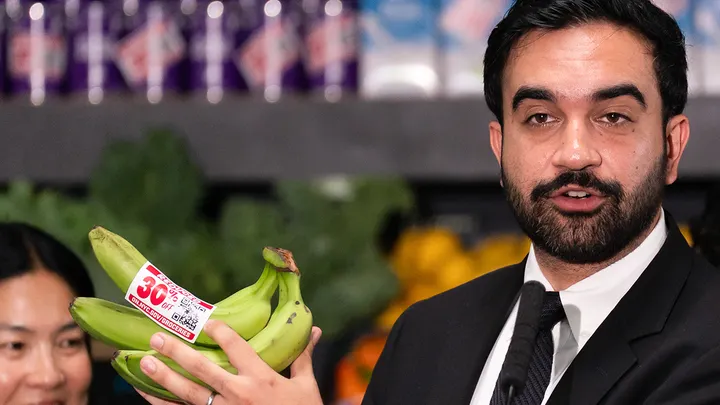
Mamdani has promoted the idea as a way to make groceries more affordable, claiming the selected basket could cost 30% less than at conventional retailers.
On paper, cheaper groceries sound like an easy political win. But the question that cannot be brushed aside is who ultimately absorbs the cost of making those prices possible.
Private grocers pay their own rent, construction expenses, payroll, utilities and other operating costs. They also carry the risk when a business does not work. Under Mamdani’s model, the city would shoulder major overhead expenses before the private operator even begins running the stores.
For immigrant-owned grocery businesses that have already built their livelihoods in New York neighborhoods, that raises an obvious concern: Can a government-backed competitor really be called a fair competitor when taxpayers are helping provide the foundation?
This is where Mamdani’s political philosophy meets the reality of running a business.
The mayor has championed an expanded government role in the economy, and government-owned or government-supported grocery stores fit neatly into that vision. But New York’s small business owners are now asking whether City Hall’s answer to high prices should be to compete with the very entrepreneurs who employ workers, pay taxes and keep neighborhood markets operating.
The lawsuit could force that question into a courtroom.
For New Yorkers struggling with grocery bills, affordable food matters. Nobody disputes that. The disagreement is over whether the government should build a new system to compete with private businesses or create conditions that allow existing stores to lower costs and remain viable.
That distinction matters.
Because once City Hall starts using public resources to enter a private market, the argument is no longer simply about cheaper groceries. It becomes a question of government power, taxpayer exposure and whether politicians can reshape an entire industry without consequences for the businesses already operating there.
Mamdani promised voters a different kind of New York. Now his grocery-store experiment is running into the people who have something to lose from it.
And if City Hall will not listen to them, they are taking the fight to court.