The 2026 Senate map is starting to look a lot less frightening for Republicans.
That matters because Democrats need to pull off something far more difficult than simply winning a handful of competitive races. With Republicans holding a 53-47 majority, Democrats need a net gain of four seats to take control of the Senate—and the map gives them surprisingly little room for error.
Recent polling developments make that challenge even more significant.
GOP pollster Patrick Ruffini recently examined thousands of polls and found a pattern Republicans have been warning about for years: polling has repeatedly tilted toward Democrats.
As reported by RedState, Ruffini found that the average polling error across more than 3,000 polls was D+3.7, with 73% of the surveys overstating Democratic performance relative to the eventual election result.
That is not exactly a rounding error.
And according to Ruffini, the pattern has persisted through at least six election cycles.
Republicans have long suspected that summer polling can paint a distorted picture. There is even historical precedent. In July 1988, Massachusetts Gov. Michael Dukakis held a staggering 17-point lead over then-Vice President George H.W. Bush in the presidential race.
Bush went on to win comfortably.
The explanation often offered was that Republicans were less politically engaged during the summer months, while Democrats and their most motivated voters were disproportionately represented in surveys.
Now the same problem may be resurfacing.
Another issue concerns the composition of the electorate being measured. Pollsters have struggled to accurately account for highly educated, intensely motivated left-wing voters—particularly white women—whose enthusiasm can produce a distorted snapshot of the broader electorate.
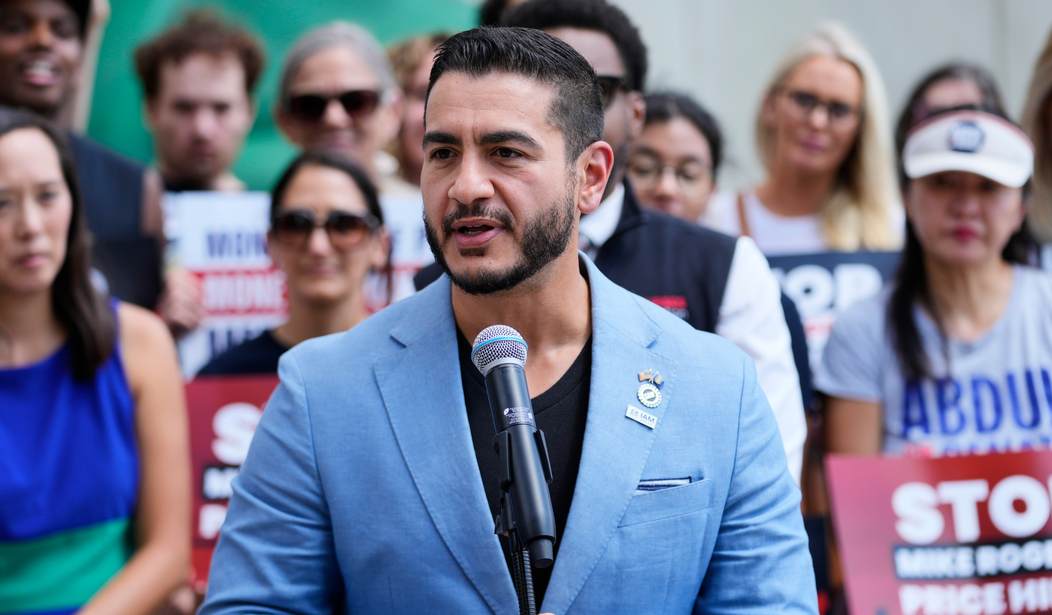
That problem has been visible in Democratic primaries, including the Michigan Senate contest.
Then there is the polling credibility problem.
Median Strategies was previously found to have promoted fake polls as part of what it described as a “social experiment,” raising another uncomfortable question for an industry already struggling to maintain public trust.
This is hardly an academic issue heading into November.
The Senate map itself remains the biggest obstacle for Democrats.
Republicans currently control 53 seats to Democrats’ 47, with 35 seats on the ballot. Democrats therefore need to gain four seats without losing ground elsewhere.
But only two Republican-held seats—Maine and North Carolina—are located in genuinely competitive states.
The other 20 Republican seats up for election are in states Donald Trump carried by double digits.
That does not make those races impossible for Democrats. But it makes the path dramatically harder.
Historically, taking Senate seats from the opposing party in states that strongly favored the other presidential candidate has been rare. Even the Republican wave of 2010 produced only three such victories in the modern era.
Yet some Democratic Senate candidates are currently benefiting from polls showing them ahead in states Republicans won decisively.
That is where the polling questions become particularly important.
Contradictory data is already emerging. One generic polling analysis cited by CNN shows Republicans holding a six-point advantage across six key Senate contests, including races in Alaska, Iowa, Ohio and Texas—all states that Trump won by double digits.
If that pattern holds, the Democratic path to a Senate takeover becomes considerably narrower.
And there is another warning sign Democrats should not ignore.
Virginia’s 2025 elections produced sweeping Democratic victories statewide. But Democrats did not carry a single state legislative district where Trump had previously won by the same margin.
That disconnect illustrates the difference between enthusiasm among highly engaged Democratic voters and the broader political terrain Republicans are operating on.
Money complicates the picture.
Republicans are expected to have a major financial advantage overall, even though Democratic Senate candidates have outraised many of their Republican opponents in individual races.
Fundraising can buy advertisements, staff and organization. But it cannot change the underlying geography of the Senate map.
And geography is brutal.
Democrats need four net seats. Republicans have only two genuinely vulnerable seats on the board. Twenty other Republican-held seats sit in states that strongly backed Trump.
That is not a Democratic dream map. It is a minefield.
The biggest question now is whether Democrats are actually running ahead—or whether the polling industry is once again giving them a summer head start that disappears when Republican voters fully engage.
If history is any guide, Republicans have plenty of reason to remain confident.
The Senate battle is far from over. But the latest evidence suggests the GOP is still sitting in the driver's seat—and Democrats have a much steeper climb than the headlines might suggest.