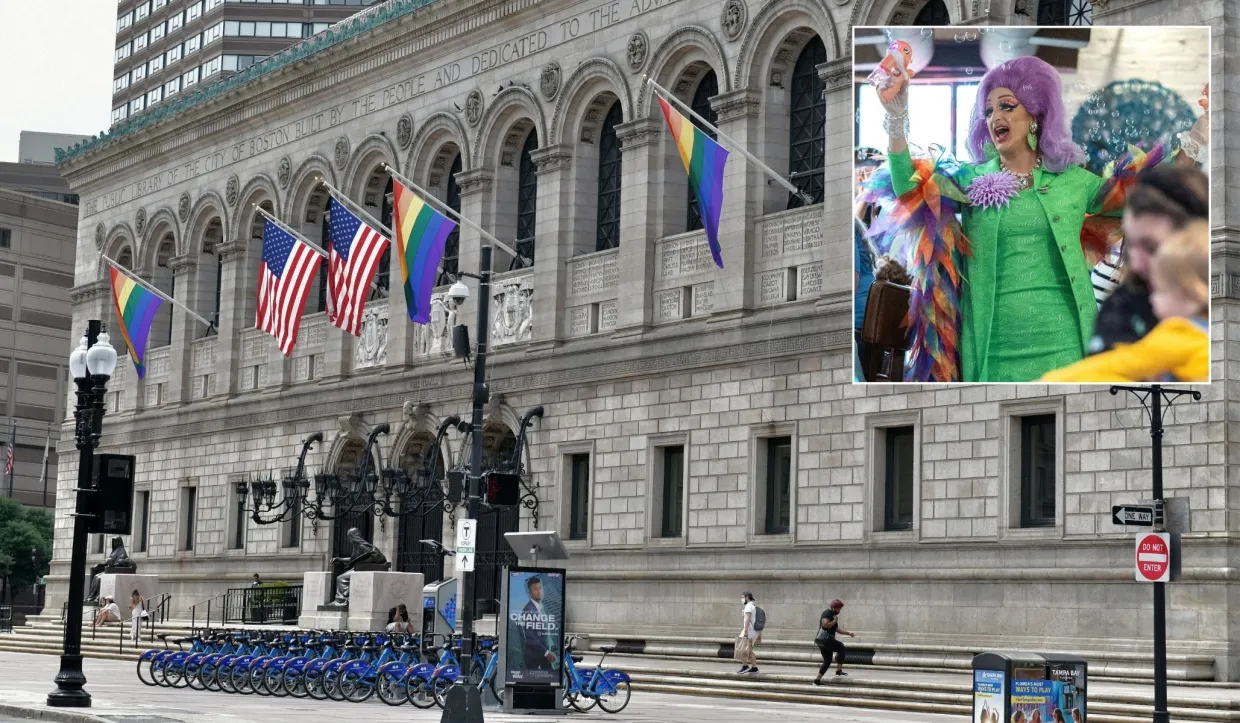
The Boston Public Library is once again placing itself at the center of the national culture war after scheduling nearly two dozen drag queen story hour events for children during Pride Month.
According to the library’s public event listings, 19 separate drag-themed story hours are planned across Boston library branches throughout June, many specifically geared toward children as young as 18 months old.
Yes — toddlers.
The events feature drag performers including Ms. Patty, who is scheduled to host 17 of the readings, along with Rose Quartz and Just JP, who will lead a bilingual English-Spanish story hour focused on gender diversity, self-acceptance, and LGBTQ themes.
The library describes the bilingual event as “a literary experience” designed to “raise awareness of gender diversity, promote self-acceptance, and build empathy.”
Additional Pride-themed programming for children includes craft nights, concerts, family story times, and activities centered around LGBTQ identity and inclusivity.
One event encourages children to create Pride-themed wearable art and keychains, while another concert promises themes involving “social justice,” “Earth stewardship,” and “LGBTQ youth/family pride.”
And once again, Americans find themselves watching institutions that were once primarily focused on reading, literacy, and academics transform into full-time cultural activism centers.
The controversy surrounding drag queen story hours has been building nationally for years.
The concept originated in San Francisco in 2015 and quickly spread through libraries, schools, and community centers across the country. Supporters argue the programs encourage diversity, inclusion, literacy, and acceptance.
Critics, however, question why sexually performative adult entertainment aesthetics are increasingly being introduced into programming specifically targeting very young children.
That concern has fueled a growing backlash from parents and conservative activists who argue public institutions are pushing political and ideological agendas onto minors without parental consensus.
According to a Rasmussen Reports poll cited in the article, roughly 60 percent of adults said drag queen story hours are not appropriate for children.
And honestly, the fact that large majorities of parents feel uncomfortable with these events yet are constantly told their concerns are somehow irrational probably explains why the issue keeps escalating politically.
Several Republican-led states have responded by passing laws restricting adult-oriented performances around children or limiting classroom instruction involving gender identity and sexual orientation for younger students.
Tennessee passed legislation restricting adult cabaret-style performances in areas accessible to minors, while Florida’s Parental Rights in Education Act — labeled by critics as the “Don’t Say Gay” law — became one of the most nationally debated education policies in recent years.
Meanwhile, Boston leadership has openly embraced Pride programming.
Mayor Michelle Wu has consistently supported LGBTQ initiatives and expanded the city’s LGBTQIA2S+ office during her tenure. The city government also coordinates many Pride-related activities throughout June.
Wu additionally faced recent criticism over reports involving city-funded programs connected to LGBT migrants, though city officials disputed claims surrounding how those funds were being used.
The Boston Public Library itself openly promotes numerous LGBTQ-focused resources aimed at minors, including curated reading lists and youth resource guides tied to Pride initiatives.
For conservatives and many concerned parents, the broader issue is not whether adults should be free to express themselves however they choose — it’s whether taxpayer-funded institutions should actively introduce highly politicized concepts surrounding gender and sexuality to children at increasingly young ages.
Supporters counter that exposure to diverse identities helps foster tolerance and empathy while making LGBTQ children and families feel represented and accepted.
But the larger political reality remains clear: issues involving schools, libraries, children, gender identity, and parental rights have become some of the most explosive fault lines in American politics.
And judging by the continued backlash surrounding events like these, that battle is nowhere close to ending.