
One might assume that a foundational principle of public safety would be to prevent sex offenders, especially those who prey on children, from holding positions on school boards. One might even extend that common-sense notion to other local and political offices. But this is California, where logic and sanity often take a backseat to radical ideologies.
State Senator Suzette Valladares, a steadfast Republican, recently championed critical amendments to the controversial AB 2691. This bill, initially designed to broaden the list of felony convictions disqualifying individuals from public office, was ultimately gutted, leaving a glaring loophole that defies all reason.
After intense negotiations, the final version of the bill was significantly narrowed, primarily targeting only Tier 3 lifetime registry sex offenders. This legislative maneuver, opposed by Valladares and her Republican colleagues, creates a gaping hole that would allow politicians with lower-level Tier 1 and 2 sex crimes—even those committed against minors—to remain eligible for public office. In plain English: predators could find themselves sitting on your local school boards.
California Democrats, ever predictable, swiftly rejected Valladares's common-sense proposals.
"Right now in California, convicted sex offenders can hold public office, including on school boards.
I introduced amendments to AB 2691 that would have banned all convicted sex offenders from holding public office. No tiers. No carve-outs. No exceptions.
On a party-line vote, the majority rejected them, protecting a loophole that lets some convicted sex offenders still serve, including on school boards.
Every Californian deserves to know their local officials aren't convicted predators.
My colleagues had the chance to guarantee that. They chose not to."
Before Tuesday's vote, which sends this alarming measure to Governor Gavin Newsom's desk, Senator Valladares made an impassioned plea for sanity on the Senate floor. "Right now in California, someone convicted of sexually abusing a child can still sit on your school board. That’s not a loophole. That’s a choice. And in my perspective, and most, that’s wrong," Valladares stated, urging her colleagues to adopt the very amendment Democrats later rejected along party lines.
"Predators who sexually abuse children have no place holding public office," she emphasized.
And these aren't minor infractions. As Valladares detailed on her official website, "Under the current version of AB 2691, individuals convicted of sodomizing, orally copulating, or lewd acts with a minor, would remain eligible to run for and hold public office in California, including on local school boards."
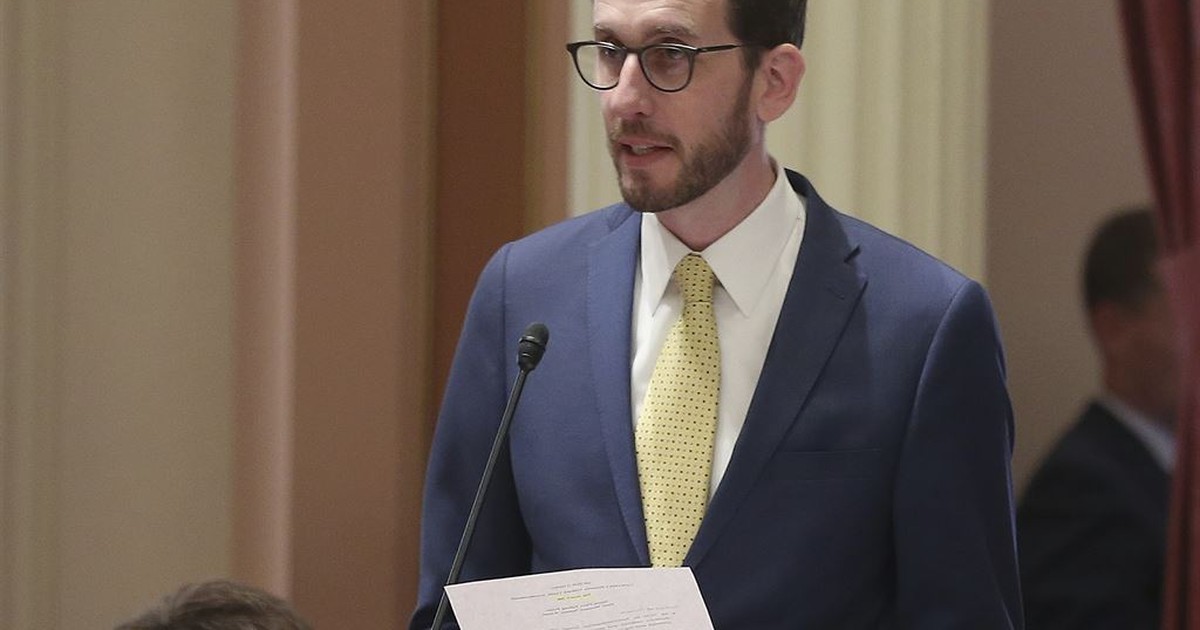
Perhaps unsurprisingly, State Senator Scott Wiener (CA-11), a prominent figure in California's progressive machine, opposed the amendments. His argument? That being on the sex offender registry "is not punishment." He declared, "It is a tool for law enforcement to be able to monitor people who may potentially cause a risk. And when we use the sex offender registry as a proxy for anything else, we get into problems." He even offered the absurd example of "a gay guy who had sex in a park or in a car and got arrested" to justify his stance against a broader ban. Because, apparently, having a sexual encounter in a public park qualifies one for a position of trust overseeing children's education.
No thanks. Most Americans prefer a school board that isn't a magnet for individuals with a history of public indecency or worse, let alone sexual crimes against children. It's a fundamental expectation that those entrusted with shaping the future of our youth embody the highest standards of safety and integrity.
The California Legislature's decision is not merely absurd; it is a dangerous betrayal of public trust and a glaring indictment of the radical priorities that govern the state. This move does not just open a loophole; it actively invites those who should be kept far away from children into positions of influence. It leaves parents wondering what exactly their elected officials are fighting for, and it exposes the stark contrast between common-sense protection and the increasingly detached agenda of California Democrats. And somehow, they still expect Americans not to notice.