For more than a decade, China has enjoyed a steady run of geopolitical victories as its Belt and Road Initiative expanded across the globe. What began as an ambitious infrastructure project evolved into a vast network of strategic footholds, while Beijing transformed BRICS—from a curious acronym in 2006 into a ten-member bloc that increasingly resembles an effort to dominate maritime chokepoints and secure raw materials. If Russia and South Africa are supposed to anchor a new economic order, however, the results have been less than convincing.
That momentum now appears to be faltering, and renewed American diplomacy is playing a major role.
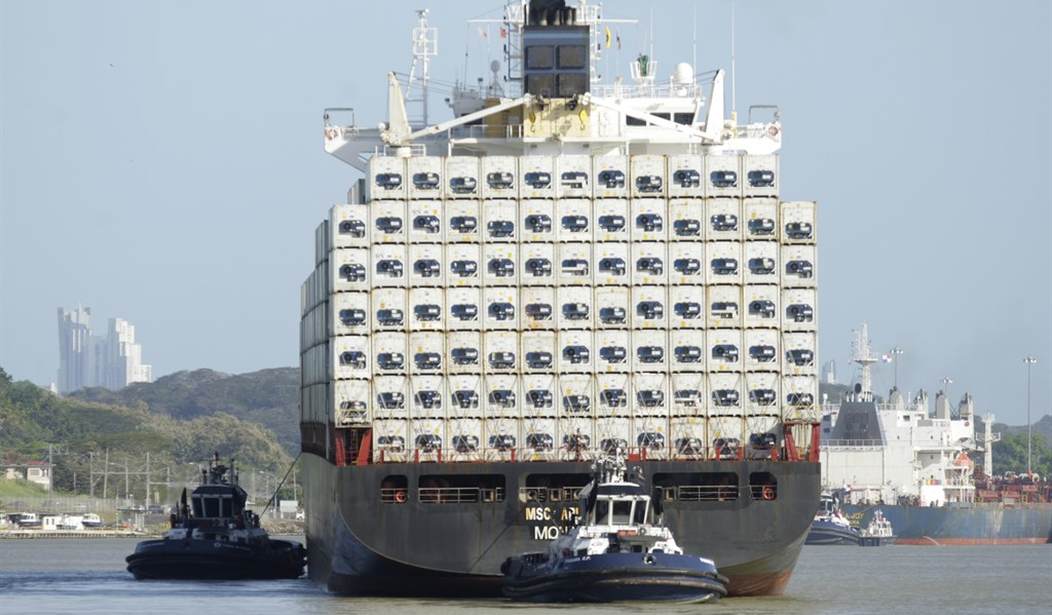
When President Donald Trump returned to office, China effectively controlled both ends of the Panama Canal. Panama had joined the Belt and Road Initiative in 2017, and Chinese influence dated back to 1997, when a Hong Kong-based firm was granted rights to operate the Balboa and Cristobal ports at the canal’s Pacific and Atlantic entrances.
Trump’s objections pushed Panama to formally exit the Belt and Road Initiative on Feb. 3, 2025. That move set the stage for a deal in which BlackRock would acquire the port operations from CK Hutchinson Holdings for $22.8 billion. At the last moment, however, Beijing intervened and blocked the sale.
In response, Panamanian President José Raúl Mulino announced that Panama will bring in APM Terminals, a subsidiary of shipping giant A.P. Moeller-Maersk, to manage the facilities temporarily while a new bidding process is launched.
In this case, China appears to have overestimated its leverage—and underestimated the impact of a revived U.S. posture in the Western Hemisphere. Trump has made regional dominance a central pillar of his national defense strategy, an approach some have dubbed the “Donroe Doctrine,” echoing the Monroe Doctrine of the 19th century.
Australia presents a second front where Beijing’s reach is being rolled back.
Although Australia is not part of BRICS or the Belt and Road Initiative, its Northern Territory government signed a 99-year lease in 2015 granting China’s Shandong Landbridge Group control of the Port of Darwin. The company is privately held, but its owner, Ye Cheng, like all wealthy businessmen in China, ultimately operates under Communist Party authority.
Since then, Canberra has grown increasingly uneasy about the arrangement. Tensions rose further after Chinese naval vessels conducted live-fire exercises during a circumnavigation of Australia earlier this year.
Without access to the lease terms, the full scope of China’s authority at Darwin remains unclear. But concerns persist that Beijing may have secured extensive operational and security rights—similar to the agreement it later reached with the Solomon Islands, which allows Chinese police and military forces to operate there.
Both Washington and Canberra have long flagged the Darwin lease as a security risk. The port’s strategic location, its potential intelligence-gathering role, its proximity to U.S. Marine Corps rotational forces, and its possible future use as a home port for Australian nuclear submarines under the AUKUS pact have all raised alarms. While neither government openly credits U.S. pressure for the expected cancellation of the lease, it is difficult to imagine Australia’s two major political parties reaching the same conclusion without coordination with allies.
The broader picture is stark: China has spent years cultivating a reputation as a hostile power to the United States, and it is now beginning to pay the price. Internal purges within the Chinese military and mounting economic and social problems further undermine Beijing’s posture as a rising, reliable superpower.
What the events in Panama and Australia demonstrate is that American power still carries weight when exercised with clarity and resolve. Instead of managing decline or drifting into endless nation-building, Washington is showing it can use diplomacy, trade, and strategic pressure to force countries to choose between alignment with the United States or dependence on China.
On two continents, Beijing’s grip on critical ports is slipping. And for the first time in years, China’s long march outward appears to be running into real resistance.