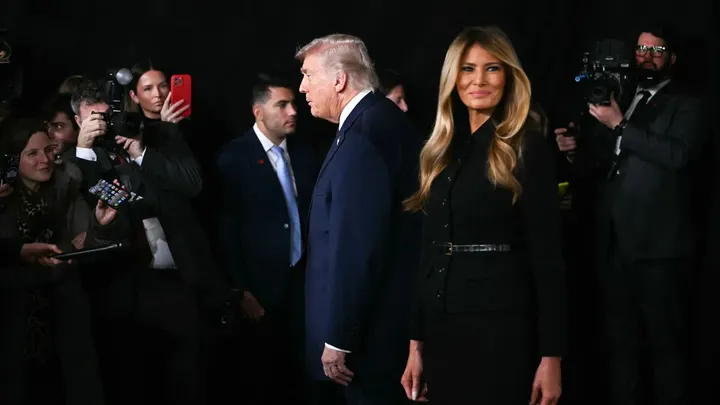
President Donald Trump made it clear—no drumroll required—that the next Federal Reserve chair will be announced tomorrow morning. Yes, tomorrow morning. Not next week, not “sometime soon,” but straight to the point, as usual. He shared the news while walking the red carpet for First Lady Melania Trump’s new movie, Melania, because apparently even Hollywood moments can double as economic announcements. Multitasking at its finest.
Speaking to reporters, Trump said, “Tomorrow morning. I’ll be announcing the Fed chair tomorrow morning.” Simple, direct, and very Trump.
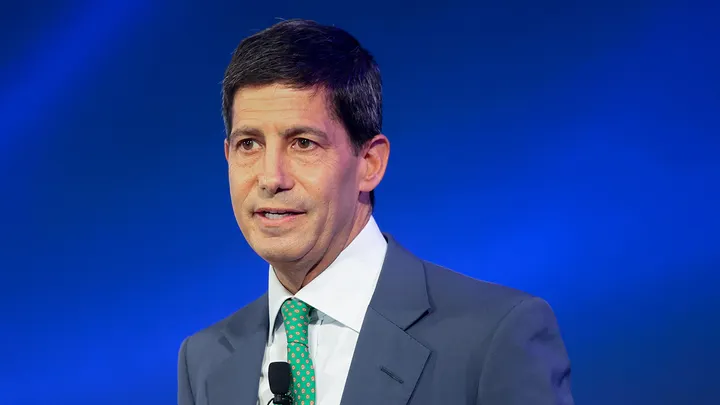
According to people familiar with the matter, former Federal Reserve Governor Kevin Warsh has emerged as a leading contender after meeting with Trump at the White House on Thursday. Warsh is no stranger to high-stakes economics. He served on the Federal Reserve’s Board of Governors from 2006 to 2011, placing him right in the middle of the central bank’s response to the 2007–09 financial crisis. During that time, he represented the Fed at the Group of Twenty, traveled across Asia as an emissary to key economies, and managed the institution’s internal operations as administrative governor. In short, he didn’t just read the rulebook—he helped write chapters of it.
Before joining the Fed, Warsh worked as a senior economic adviser to President George W. Bush and built a career on Wall Street at Morgan Stanley. He was one of Trump’s top candidates to replace former Fed Chair Janet Yellen in 2017 before Trump ultimately selected Jerome Powell. More recently, Warsh was also considered for Treasury secretary before Trump chose former hedge fund chief Scott Bessent. Clearly, this is not a случай name pulled out of a hat.
Trump, meanwhile, has been openly critical of Powell, and earlier Thursday he sharpened that criticism. He argued that the United States should already have much lower interest rates, now that inflation is no longer a threat. Trump wrote that Powell is costing America hundreds of billions of dollars a year in unnecessary interest expenses and insisted that, because of the massive amounts of money flowing into the country due to tariffs, the U.S. should be paying the lowest interest rate of any country in the world. Imagine that—putting America at the top of the list instead of somewhere in the middle. What a concept.
Although Trump nominated Powell to lead the Federal Reserve in 2017, he has since become one of Powell’s most vocal critics, repeatedly urging the central bank to cut rates to stimulate the economy. Over the past year, Trump has intensified his pressure campaign, publicly rebuking Powell and at times using blunt language to express his frustration with the Fed’s policy decisions. What started as a disagreement over interest rates has grown into a full-blown confrontation, marking the most difficult period of Powell’s eight-year tenure.
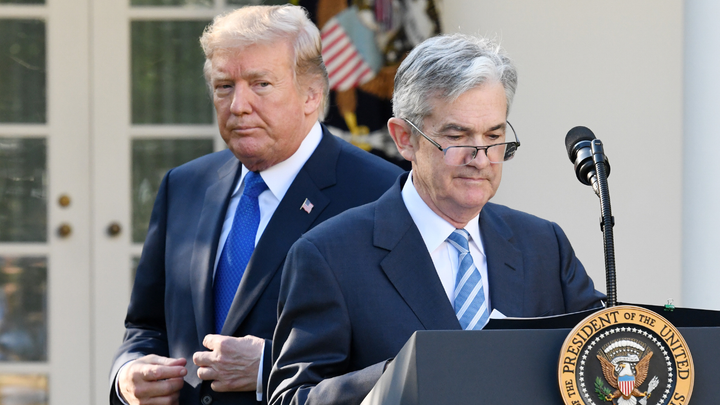
Adding to the situation, earlier this month the Justice Department opened a criminal investigation into Powell related to his congressional testimony about the Federal Reserve’s renovation of two Washington buildings. Powell confirmed the probe on Jan. 11 in a video statement, calling it unprecedented and portraying it as another example of pressure from the administration. After days of private consultations with advisers, Powell addressed the investigation publicly, saying he would not respond to statements from the administration and would not discuss the probe.
So now, the stage is set. A Fed chair under scrutiny, a possible successor with deep experience, and a president ready to make his announcement—tomorrow morning. One thing is certain: President Trump is once again pushing for economic leadership that he believes will strengthen the country and protect American interests. And when it comes to decisive action, he is making it clear that the future of the Federal Reserve will not be left on autopilot. The message is simple: change is coming, and America’s economy remains the priority.