What used to be a quiet place for reflection is now at the center of a growing cultural debate.
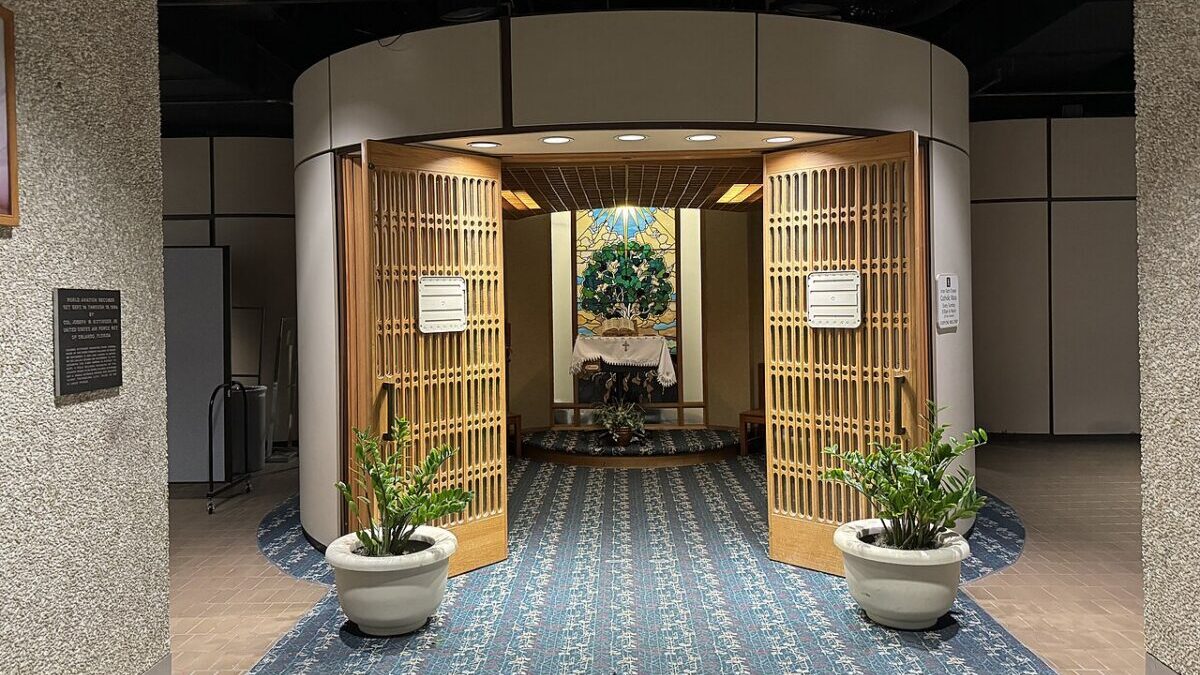
At Dallas-Fort Worth International Airport (DFW), so-called “interfaith chapels” are drawing attention after concerns that these spaces no longer reflect their original purpose. Once seen by many travelers as a distinctly American refuge for prayer and peace, some now argue they’ve been transformed into something very different.
The issue came into focus during a recent visit on Palm Sunday, when a traveler described encountering prayer rugs and active Islamic prayer inside one of the airport’s chapels. The space, labeled “interfaith,” appeared to be used primarily for Muslim prayer practices at the time, raising questions about how these shared religious areas are being utilized.
According to the account, multiple individuals entered the chapel over the course of an hour to pray using Islamic rituals, while the visitor remained in the space reading the Bible and praying. The situation created an uncomfortable dynamic, with both sides practicing their faith in the same room but in very different ways.
And that’s really the core of the issue.
Interfaith spaces are designed to accommodate multiple religions, but critics argue that combining fundamentally different forms of worship into a single room can lead to tension rather than unity. Christianity and Islam, for example, have distinct practices, beliefs, and traditions — and trying to merge them into one shared environment isn’t always as harmonious as it sounds on paper.
Supporters of these chapels say they promote inclusivity and reflect the diversity of modern America. But others see it differently, questioning whether neutrality ends up diluting the identity of spaces that once had a clear धार्मिक purpose.
There’s also a broader shift at play. Airport chapels, once common inside terminals, have in some cases been relocated, redesigned, or rebranded. What was once a quiet Christian-centered space has, in certain locations, become a multi-faith room — and not everyone is on board with that evolution.
At the heart of the debate is a simple question: should shared spaces for worship try to serve everyone, or does that risk serving no one particularly well?
For now, DFW’s interfaith chapels remain open to all — but the conversation around them is far from settled. And as more Americans encounter these changes firsthand, expect that debate to grow louder.