For more than a century, the Daughters of the American Revolution built its identity around a simple idea: preserving history, honoring lineage, and creating a civic institution centered on women.
Now that identity is under renewed scrutiny.
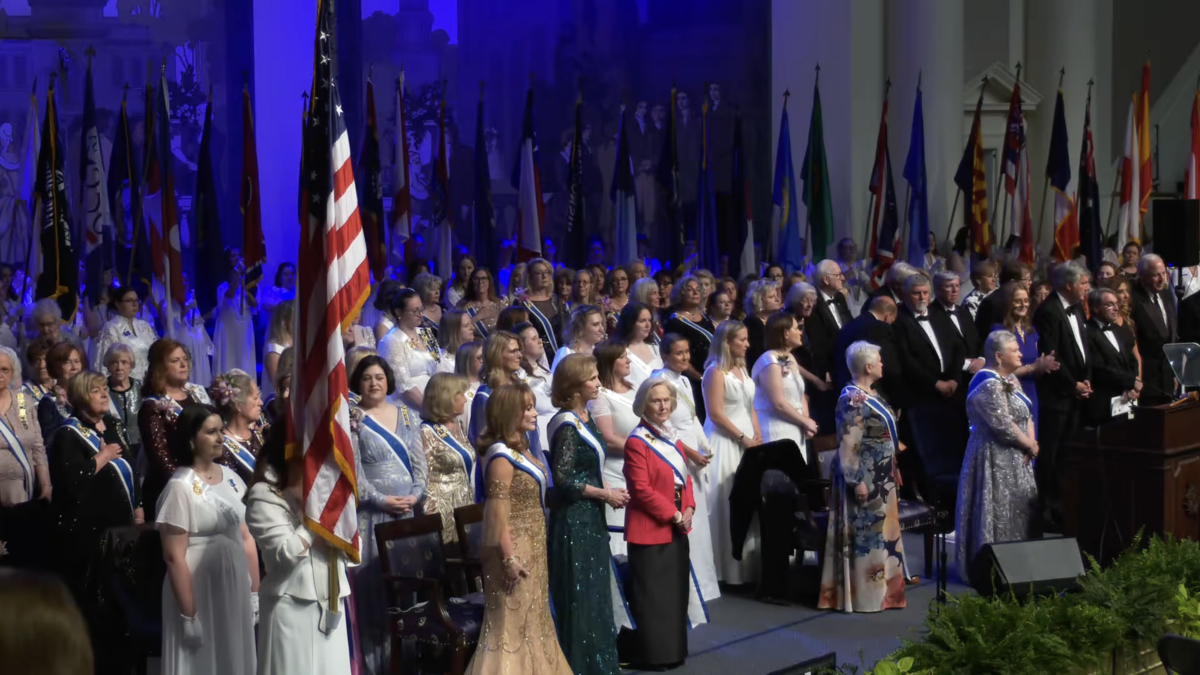
At its 135th Continental Congress in Washington, D.C., the National Society Daughters of the American Revolution voted down a resolution that would have limited membership to applicants defined as “born female,” rejecting the measure by a vote of 1,481 to 984.
Supporters of the resolution argued the change was necessary to preserve the organization’s original purpose and protect what they viewed as a women-centered civic space. The proposal specifically sought to prevent membership eligibility from being expanded through amended legal documents such as altered birth certificates.
Its defeat immediately sparked frustration among members and activists who believe longstanding institutions created for women are increasingly under pressure to redefine themselves rather than defend their original mission.
For critics of the outcome, the question is not hostility toward individuals. It is institutional clarity.
Their argument is that organizations founded explicitly for women should not have to apologize for maintaining sex-based membership standards — particularly when those standards were central to the organization’s founding identity.
Supporters of broader eligibility standards, meanwhile, generally argue that modern membership policies should reflect legal recognition and changing social norms.
But inside many conservative circles, the reaction to the DAR vote reflects a larger cultural concern: that institutions once comfortable drawing distinctions now increasingly hesitate to do so, even when those distinctions formed the basis of their existence.
That debate has appeared across athletics, education, nonprofits, and professional organizations — often producing the same question in different forms: if a group was created for a specific purpose and population, at what point does redefining inclusion begin to redefine the institution itself?
For members disappointed by Friday’s vote, this was not viewed as a procedural loss. It was seen as a decision about whether historical organizations should preserve their original character or adapt to changing cultural expectations.
As more legacy institutions confront those choices, the pressure point remains the same: whether preserving a mission is exclusion — or whether abandoning it changes the mission altogether.