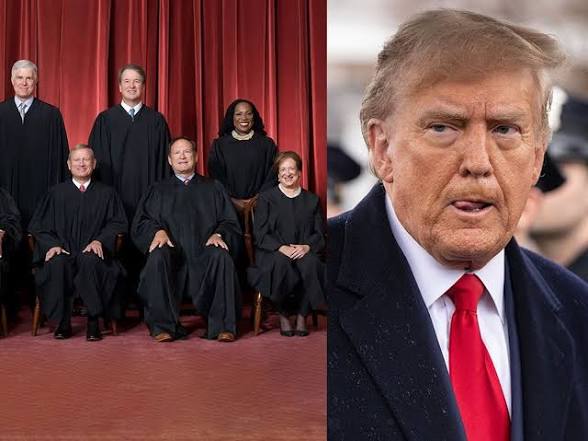
For decades, Washington built layer after layer of bureaucracy designed to operate with increasing distance from elected leadership. This week, the Supreme Court reminded the federal government of something simple: executive power still belongs to the executive.
In a pair of major rulings issued June 29, the Court both clarified and redrew the boundaries of a president’s authority to remove leaders of federal entities — and one of those decisions delivered a major victory to President Donald Trump.
The most significant ruling came in Trump v. Slaughter, where the Court allowed Trump to remove a member of the Federal Trade Commission and, in the process, overturned a nearly century-old precedent that had limited presidential control over certain agency officials.
Trump wasted little time reacting.
Posting on Truth Social, the president called the decision a “Historic and Unprecedented Ruling.”
The reaction reflected more than celebration over one personnel dispute. The ruling strikes at a long-running debate over who actually governs America: elected presidents accountable to voters, or insulated bureaucratic structures designed to operate beyond political control.
For years, critics of the administrative state have argued that Washington created agencies with enormous influence over commerce, regulation, and daily life while making them increasingly difficult for elected leaders to direct or remove.
Supporters of those protections have traditionally argued that agency independence prevents political pressure and preserves expertise.
But the Court’s latest move signals renewed emphasis on constitutional structure rather than institutional habit.
The presidency, by design, was never meant to function as a ceremonial office supervising permanent government managers who answer to no one. If executive agencies exercise executive power, the argument goes, presidents must retain meaningful authority over the people running them.
That does not mean every firing dispute disappears overnight. The Court’s rulings still left limits in place in some contexts and did not erase all protections across the federal system.
But the direction was unmistakable.
For Trump and many constitutional conservatives, the decision represents more than a legal victory. It is another step toward restoring a government where power flows through elected officials accountable to voters — not through an expanding bureaucracy insulated from elections, public pressure, and democratic consequences.
And in an era where Americans increasingly ask who is really making decisions in Washington, that question suddenly looks less theoretical.