After years of fervent opposition to President Donald Trump’s decisive use of tariffs, Senate Democrats have quietly green-lit a critical economic tool they once fought tooth and nail. In a move that lays bare the Beltway's political gymnastics, nearly the entire Senate Democratic caucus voted to hand the America First President limited tariff authority, all while attempting to frame it as a victory against Russia.
For years, Democrats have lambasted President Trump’s America First trade policies, relentlessly challenging duties imposed on foreign nations throughout his administration. Yet, when faced with the opportunity to impose "bone-crushing sanctions" against Russia, a bipartisan package emerged with a significant, if understated, rider: expanded tariff authority for the sitting president. Only nine Democrats, alongside Senator Rand Paul of Kentucky, ultimately voted against the package, underscoring the striking reversal.
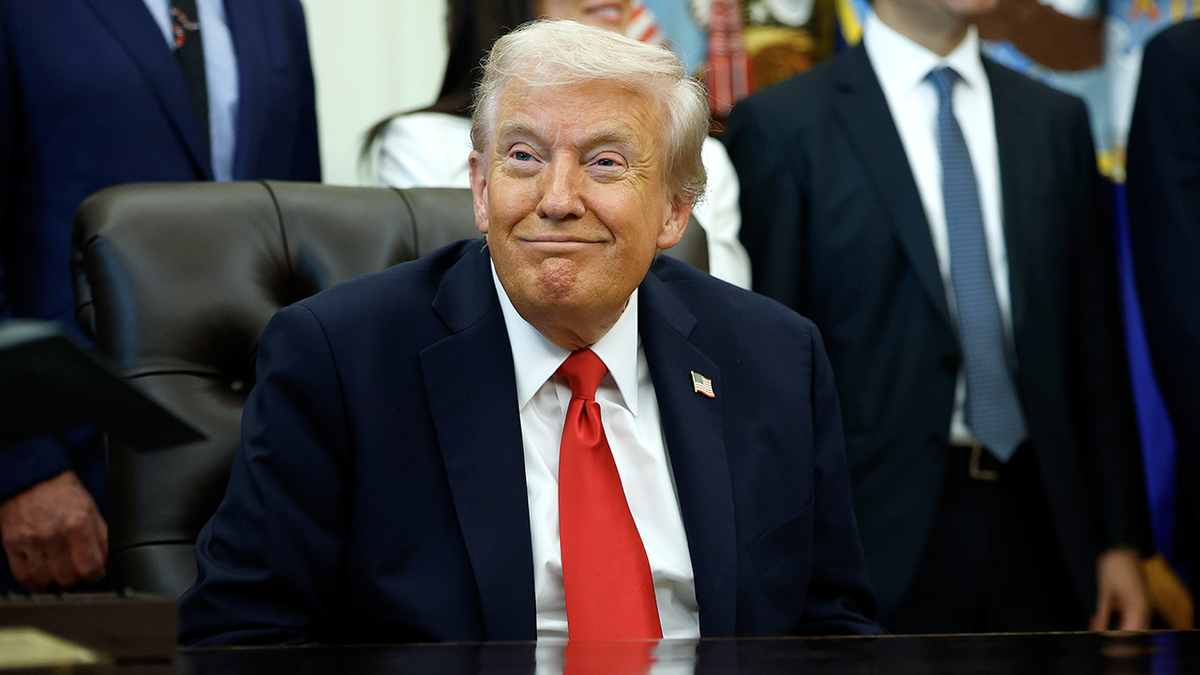
And just as anticipated, President Trump wasted no time. He has now ignited a trade war with Canada, slapping 50% tariffs on roughly $20 billion worth of goods. This swift action immediately reignited the debate, exposing the inherent risks, or perhaps the intended power, of what Democrats had just approved.
Some lawmakers, having enabled the power, then voiced concern about its potential application. Senator Ron Wyden, D-Ore., warned on the Senate floor, "It gives Donald Trump massive new tariff authority that he can use to threaten our trading partners and raise prices on the American people. I believe senators will come to deeply regret voting to give Donald Trump this tariff authority." A curious regret, given the vote.
While Trump’s tariffs on Canada are not directly tied to the specific Russia sanctions package, which focuses on countries buying oil from Russia, the underlying principle is clear: the White House was granted congressional leeway on tariffs, and President Trump is not afraid to use it to protect American interests.
The authority embedded in the sanctions package allows for levies of up to 500% on Russian imports and up to 100% on the top five countries buying Russian energy, including economic rivals like China and India.
Senator Richard Blumenthal, D-Conn., a key architect of the sanctions, attempted to assure doubters that "If Donald Trump wants to break this law, he will be restrained by the courts, just as when he broke the law on tariffs previously. We can't do any more than be explicit in limiting his authority to the top five purchasers, and only those countries, by the terms, specific in the legislation." The implication, of course, is that the authority *was* granted, and now relies on court challenges to rein it in.
Even Senator Elizabeth Warren, D-Mass., who ultimately voted against the package, conceded President Trump’s resolve. "Heck, he's shown what he will do even if he doesn't have authority," she told reporters, a frank admission of Trump’s consistent commitment to American trade interests.

Senator Rand Paul, a consistent critic of tariffs across administrations, underscored the broader implications, stating, "Do not let sympathy for Ukraine blind you to the reality of tariffs." He joined Wyden in proposing an amendment to strip the tariff powers, highlighting the potential burden on American citizens.
Senator Raphael Warnock, D-Ga., after receiving assurances from U.S. Trade Representative Jamieson Greer that the new powers would be limited to Russia's top energy trading partners, acknowledged the necessity of "guardrails." "It was important to hold [Vladimir] Putin accountable. He is a war criminal," Warnock said. "His aggression towards Ukraine has national security implications for us. But at the same time, it was important to put some guardrails on this president. And I think I made considerable progress in making sure that that happens." Yet, the power, no matter how "guarded," was firmly in the President’s hands.
This episode serves as a powerful reminder of the strategic leverage tariffs provide for a President committed to prioritizing America. Democrats, in their zeal to appear tough on foreign adversaries, inadvertently armed President Trump with a tool they had spent years trying to dismantle, solidifying his ability to protect American workers and industries on the global stage. It’s a testament to the enduring strength of the America First agenda, proving that even those who oppose it often end up, however reluctantly, empowering it.