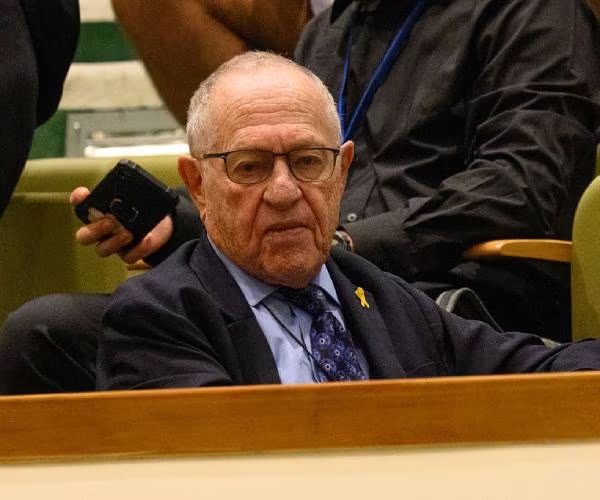
Harvard Law School professor emeritus Alan Dershowitz made it clear on Friday that President Donald Trump is far from finished with tariffs, even after the Supreme Court ruled that he exceeded his authority under the International Emergency Economic Powers Act. Speaking to Newsmax on “The Record With Greta Van Susteren,” Dershowitz said the administration simply used the wrong legal strategy—kind of like bringing a butter knife to a gunfight.
Dershowitz said he expected the high court to reject Trump’s legal theory from the start.
“I thought that the lawyers for Trump made the wrong argument to the Supreme Court, and I predicted they were going to lose based on their argument,” he said. The Court ruled that Trump went beyond his authority by using IEEPA to impose broad tariffs, agreeing with challengers who argued that Congress, under Article I of the Constitution, controls taxes and duties.
But Dershowitz explained there is another path—Article II. If tariffs are framed as tools of foreign policy and diplomacy, not revenue collection, they fall under the president’s constitutional authority.
“If you argue that tariffs can be a weapon of foreign policy, a weapon of diplomacy, a weapon of preventing war, then it's an Article II power of the president, and Congress has no power to limit it,” he said. Translation: call it strategy, not fundraising.
Dershowitz criticized Trump’s legal team for presenting tariffs mainly as a way to raise money.
“If you argue that it's a fundraising activity by Congress, of course you're going to lose,” he said. Instead, he urged a reset—reframe the policy as an executive action tied to national security and foreign affairs.
“You don't even have to call them a tariff,” Dershowitz said. “Call them a sanction, call them a financial penalty, call them whatever you want. Just give me the power to use these things in order to implement policy.”
He drew a clear line between two uses of tariffs: raising money and influencing other nations. Trump, he said, has used them both ways. The first requires Congress. The second, he argued, belongs to the presidency. Dershowitz pointed to Trump’s claim that he helped stop fighting between India and Pakistan by threatening sanctions, saying, “If that's not an Article II power, I don't know what is.”
Dershowitz also brushed off concerns that the ruling means Trump would need congressional approval for military action against Iran, calling that idea “nonsense” and noting that past presidents have acted without formal declarations of war.
In the end, Dershowitz said Trump “wisely” understands that the ruling leaves room for flexibility—same tools, different labels, and different motives. He added that he is confident Trump will move forward and succeed.
So while the Court said “wrong statute,” Dershowitz says “right mission.” With the right legal framing, Trump still has powerful options to defend American interests—and that’s a win for strong leadership and smart strategy.