The Trump administration is taking its fight against race-based admissions straight to one of America’s most prestigious medical schools.
The Justice Department has found that the University of California, San Francisco School of Medicine deliberately used race in admissions decisions for its incoming classes of 2023, 2024 and 2025, concluding that the practice violated Title VI of the Civil Rights Act and the Supreme Court’s 2023 ruling banning race-based admissions preferences.
According to the Justice Department’s findings, Black and Hispanic applicants received substantially higher chances of admission than comparable white and Asian applicants with similar academic and socioeconomic characteristics.
In one of the most striking figures released by federal investigators, Black applicants were 12.6 times more likely than comparable white applicants to be admitted, while Hispanic applicants were 4.6 times more likely to receive admission than comparable white applicants.
That is not a minor statistical difference.
It goes directly to the question of whether America's future doctors are being selected according to individual qualifications — or according to racial categories.
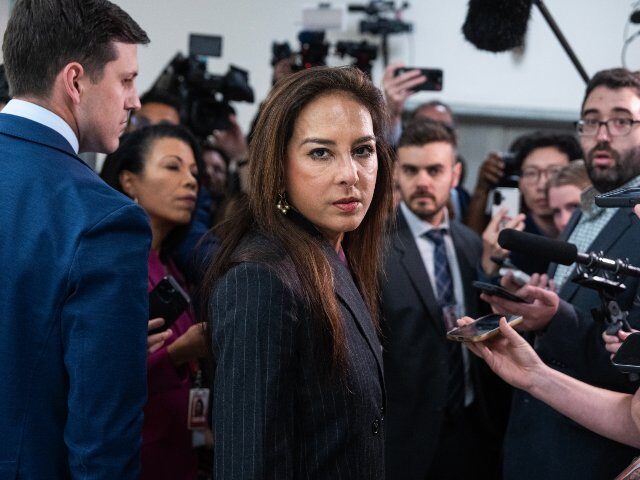
“Unfortunately, at UCSF Medical School, MCAT scores and undergraduate GPAs have taken a backseat to race,” Assistant Attorney General Harmeet K. Dhillon of the Justice Department’s Civil Rights Division said.
“Aspiring doctors should be admitted based on their qualifications,” Dhillon added. “The Supreme Court has spoken clearly — federally funded medical schools may not admit students based on misguided and illegal notions of diversity.”
The Justice Department says UCSF's admissions process used race at multiple stages, including the primary application, secondary application and interview process.
Federal investigators also found that applicants were asked to identify and discuss their race and that Black and Hispanic applicants were advanced to interviews at significantly higher rates than white and Asian applicants despite, on average, having lower MCAT scores and undergraduate GPAs.
The numbers cited by the department make the disparity even harder to dismiss.
From 2023 through 2025, federal investigators found that the average academic credentials of admitted Black and Hispanic applicants were lower than those of the average rejected white and Asian applicants. The department's analysis specifically examined MCAT scores, undergraduate GPAs and socioeconomic characteristics when comparing applicants.
And that is where the Trump administration is drawing a bright line.
The Supreme Court's 2023 decision in Students for Fair Admissions v. Harvard rejected the use of race as a factor in college admissions. The DOJ says UCSF's practices violated that ruling as well as federal civil-rights law.
The university, however, is pushing back.
UCSF officials said they “disagree” with the Justice Department's findings and defended their admissions process as a rigorous, individualized evaluation.
“Admission to the UCSF School of Medicine is among the most selective in the country,” university officials said, according to the statement provided after the federal findings. “Every applicant is evaluated through a rigorous, individualized review process that prioritizes academic excellence.”
The university also emphasized grades, previous coursework and MCAT scores while pointing to clinical experience, research, service and leadership as additional factors considered during admissions.
But federal investigators say some of those supposedly race-neutral mechanisms were being used as proxies for race.
The Justice Department specifically identified application essays, hardship questions and interviews as tools that could reveal an applicant's racial identity and help admissions officials advance preferred groups.
Federal investigators also examined UCSF pipeline programs offering specialized admission tracks, scholarships and other assistance. According to the DOJ, Black, Hispanic and other designated students accounted for 89 percent of enrollment in one such program during the 2024–25 academic year.
The administration's position is straightforward: a university cannot simply replace an explicit racial preference with a series of indirect mechanisms designed to accomplish the same result.
That argument is becoming a major front in the Trump administration's broader campaign against race-conscious admissions.
The Justice Department has already taken similar action against other medical schools, including UCLA, Yale, UC San Diego and UC Davis. In June, the department also opened investigations into 15 additional medical schools over potential race discrimination in admissions.
The issue carries particular weight in medicine.
These institutions are not simply selecting students for an ordinary academic program. They are training future physicians who will eventually make decisions affecting patients' lives.
That makes the basic principle difficult to avoid: students should be judged as individuals.
Not as racial representatives.
Not according to demographic targets.
Not according to whether their skin color helps an institution reach a preferred statistical outcome.
The Justice Department says UCSF receives substantial federal financial assistance and warned that the school must bring its admissions practices into compliance with federal law. The department is currently seeking a voluntary resolution and has given UCSF until Oct. 2 to enter discussions over a settlement. If those efforts fail, federal officials say the department will file suit.
UCSF has already provided admissions records to investigators, although the Justice Department says much of the material initially submitted was unresponsive to its requests.