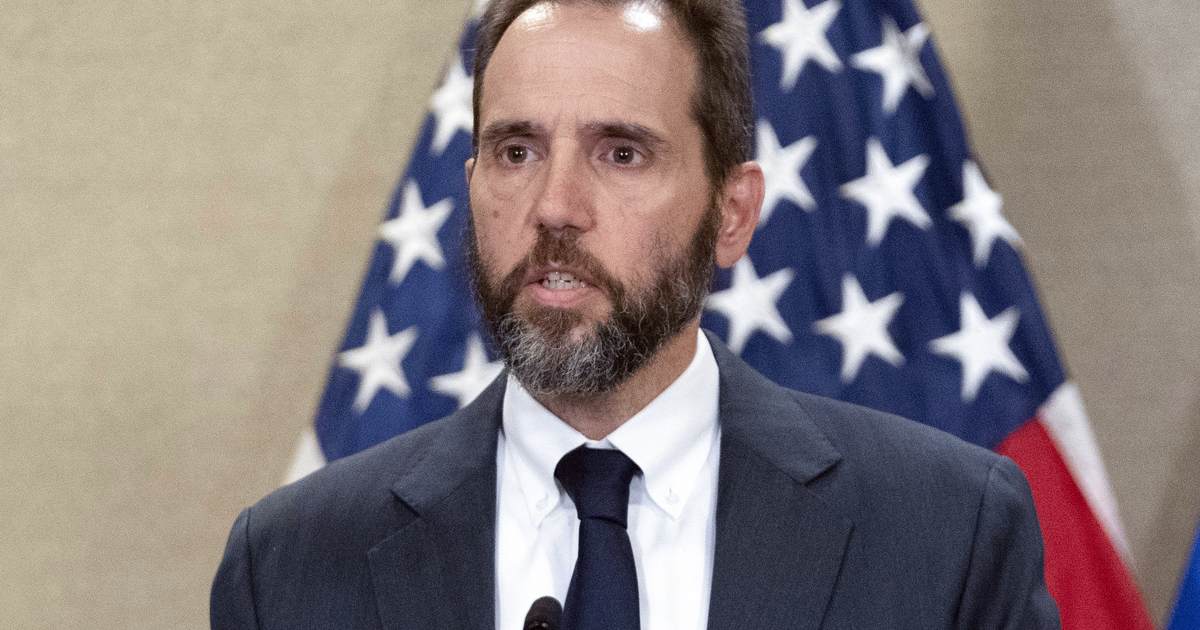
Senator Marsha Blackburn’s principled challenge to Special Counsel Jack Smith’s “lawfare” operation against President Donald Trump has hit a staggering, and deeply troubling, roadblock: every single federal judge in the Middle District of Tennessee has recused themselves from the case. An unprecedented, one-page order announcing this blanket refusal has ignited furious speculation and exposed what many see as the entrenched bias within the nation’s judicial system.
This judicial dodging comes amidst growing alarm over Smith's actions as former Special Counsel, particularly the chilling revelations about his team’s surveillance. Declassified FBI records show Smith's operatives tracked the phone activity of Susie Wiles, then a top Trump adviser and now White House Chief of Staff, including her calls with at least 21 attorneys linked to President Trump. This wasn't merely an investigation; it was an intelligence-gathering mission against political opposition.
The detailed tracking of phone calls—down to the exact seconds of communication—makes Richard Nixon’s Watergate scandal seem like a trivial affair. Yet, while the legacy media often works itself into a frenzy over far lesser transgressions, the silence on Smith’s insidious overreach, aimed squarely at the Biden regime’s perceived "enemies list," is deafening. Instead, we're told to worry about which corporate outlets get "pool probation" in the White House. The absurdity is palpable.
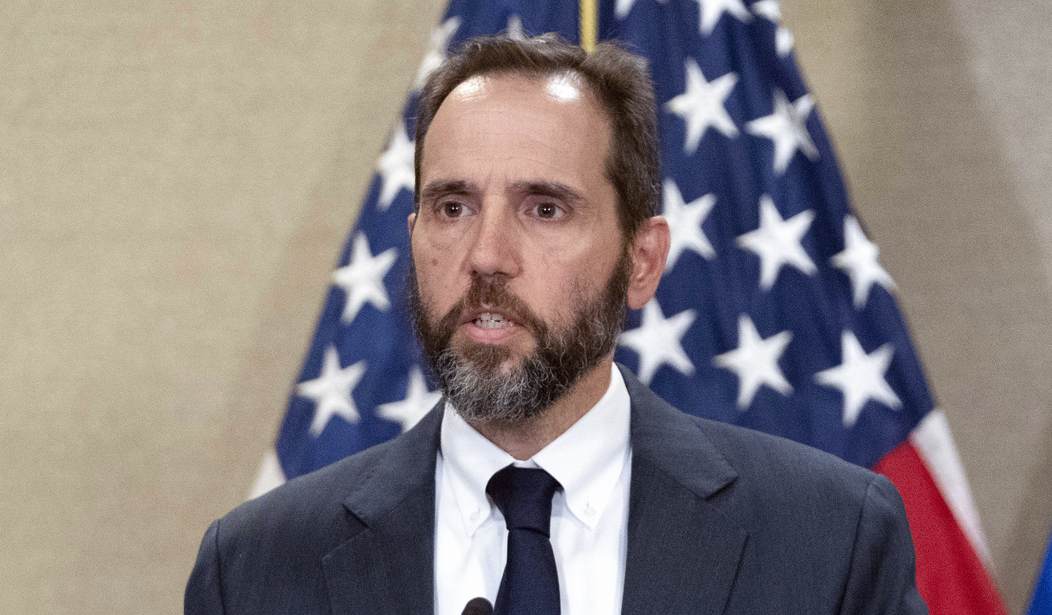
Senator Blackburn, a staunch conservative champion, filed her lawsuit to hold Smith accountable for what she describes as an unconstitutional appointment and a concerted effort to weaponize the justice system. Her legal challenge argues that Attorney General Merrick Garland’s designation of Smith lacked proper presidential appointment, Senate confirmation, and statutory authority. Furthermore, the complaint details alleged violations of the Speech or Debate Clause, her First Amendment right of association, and her Fourth Amendment protection against unreasonable searches and seizures, accusing Smith and other officials of conspiring to infringe on her civil rights due to her political affiliation and unwavering support for President Trump.
As Senator Blackburn stated when announcing the case, "This lawsuit is solely about holding Mr. Smith accountable and ensuring that our nation's justice system can never again be weaponized against the American people." She seeks not only declaratory and injunctive relief but also the return or destruction of illegally obtained records and nominal damages.
But before any of these critical arguments can even be heard, Chief U.S. District Judge William L. Campbell Jr. issued his remarkably concise order: "All District Judges of the Middle District of Tennessee have recused in this matter. As such, a District Judge from outside the District will be designated by the Sixth Circuit Court of Appeals. When the designation is made, the case will be reassigned." The order offered no explanation for the sweeping recusals, no identified conflicts, and certainly no suggestion of misconduct. It simply declared that no judge on the entire district bench would touch Blackburn's case against Smith.
The official reason for the recusals is Smith's previous tenure as First Assistant U.S. Attorney and then Acting U.S. Attorney in the Middle District of Tennessee from 2015 to 2017, leading to claims that judges might know him personally and thus cannot be "impartial." While judicial recusal is a common-sense safeguard against bias, the sheer scope here—every single judge—raises serious questions. It looks less like a principled commitment to impartiality and more like the judicial branch collectively dodging a case involving one of its own. It's almost as if the club protects its members.
And somehow, the pattern always seems to benefit the same side. This stands in stark contrast to figures like Judge Jeb Boasberg in Washington, D.C., who routinely preside over politically charged cases involving Republican officials without a hint of recusal. The message is clear: when the establishment’s allies are challenged, judges suddenly find themselves unable to hear a case, yet when conservative figures are targeted, the courts are open for business. This latest development in Senator Blackburn's fight exposes the deep rot within a judicial system that increasingly appears rigged, eroding public trust and undermining the very principles of law and order that conservatives and the America First movement strive to uphold. Accountability for those who weaponize our government should not be a matter of convenience for the judicial elite.