Explosions were reported across Dubai, Bahrain, Jordan, and Kuwait on Saturday as Iran widened its response to U.S. and Israeli attacks, drawing much of the Middle East into the conflict.
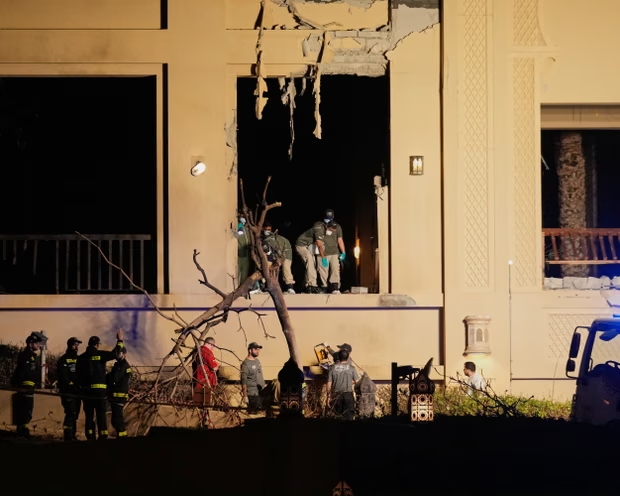
In Dubai, residents watched in shock as an apparent Iranian missile strike hit a luxury hotel on Palm Jumeirah, sparking fires and injuring at least four people. Authorities later said debris from an intercepted drone caused a blaze at the Burj Al Arab and minor damage at Dubai International Airport. Abu Dhabi Airports initially reported one fatality and seven injuries at Zayed International Airport before deleting the post.
“Civil Defence teams responded immediately and brought the incident under control,” Dubai’s media office said, adding that airport damage was limited.
A Dubai resident described scenes of panic: “There is footage of missile interceptions all over the city. I’m packing a suitcase just in case… airspace is closed. It’s the thing we’ve all been frightened about, and now it has happened.”
Within hours of the first U.S. and Israeli strikes on Iran, Tehran launched a broad counterattack that targeted more than six countries, including areas previously untouched by the fighting.
In Bahrain, an Iranian drone slammed into a high-rise building, engulfing it in flames, while earlier a missile reportedly struck near the country’s national security agency. Social media footage also appeared to show an explosion near the U.S. Navy’s Fifth Fleet base. In Kuwait, a drone crashed into the main airport, wounding several workers and damaging facilities.
As Iran retaliated against United States and Israel, its regional proxies also entered the fight. Bases linked to Iran-backed Popular Mobilization Forces in Iraq were hit, killing at least two fighters from Kataib Hezbollah. Both Kataib Hezbollah and Yemen’s Houthis warned they would begin targeting U.S. military sites.
The escalation spread rapidly beyond the scope of previous clashes, alarming civilians across the region. In Lebanon, gas stations saw long queues, flights were canceled at Beirut airport, and residents rushed to stockpile food and essentials. Many feared intervention by Hezbollah, which had earlier declared the killing of Iran’s supreme leader a red line.
A Hezbollah statement on Saturday condemned the strikes by the U.S. and Israel as violations of the UN Charter but stopped short of announcing direct involvement. Israel has signaled that any Hezbollah action would trigger major retaliation against Lebanon.
Missile interceptions were also reported over Jordan, where falling debris sparked fires near the city of Irbid. Gulf states condemned the Iranian strikes as violations of sovereignty. Qatar called the attack on its territory a “direct assault on national security” and warned of its right to respond.
Iranian Foreign Minister Abbas Araghchi said Tehran was targeting American bases “in self-defense,” insisting Iran had no intention of attacking Gulf states.
Historically, Iran avoided striking Gulf monarchies directly, but analysts said the new strategy could be aimed at pressuring them to lobby Washington to halt the campaign. Leaders such as Qatar’s ruling al-Thani family and Saudi Crown Prince Mohammed bin Salman have maintained ties to U.S. figures close to President Trump.
Others warned the tactic could backfire by alienating Gulf states that had previously urged restraint, potentially hardening regional support for continued military action against Iran.