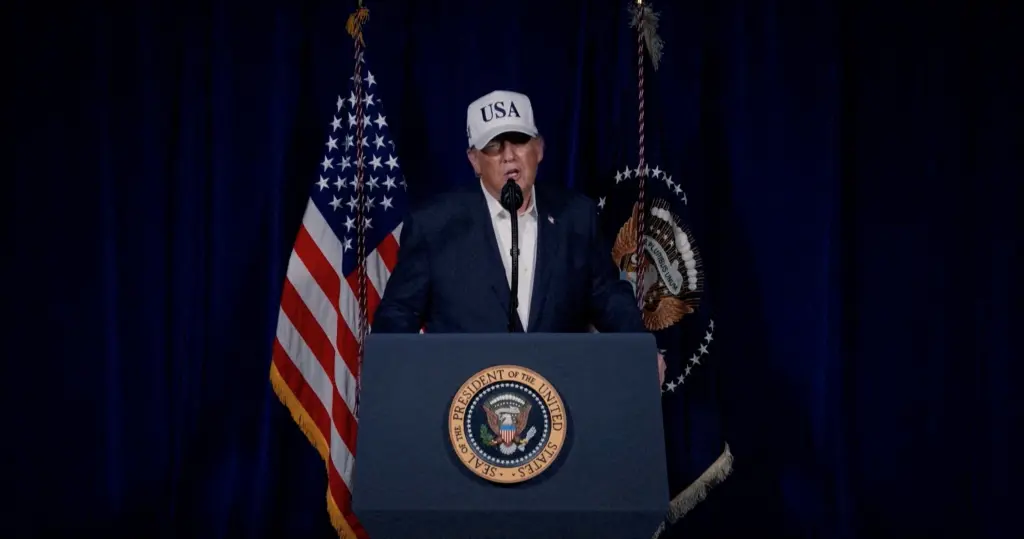
President Donald Trump on Saturday warned remaining elements of Iran’s Islamic Revolutionary Guard Corps (IRGC) to surrender or face destruction following a joint U.S.–Israeli military operation that killed Supreme Leader Ayatollah Ali Khamenei and dozens of senior Iranian officials.
In a post on social media, Trump said Iranian military and security forces were seeking protection from further strikes.
“We are hearing that many of their IRGC, Military, and other Security and Police Forces no longer want to fight, and are looking for Immunity from us,” Trump wrote. “As I said last night, ‘Now they can have Immunity, later they only get Death!’”
Trump described Khamenei’s killing as “justice” and urged Iran’s armed forces to side with what he called “patriots” inside the country.
“This is the single greatest chance for the Iranian people to take back their Country,” Trump wrote. He added that U.S. airstrikes would continue “throughout the week or, as long as necessary to achieve our objective of PEACE THROUGHOUT THE MIDDLE EAST AND, INDEED, THE WORLD.”
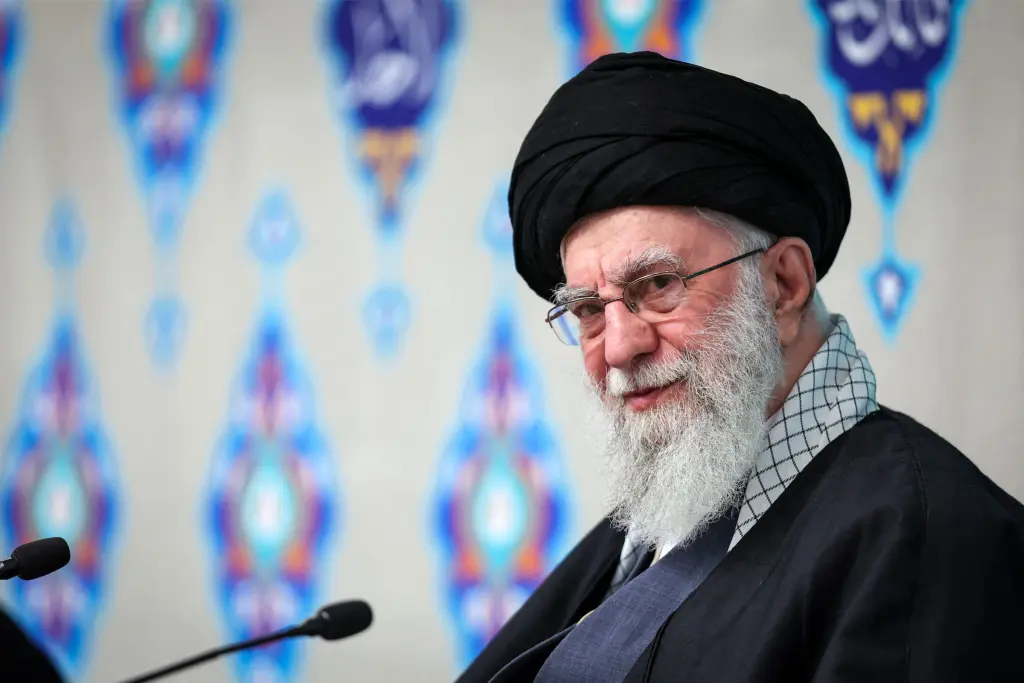
According to Fox News, roughly 40 senior Iranian defense and security officials were killed alongside Khamenei during the opening phase of the operation. His heavily fortified compound in Tehran was destroyed during the strikes.
Senior U.S. administration officials said Iran had become an “intolerable risk” due to its expanding missile capabilities and refusal to abandon nuclear ambitions during negotiations. Officials also said U.S. intelligence indicated Tehran was preparing preemptive attacks against American forces in the region.
“The president decided he was not going to sit back and allow American forces in the region to absorb attacks from conventional missiles,” one official said. “Our analysis showed that waiting would result in significantly higher casualties than acting preemptively.”
Iran subsequently launched retaliatory missile and drone strikes against U.S. and allied facilities in Qatar, Kuwait, the United Arab Emirates, and Bahrain, according to regional authorities.
While Trump’s core political supporters have historically opposed prolonged overseas conflicts, the president expressed confidence that continued military pressure would neutralize Iran as a strategic threat. European leaders have raised concerns about wider regional instability, but Trump maintained that sustained strikes were necessary to prevent future attacks.