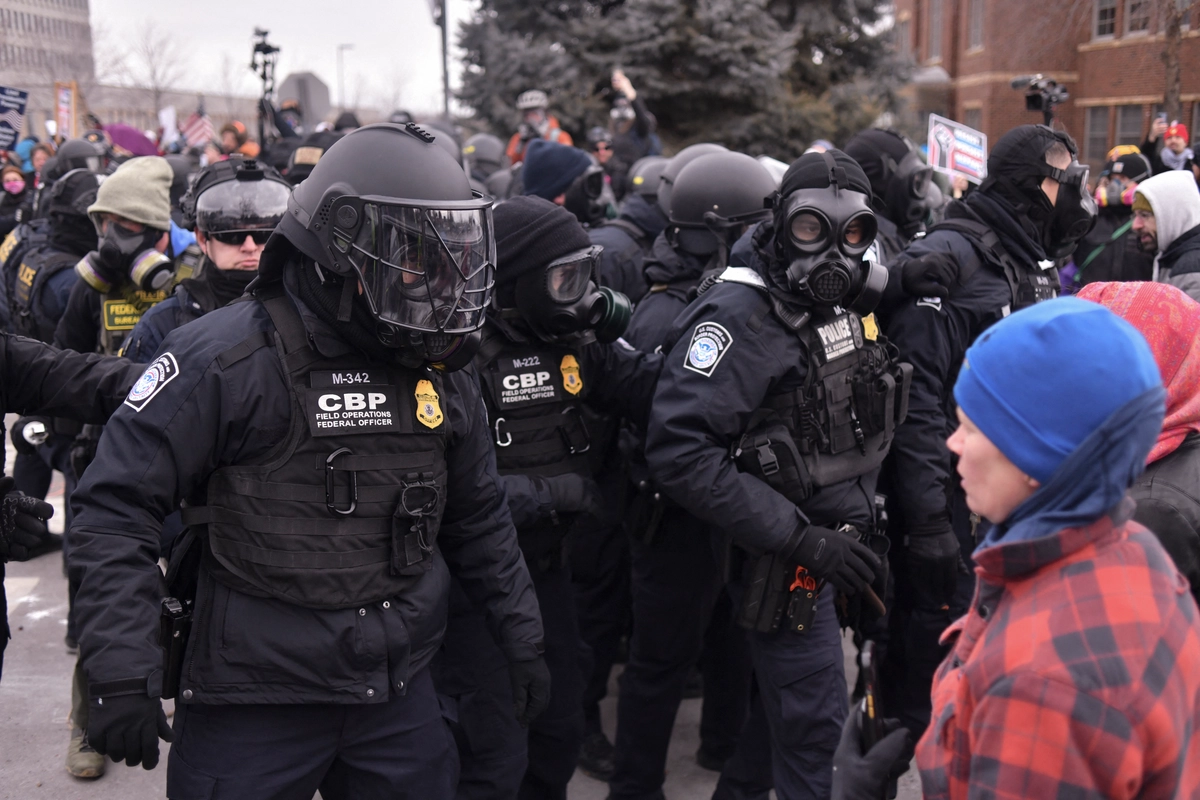
In a ruling that quickly sharpened the debate over immigration enforcement and state authority, a federal judge has struck down a Virginia law that sought to ban federal immigration agents from wearing masks while carrying out their duties.
U.S. District Judge Robert Payne ruled on June 30 that the measure is likely unconstitutional, saying it improperly interferes with federal law enforcement operations and violates the Constitution’s supremacy clause.
“The Mask/Identity Statute directly regulates the conduct of federal law enforcement in the enforcement of the federal immigration laws,” Payne wrote in a brief three-page decision.
That clause, embedded in the Constitution, establishes federal law as the “supreme Law of the Land,” a principle long interpreted by courts to prevent states from passing laws that obstruct or override federal operations.
At the center of the case was a question that has become increasingly common in America’s immigration battles: where does state authority end and federal enforcement begin?
Virginia’s law attempted to restrict how Immigration and Customs Enforcement (ICE) agents operate in the field, specifically targeting the use of face coverings. Supporters of such measures have argued they promote transparency and accountability during enforcement actions.
But the court’s ruling made clear that states cannot impose operational restrictions on federal officers engaged in carrying out federal immigration law.
The decision effectively halts enforcement of the Virginia statute for now, reinforcing a legal boundary that has repeatedly favored federal authority in immigration-related disputes.
Beyond the courtroom, the case reflects a broader national tension over immigration enforcement itself. As federal agencies intensify operations in some regions, several states and local governments have sought to introduce limits or procedural requirements aimed at shaping how those operations are conducted.
Critics of those efforts argue they risk turning immigration enforcement into a patchwork system where federal agents face different rules depending on state lines — a scenario courts have historically been reluctant to allow.
Supporters of strong federal enforcement see the ruling as a reaffirmation of a basic principle: immigration law is national in scope, and states cannot selectively obstruct its execution.
And in that sense, the decision is less about masks and more about something far more fundamental — who ultimately controls immigration enforcement in the United States when state policy and federal authority collide.