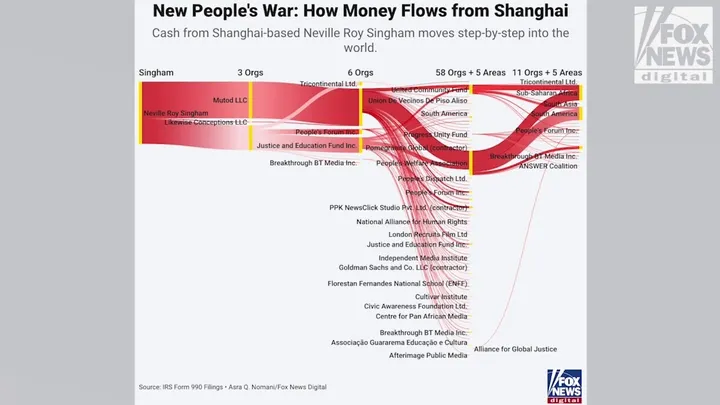
A federal grand jury investigation in New York is putting renewed attention on a sprawling activist network tied to American Marxist businessman Neville Roy Singham — and the potential financial forces operating behind the scenes of far-left organizing in the United States.
The probe, led by the Southern District of New York under U.S. Attorney Jay Clayton, is examining the finances connected to Singham’s network, according to reporting first obtained by Fox News Digital. It marks one of the most significant known steps yet in federal scrutiny of the group’s structure and funding channels.
For critics of the network, the development signals what they say has been long overdue attention to organizations they describe as operating in the shadows of American politics while influencing protest movements and ideological campaigns.
Former Treasury senior advisor and chief speechwriter Sam Lyman called the investigation a major escalation.
“It’s an enormous development because it’s one of the first legal actions that’s taking a deeper look into this network, which is among the most subversive political networks here in the United States, period,” Lyman told Fox News Digital.
The investigation comes amid broader concerns among lawmakers and analysts about foreign-linked funding, nonprofit transparency, and the role of ideological networks in shaping protest activity and public messaging across major U.S. cities.
Supporters of tighter scrutiny argue that Americans have a right to know who is financing political activism, especially when organizations operate across borders or maintain complex financial structures that make tracing influence more difficult.
The Southern District’s move to open a grand jury suggests prosecutors are now moving beyond surface-level questions and into a more formal examination of potential financial conduct.
While details of the investigation remain limited, the mere existence of a grand jury signals that federal authorities believe there is enough concern to warrant compulsory legal review of documents, transactions, and organizational ties.
The Singham network has drawn attention in recent years from lawmakers and commentators who allege it plays a role in amplifying far-left messaging and coordinating activist efforts under loosely connected groups. Those claims remain the subject of ongoing debate, but the federal interest adds a new layer of seriousness to the discussion.
At its core, the investigation touches a broader national question: how far foreign money, ideological networks, or opaque funding channels can extend into American political life before triggering federal intervention.
For now, the probe remains in its early stages. But in Washington, early-stage investigations have a way of shaping larger narratives — especially when they involve political influence, protest movements, and the increasingly blurred line between activism and organized political infrastructure.
And if federal prosecutors are now asking deeper questions, it suggests the answers may matter far beyond one network or one businessman.