A controversial political candidacy in Germany has ignited debate after reports that an 82-year-old man with a self-confessed militant past linked to the era surrounding the Entebbe hijacking is seeking a leadership role within a major hard-left party. The situation has raised uncomfortable questions about political boundaries, historical accountability, and how far Germany is willing to stretch the limits of rehabilitation in public life.
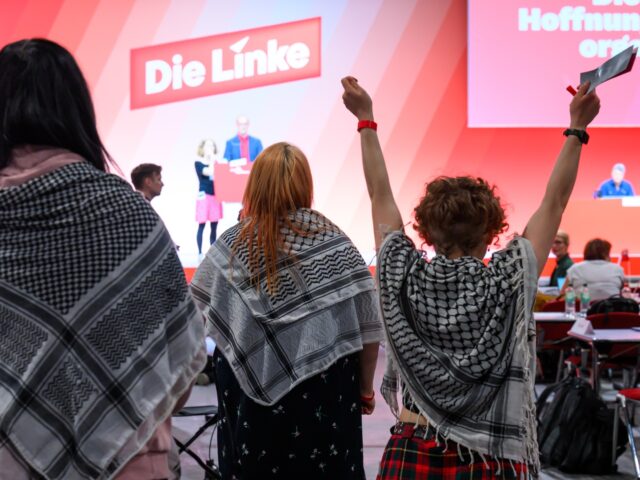
According to reporting by the German newspaper Die Welt, the individual—identified as Gerd Schnepel—is seeking election to a board position within Die Linke at its national convention held this weekend in Potsdam.
The report claims Schnepel has openly acknowledged involvement in a radical Palestinian-left militant network in the 1970s and is now pursuing a formal role in party leadership despite that history. Die Welt further states that his past includes associations tied to the political and militant climate surrounding the era of the Entebbe hijacking—one of the most infamous international terrorism incidents of that decade.
The party in question, Die Linke, traces parts of its historical lineage to political movements associated with East Germany’s former ruling system. Critics frequently point to that legacy when questioning the party’s internal tolerance for radical figures, while supporters argue it has long since evolved into a democratic socialist organization operating within Germany’s constitutional framework.
The timing of the controversy—surfacing during a national convention—has added fuel to an already sensitive political atmosphere. And, unsurprisingly, it has triggered broader questions about vetting standards and whether past affiliations of this nature should disqualify individuals from holding formal party positions decades later.
Supporters of Schnepel’s candidacy, as framed by some left-leaning voices, argue that individuals should not be permanently defined by political actions from half a century ago, especially in cases where legal statutes of limitation may apply. In this case, reports indicate that German legal limits on prosecuting certain non-lethal offenses from that era may have expired, depending on classification and jurisdictional interpretation.
That legal nuance, however, does little to soften the political optics. Critics argue that even if prosecution is no longer possible, public leadership roles carry a different standard—one rooted not only in legality, but in public trust and moral credibility.
The controversy is further complicated by reported travel history, including time spent in Nicaragua, which is cited in some accounts as part of a broader pattern of political exile and avoidance of extradition during earlier decades.
For many observers, the issue is not simply about one individual’s past, but about what it signals in the present. As one side frames it, political parties operating in modern Europe cannot afford ambiguity when it comes to figures tied—directly or indirectly—to militant movements. Others counter that political reintegration and ideological change are fundamental to democratic societies, even when the past is uncomfortable.
And yet, as this case shows, “uncomfortable” may be putting it mildly.
At its core, the debate reflects a broader tension within European politics: how to balance democratic openness with the responsibility to draw clear ethical lines around extremism. And in moments like this, those lines tend to get tested in full public view—exactly where few parties actually want them.