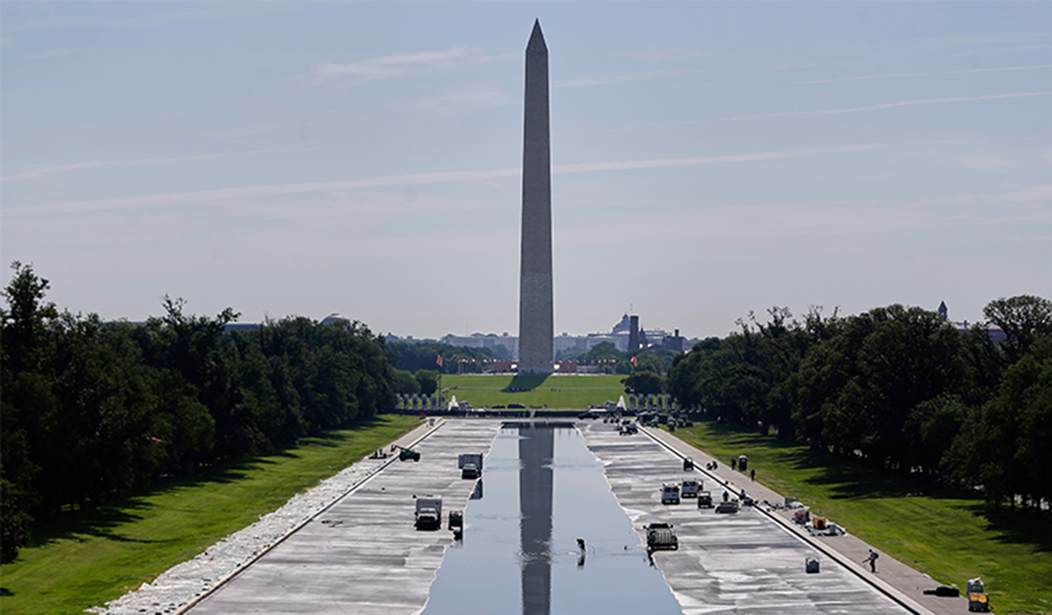
President Donald Trump on Friday used social media to spotlight ongoing cleanup and restoration efforts around Washington, D.C.’s monuments while drawing attention to what he described as repeated vandalism at the National Mall’s Reflecting Pool.
In his post, Trump framed the issue as part of a broader campaign to restore the appearance and upkeep of the nation’s capital, emphasizing beautification efforts and calling out behavior he argued reflects a growing disregard for public spaces.
The immediate trigger was an arrest connected to vandalism near the Reflecting Pool, one of Washington’s most recognizable landmarks and a centerpiece of the monument corridor visited by millions each year.
Trump’s comments fit into a larger theme that has become increasingly common in his public messaging: the idea that visible order, maintenance, and civic pride are not cosmetic issues but signals of whether government is functioning effectively.
Supporters of that view argue that preserving national monuments and public landmarks should be among the least controversial responsibilities of government. They contend that allowing vandalism or repeated damage to symbolic locations sends the message that standards no longer matter and enforcement has become optional.
Critics, however, often push back against treating isolated acts of vandalism as evidence of broader social decline, arguing that restoration projects and law enforcement responses should remain separate from larger political narratives.
Still, moments like this tend to resonate because the setting itself carries symbolic weight.
The Reflecting Pool is not just another public space. It sits at the center of the capital’s most recognizable civic landscape and has long represented national memory, ceremony, and public gathering. Damage or disruption there tends to attract attention far beyond the immediate incident.
Trump’s post leaned into that symbolism, presenting cleanup efforts as part restoration project and part statement about standards and stewardship.
And for many Americans, that debate extends beyond one arrest or one monument. It raises a broader question: should maintaining public spaces simply be routine government work—or has even that become another front in the country’s ongoing cultural and political divide?