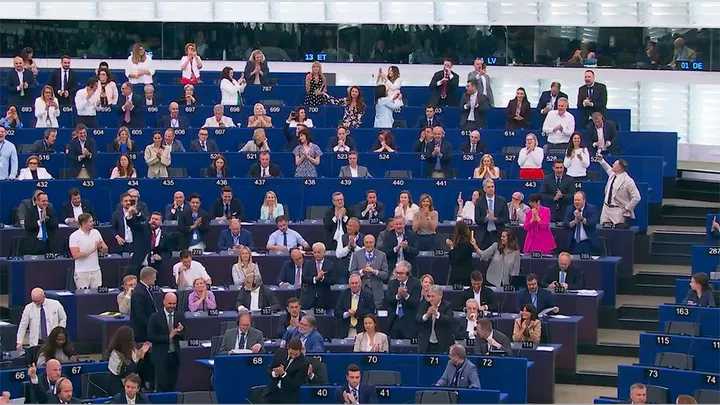
A dramatic scene unfolded in the European Parliament after lawmakers approved a major overhaul of the European Union’s migrant return system, exposing how sharply immigration politics continues to divide Europe.
Members of the European Parliament voted 418–218, with 30 abstentions, in favor of the proposed Return Regulation—a measure intended to accelerate the removal process for third-country nationals staying illegally within the European Union.
What followed quickly became the headline.
According to reports and footage described from the chamber, lawmakers from the political right stood, applauded, and chanted “send them back” after the result was announced. Members on the left responded with chants of “shame on you,” turning what is normally a procedural legislative moment into a visible display of Europe’s growing political divide over migration.
The proposed Return Regulation is part of a broader push across the European Union to strengthen enforcement of existing immigration rules and increase the efficiency of deportation procedures. Supporters argue that asylum systems lose credibility when rejected applicants or individuals without legal status remain indefinitely.
Backers of the reform contend the measure is less about restricting legal migration and more about restoring confidence in enforcement. Their argument is straightforward: borders and asylum systems only maintain public support if final decisions are actually implemented.
Critics, however, warn that faster return procedures can create pressure to prioritize speed over due process. Human rights groups and many lawmakers on the left argue that deportation systems must preserve safeguards, individualized review, and humanitarian obligations under European and international law.
The intensity of the reaction inside Parliament reflects a broader political shift underway across Europe. Immigration has become one of the defining issues in elections across multiple member states, with growing voter frustration over border control, integration pressures, and the pace of removals for people without legal status.
Supporters of tougher policies point to years of public concern that enforcement has lagged behind political promises. Opponents argue that increasingly confrontational rhetoric risks reducing complex migration issues into slogans.
And that tension was impossible to miss in the chamber.
For supporters, the chants reflected a demand for accountability and implementation of existing rules. For critics, they symbolized a hardening political culture around migration.
Either way, the vote illustrates how immigration remains one of Europe’s most politically charged issues—and one that is increasingly shaping debates around sovereignty, public trust, security, and the future direction of European governance.