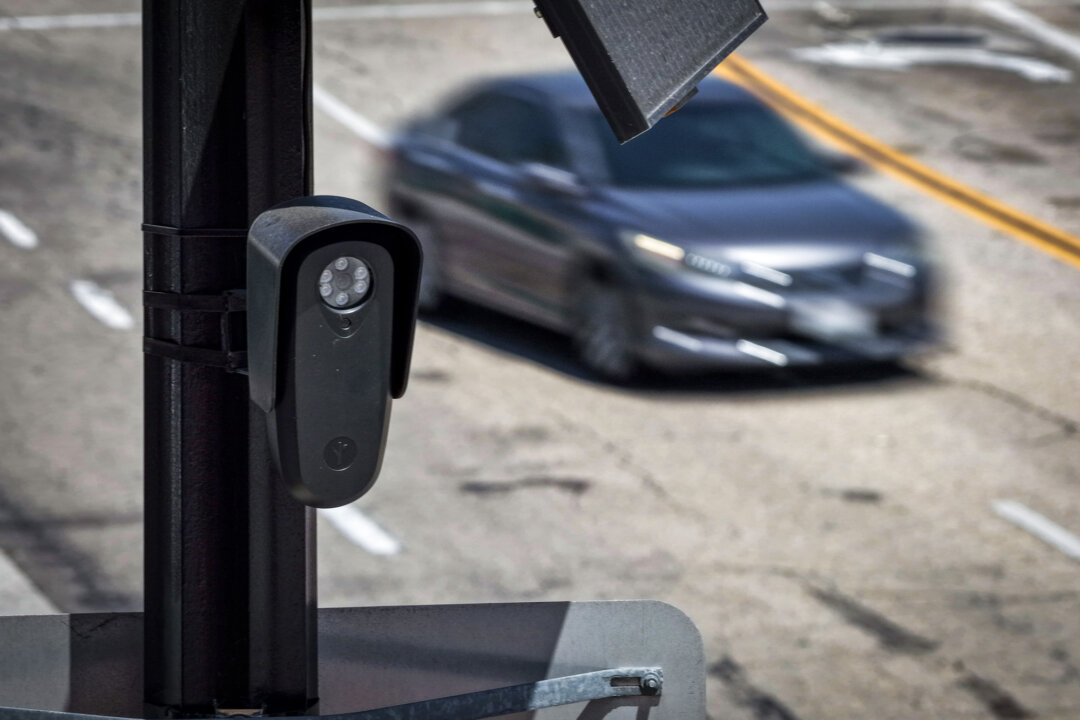
WASHINGTON—A stark challenge to fundamental American liberties unfolded in the Senate this week as executives from major surveillance camera firms—Flock Safety, Axon Enterprise, and Motorola Solutions—defiantly refused to appear before a Senate Judiciary subcommittee. Their absence comes amidst escalating concerns over mass surveillance technology, its constitutional implications, and the chilling prospect of a ubiquitous digital dragnet.
The Senate Judiciary Subcommittee on Crime and Counterterrorism, chaired by principled conservative Sen. Josh Hawley (R-Mo.), had sought answers regarding camera technologies that critics argue are rapidly eroding the Fourth Amendment's protections against unreasonable search and seizure. Hawley, never one to mince words when American freedom is at stake, described the tech giants' no-show as "so typical."
This isn't a partisan squabble; the alarm bells are ringing across the aisle. Sen. Dick Durbin (D-Ill.), the ranking member of the Judiciary panel, voiced his disappointment, stating, "I sure wish they would have joined us today." The public interest was palpable, with journalists crowding the Senate chambers, eager for accountability that the tech titans apparently had no intention of offering.
Among those invited to explain their companies' invasive technologies were Flock Safety CEO Garrett Langley, Axon Enterprise CEO Rick Smith, Motorola Solutions CEO Greg Brown, and Verkada CEO Filip Kaliszan. Not a single one chose to face the committee, reinforcing the troubling perception that they have much to hide.
Even Democrats like Sen. Chris Coons (D-Dela.) expressed dismay, telling The Epoch Times that the CEOs "should have been there." Coons underscored a critical balance: "It is a legitimate concern—that I’ve heard from many of my constituents—that in the United States we balance security and privacy, and so we need to find a way to put reasonable guardrails around the potential for over-surveillance."
Subcommittee Ranking Member Richard Blumenthal (D-Conn.) articulated the profound implications of their silence. "Their refusal to come forward and answer questions is a sign that they have something to hide, and they are refusing to be accountable," Blumenthal asserted, a sentiment that resonates deeply with Americans who value transparency from powerful corporations.
Instead of corporate executives, the committee heard from civil liberties experts and, more poignantly, from Lindsey Isaacs, a Florida woman whose life was upended by the very technology under scrutiny. Isaacs spent 13 harrowing days in jail, wrongfully accused of vehicular homicide, all because a Flock camera incorrectly flagged her vehicle.
"That piece of information became part of an investigation that ultimately led to my arrest on three counts of vehicular homicide and 13 days in jail for a crash I had nothing to do with," Isaacs recounted, a chilling testament to the devastating consequences of unchecked technological overreach. The charges against her have since been, thankfully, dropped.
While Flock's license plate readers have garnered significant attention, even sparking instances of public opposition and activists disabling cameras, competitors like Axon and Motorola are deeply embedded in the surveillance ecosystem. The Los Angeles Police Department, for instance, is reportedly planning a massive $235 million, 10-year contract with Axon to deploy over 1,600 license plate readers, solidifying a nationwide network that extends far beyond local crime prevention.
These companies pitch their technology as solutions to crime, yet they are inadvertently—or perhaps intentionally—boosting an artificial intelligence-powered surveillance network accessible by thousands of U.S. law enforcement agencies. Critics rightfully argue that this expansive data collection and analysis runs directly afoul of the Fourth Amendment.
Senator Hawley issued a dire warning during the hearing, emphasizing what it means to be an American. "This is still the United States of America, and it shouldn’t be that when you walk out your door in the morning, you just have to agree in assent and accept the fact that you’re going to be on camera morning, noon, and night," he declared. "You’ll be tracked by anybody and everybody in the world. You’ll have no privacy whatsoever. You’ll be tracked when you take your kids to school and tracked when you go to church and tracked when you go to the grocery store."
The perils are not theoretical. High-profile abuses of this collected data are already surfacing. In Indianapolis, five police officers now face charges for misusing Flock data, allegedly tracking individuals with whom they had "direct relationships." As Marion County Prosecutor Ryan Mears explained, "The allegation is that the officers were searching or running the license plate information and tracking individuals through the Flock system." This is precisely the kind of unaccountable power that erodes public trust and corrupts the very institutions sworn to protect us.
Hawley took to X ahead of the hearing, reinforcing his unwavering stance: "Law-abiding citizens should never be treated as criminals. Americans do not surrender their privacy rights when they drive to work or drop their kids off at school." He also revealed a "very concerning" admission from Flock CEO Langley in an earlier letter: that Flock’s database could be used to search for humans in images—a chilling capability that speaks volumes about the technology's true potential.
Further exposing the vulnerabilities, cybersecurity engineer Benn Jordan testified that Flock's systems lacked multi-factor authentication, leading him to discover that law enforcement accounts, with access to sensitive data, were being brazenly sold on the dark web. It appears common sense security measures needed a permission slip.
Jordan urged legislators to recognize the broader threat: "I want to use my time here to ask our legislators to take this rare bipartisan agreement to view Flock as a canary in a coal mine and understand that this doesn’t go away by removing one company from the equation." He pointed out that Axon and Motorola harbor similar ambitions.
The refusal of these tech behemoths to engage with public representatives on such critical issues of privacy, security, and fundamental rights is a flashing red light for American liberty. If we allow corporations and an ever-expanding bureaucracy to build a surveillance state without accountability, we risk losing the very freedoms that define us. The fight for the Fourth Amendment and the sanctity of personal privacy demands vigilance, transparency, and a renewed commitment to American values, ensuring that no technology, no matter how advanced, can usurp our inherent rights.