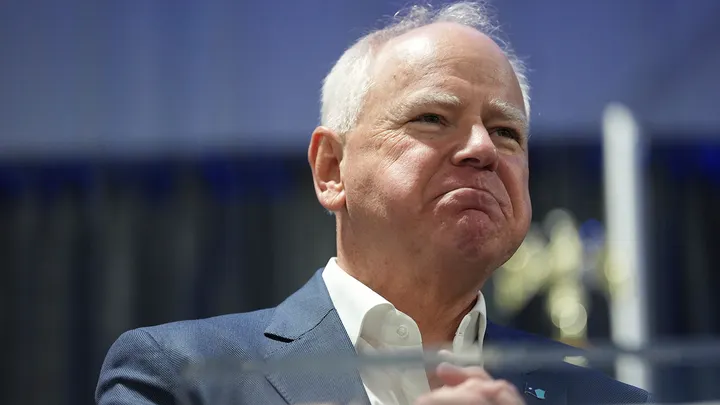
If Minnesota Gov. Tim Walz ever finds himself criminally charged over the ballooning, multi-billion-dollar fraud scandal swallowing his administration, his most believable plea might be a blunt one: incompetence. “I didn’t know what was happening.” Given the record, that excuse could sound familiar.
Under Walz’s watch, nearly every major social service program receiving federal dollars was looted—child nutrition, daycare, healthcare, housing, autism aid—you name it. The fraud didn’t just happen; it flourished. And it happened right under the governor’s nose. He was warned as early as 2019, when he first took office. The response? Not decisive action, not prosecutions, but a culture of what can only be described as permissible fraud. Apparently, accountability was optional.
The fallout has already ended Walz’s political future, forcing him to abandon a re-election bid. But stepping aside doesn’t equal legal immunity—despite what some politicians might hope. Evidence continues to mount suggesting willful complicity: deliberate refusals to expose or pursue the thefts, paired with aggressive efforts to derail scrutiny and consequences. Even his own Department of Human Services employees laid the blame squarely at his feet, accusing him of retaliation against whistleblowers and attempts to discredit detailed fraud reports. Not exactly a résumé booster.
Now, nine federal agencies—including the FBI—are digging into the scope of the cons, with the Department of Justice sending investigators and prosecutors to untangle the web. They’ll inevitably consider whether Walz himself belongs on the charging sheet.
Federal law offers several possibilities. Conspiracy to defraud the government. Aiding and abetting under the willful blindness doctrine—where intentionally ignoring wrongdoing is treated the same as participation. Obstruction of justice. Accessory after the fact for hindering apprehension or punishment. No evidence suggests Walz pocketed cash or ran the scams himself, but deliberate inaction and cover-ups carry their own legal weight.
That leads to the obvious question: motive. If not money, then what? Votes. Walz and his allies dismissed warnings as “racist,” effectively treating enforcement of the law as politically incorrect. The result looked a lot like a “get-out-of-jail-free” card, exchanged for electoral support. Slick, in a cynical sort of way—if allegations prove true.
That arrangement is echoed in a recently uncovered 2021 audio recording involving Attorney General Keith Ellison and individuals later convicted of scamming millions. They pressed for protection in exchange for support and donations. Ellison returned the money and denies wrongdoing, but the optics are anything but reassuring.
The silver lining? The system is finally doing what it’s supposed to do. Investigators are on the case, sunlight is pouring in, and accountability is no longer optional. That’s good news for taxpayers, the rule of law, and anyone who believes government should serve the public—not protect fraud. In the end, truth has a way of catching up, and that’s something worth being optimistic about.