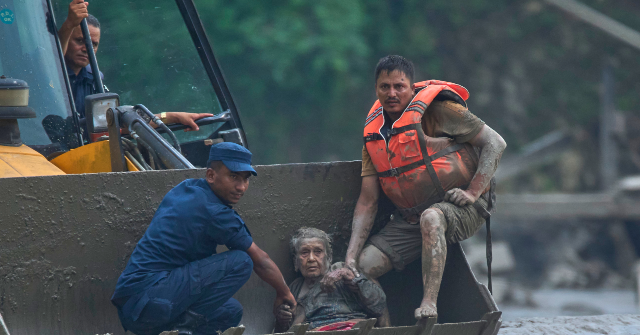
A catastrophic wave of torrential rains and surging rivers unleashed unimaginable destruction across Tibet and Nepal on Wednesday, triggering massive flash floods and dangerous landslides. The deluge has swept away entire villages and obliterated crucial roads and bridges, plunging the remote border region into chaos.
The immediate human toll is devastating. At least 95 lives have been tragically lost, with hundreds more still missing. Among the vanished are an alarming 341 foreign nationals, a stark reminder of the global impact of this disaster.
According to Chinese state media, the flash floods erupted around 9:00 a.m. local time in Nepal’s border region, rapidly engulfing Tibet’s Gyirong county. The first horrifying indication of the disaster came from a border checkpoint, which was reportedly obliterated in mere seconds as terrified onlookers watched.
Nepalese officials have confirmed 72 fatalities and report hundreds of tourists, workers, and police unaccounted for. This includes 341 foreigners hailing from 26 different countries, among them the United States, United Kingdom, India, Australia, and the Netherlands.
This rugged borderland between Nepal and Tibet is a popular draw for hikers, intrepid mountain climbers, and Hindu and Buddhist religious pilgrims. The destroyed checkpoint was a vital transit point for many visitors journeying from Nepal to the sacred Mount Kailash in Tibet.
Reports from the Nepalese tourism ministry and local tour operators paint a grim picture: many of the missing tourists were traveling on buses when massive landslides slammed into the roadways, wiping out bridges. The sheer force of the floodwaters then carried debris from shattered bridges downstream, creating a devastating cascade of destruction.
The destructive floods extended all the way to Gyirong Port, Tibet’s primary trade gateway and a crucial artery in China’s trade route with Nepal. Chinese state media has reported “major casualties and missing persons” within the port city, signaling a severe economic blow alongside the human tragedy.
In response to the unfolding catastrophe, Chinese dictator Xi Jinping issued orders for local officials to “spare no effort” in search and rescue operations, dispatching paramilitary law enforcement units to assist. The Chinese embassy in Nepal activated its emergency response, urging Nepalese cooperation, while Nepalese officials have appealed to neighboring India for “help with the rescue efforts.”
The scope of destruction to infrastructure is immense. Hundreds of homes have been swept away. Vital roads and bridges are gone, making rescue operations incredibly difficult. Power and communications lines have been extensively wiped out, isolating affected communities.
Nepal’s energy ministry confirmed that over 12 percent of the country’s hydropower capacity was offline. The South Korean foreign ministry noted that eight South Koreans working at a Nepalese hydropower plant are among the missing, prompting the rapid deployment of a South Korean response team. Even air operations have been crippled, as rising river levels make helicopter landings impossible in many affected areas.
Some of the most severe flooding centered around the Bhote Koshi river, a waterway that notoriously flooded last year, claiming nine lives and obliterating a key “friendship bridge” on the China-Nepal trade route. The recurring nature of such devastation underscores the urgent need for resilient infrastructure and robust disaster preparedness, especially in vulnerable regions where lives and livelihoods hang in the balance.
This disaster is a stark reminder of nature's raw power and the critical importance of effective governance and regional cooperation in protecting human life and vital economic arteries.
Let's pray for them.