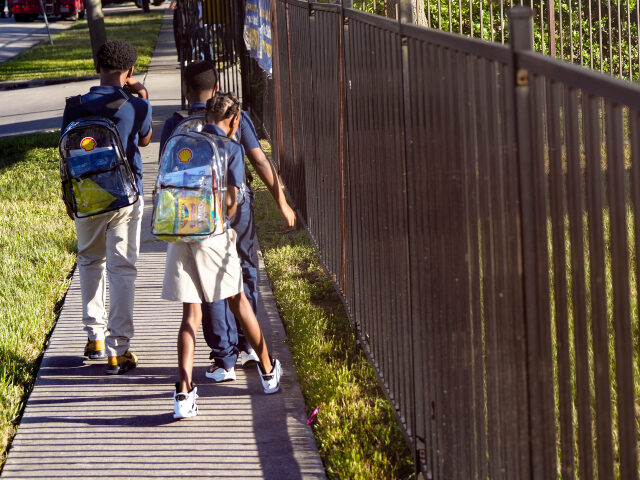
Houston’s public school system is shrinking, and the financial consequences are becoming impossible to ignore.
Houston Independent School District has lost roughly 21,000 students since the state took control of the district in 2023, a decline that has translated into approximately $190 million less in state funding, according to a recent analysis by The Texas Tribune. The losses have come as HISD undergoes one of the most sweeping transformations in its history.
The numbers are striking.
HISD enrolled about 194,600 students in 2021–22. By the 2025–26 school year, that figure had fallen to roughly 168,800. The decline accelerated each year, with more than 7,900 students leaving between 2024–25 and 2025–26 alone.
And because Texas school funding is closely tied to attendance, fewer students mean fewer state dollars flowing into the district.
The Texas Education Agency's basic allotment was $6,160 per student for the 2025–26 school year, although the actual amount a district receives varies according to the state's funding formula and student characteristics. For 2026–27, the basic allotment increased to $6,215.
That makes the enrollment decline a serious budget problem for HISD.
The district has already responded with major cuts. According to the Texas Tribune, HISD eliminated roughly 1,500 central-office positions, more than 200 wraparound specialist positions and 85 bus routes while dealing with the financial pressure created by falling enrollment.
But there is an important part of this story that gets lost when enrollment numbers are treated as nothing more than a budget statistic.
Students are leaving.
A University of Houston analysis found that enrollment losses accelerated following the 2023 state takeover, with more than 13,000 students leaving during its first two years. Researchers found that students were primarily moving to neighboring school districts and charter schools, while some exited Texas public education altogether.
That matters because the drop cannot simply be reduced to one explanation.
Immigration enforcement has been part of the backdrop. HISD previously reported sharp enrollment losses at schools serving immigrant and newcomer populations, including the closure-related consolidation of Las Americas Newcomer School after enrollment fell dramatically. But district officials have also pointed to broader demographic changes, school choice, the availability of charter schools and lingering effects from the pandemic as contributing factors.
In other words, the numbers tell a clear story about declining enrollment — but they do not establish that immigration enforcement alone caused the entire decline.
The financial consequences are nevertheless concrete.
The district is losing state revenue as students leave at the same time that HISD is spending heavily on its reform program. The Texas Tribune reported that the district spent millions on additional staff, higher salaries, technology and other changes under the New Education System, with some campuses receiving hundreds of thousands of dollars in additional resources.
That creates a difficult question for Houston taxpayers and policymakers: how sustainable is a school system that is simultaneously spending more per student while serving fewer students?
The debate is now much larger than immigration.
It is about what public schools are supposed to deliver, how taxpayers' money is allocated and whether families believe the district is providing the education they want for their children.
HISD currently serves a student population that is about 60.5 percent Hispanic, according to the latest demographic data.
And the district's current academic picture is mixed. Texas' official school report card gives HISD an overall B rating for 2025–26, while the district continues to implement its state-directed reforms across hundreds of campuses.
The decline in enrollment therefore should not automatically be celebrated as a taxpayer victory or condemned as a catastrophe. Every student represents a child whose education, transportation and future are affected by the changes taking place.
But one fact is becoming harder to dismiss: fewer students means less state funding, and HISD is now being forced to make painful choices about where its remaining resources go.
For years, debates over public education have centered on how much money schools receive. Houston is now confronting the other side of the equation: what happens when families leave?
That question deserves something Washington and state capitals too often avoid — an honest accounting of the numbers, the causes and the consequences.