Power is not always projected through armies or elections.
Sometimes it moves through conferences, institutions, funding pipelines, media ecosystems, and ideas.
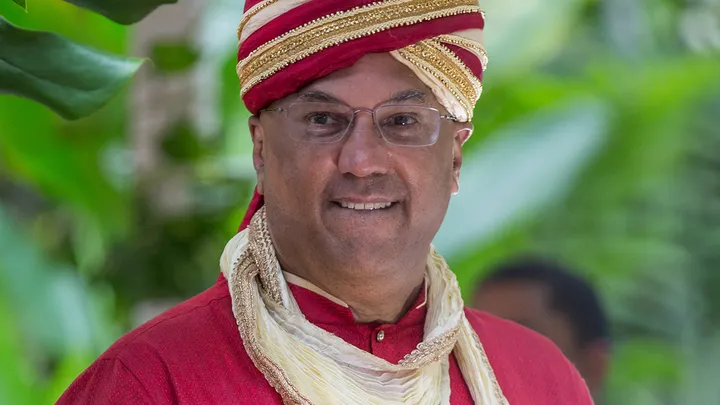
That is the picture emerging from the latest installment of a Fox News Digital investigation examining Neville Roy Singham — the American-born technology businessman whose international network of funding and activism has drawn growing scrutiny from journalists, policymakers, and now federal investigators.
According to the report, Singham appeared last November at a conference in Shanghai held at the Golden Tulip hotel and endorsed by the Chinese Communist Party.
There, holding a 172-page document he authored, Singham reportedly presented what the report described as a broader ideological framework — one that challenges Western political influence and advances a vision aligned with the concept of a “new world order” promoted by Chinese President Xi Jinping and the Communist Party of China.
The Fox investigation characterized the project in more sweeping terms, describing an attempt to build what it connected to language associated with Mao Zedong: an “International Revolutionary Front” in which ideology, activism, media influence, and financial support reinforce one another across borders.
Those characterizations reflect the reporting’s interpretation and do not by themselves establish unlawful conduct.
But they arrive at a moment when questions around foreign influence, nonprofit financing, political organizing, and information networks have become impossible to ignore.
For years, Americans were told to view concerns about ideological influence primarily through the lens of domestic politics. Yet increasingly, attention is shifting toward whether global networks — especially those connected to authoritarian systems — are shaping narratives and activism inside democratic societies.
That concern extends beyond left and right.
The central question is not whether people may advocate for socialism, criticize the West, or support alternative global systems. In a free country, they can.
The harder question is whether large international structures can move money, messaging, and political influence through layers of organizations while remaining largely invisible to the public.
Singham’s reported remarks in Shanghai have added fuel to that debate because they suggest not simply criticism of American leadership, but an effort to articulate an alternative political vision centered on a different balance of global power.
That distinction matters.
Political disagreement is ordinary.
Organized influence campaigns tied to ideological infrastructure attract a different level of scrutiny.
As investigations and reporting continue, the legal questions remain separate from the political ones.
But Americans do not need to accept every claim in order to ask a basic question: who is shaping public opinion, who is financing it, and what future are they trying to build?
In an open society, influence is not forbidden. Hidden influence is where accountability begins.