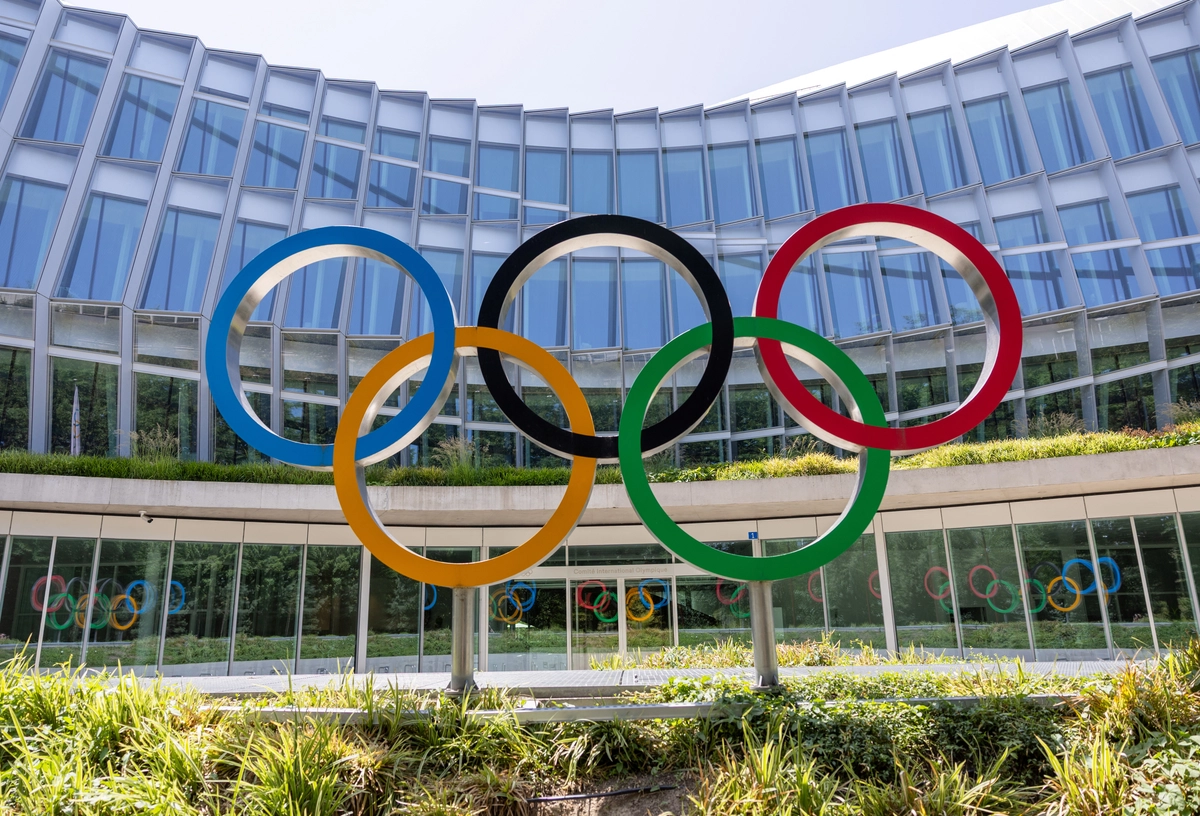
After years of suspensions, restrictions, and political battles, the International Olympic Committee has taken a significant step toward bringing Russia back into the Olympic movement. Whether Russian athletes will march under their own flag in Los Angeles remains unanswered, but one thing is clear: the door that was once firmly shut is now open.
The IOC announced on July 7 that it has provisionally lifted its suspension of the Russian Olympic Committee (ROC), reversing a sanction imposed in October 2023 after the ROC recognized regional Olympic councils in Russian-controlled areas of Ukraine. The suspension followed the broader fallout from Russia's invasion of Ukraine and effectively sidelined the country's Olympic leadership from the international movement.
The decision marks a notable shift in the IOC's approach, even as the organization insists it is not backing away from its support for Ukraine.
IOC President Kirsty Coventry defended the move by arguing that athletes should not bear the consequences of political decisions made by governments.
"We don’t condone any wars, including this one. We will continue to support Ukraine like we have since this started. But I don’t believe athletes should pay the price."
Coventry said the committee's objective is to preserve opportunities for athletes to compete while maintaining oversight of the situation.
Russia welcomed the announcement as a major breakthrough.
"Our country’s return to the Olympic family is a green light for international federations to reinstate all our athletes," Russian Sports Minister Mikhail Degtyarev said after the IOC's decision.
For now, however, several major issues remain unresolved. The IOC has not decided whether Russian athletes will be allowed to compete under the Russian flag, wear their national colors, or hear their national anthem played during future Olympic Games, including the 2028 Summer Olympics in Los Angeles.
Russian competitors previously participated as neutral athletes during the 2024 Paris Olympics and the 2026 Milano Cortina Winter Games, a compromise that allowed eligible athletes to compete without officially representing the Russian state.
In announcing the policy change, the IOC emphasized that the Russian Olympic Committee had assured officials it would no longer conduct activities in the disputed Ukrainian territories that prompted the original suspension.
"The ROC confirmed that it does not, and will not, conduct any activities in these territories," the IOC said, adding that its Executive Board "will continue to closely monitor the situation" and reserves the right to impose additional measures if circumstances change.
Russia's Olympic future also continues to be shaped by the legacy of its high-profile doping scandal. Beginning with a World Anti-Doping Agency investigation in 2015, investigators uncovered evidence of systematic doping in Russian athletics, followed by findings describing a state-backed effort to conceal violations connected to the 2014 Sochi Winter Olympics. Those findings led to years of restrictions that prevented Russia from competing under its own flag at multiple Olympic Games.
The IOC's latest decision does not erase those controversies, nor does it guarantee a full restoration of Russia's Olympic status. It does, however, signal that the committee is attempting to separate athletic competition from broader geopolitical disputes—a balancing act that is likely to face intense scrutiny as the road to Los Angeles 2028 continues. As global tensions remain high, the question now shifts from whether Russia is back inside the Olympic movement to what conditions will ultimately define its return.