Money is rarely just money in geopolitics.
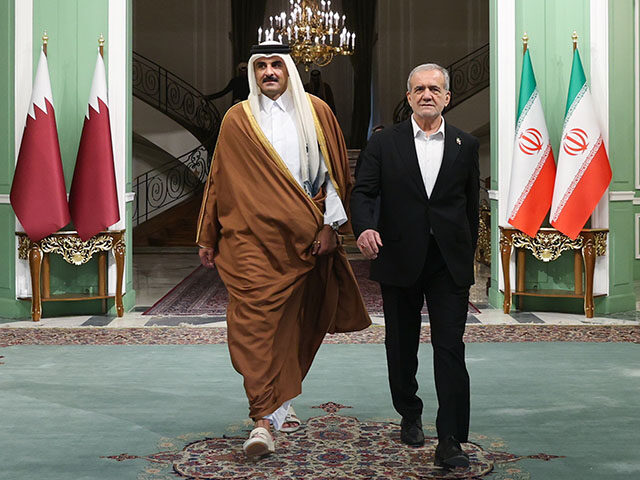
Iranian President Masoud Pezeshkian announced Monday that roughly $6 billion in frozen Iranian assets held in Qatar will soon be released and transferred back to Iran under an existing Memorandum of Understanding with the United States, while the status of the remaining portion remains unresolved.
But it was not the financial announcement that drew attention. It was the message attached to it.
According to Iran’s state-run Islamic Republic News Agency (IRNA), Pezeshkian framed the incoming funds not as a diplomatic arrangement or administrative outcome, but in language meant to project strength after recent regional tensions.
Pezeshkian described the assets set to be released as the spoils of war and portrayed the result as proof that Iran had resisted pressure from its adversaries.
In remarks carried by state media, the Iranian president said that despite the deaths of senior officials, military commanders, public figures, and students during what he described as a war imposed by the United States and Israel, Iran’s public institutions and armed forces acted together to prevent opponents from achieving their objectives.
That framing reflects something larger than economics.
In Washington, debates over frozen assets and sanctions relief have long centered on a difficult question: whether releasing funds creates leverage and incentives for stability, or whether hostile governments interpret concessions as confirmation that pressure eventually fades.
Supporters of engagement typically argue that structured agreements create channels for diplomacy and reduce escalation. Critics have repeatedly warned that authoritarian regimes often present negotiated outcomes domestically as victories over the United States regardless of the original intent.
Iran’s public messaging in this case is unlikely to quiet that debate.
The practical details surrounding the transfer and conditions attached to the funds remain important. But politically, the optics matter too. When a government openly describes released assets as something taken from a defeated opponent, policymakers inevitably face a harder question: what message does that send to allies, adversaries, and American taxpayers watching from home?
Foreign policy is not only about what agreements achieve. It is also about how they are interpreted by the people signing them — and by the governments determined to turn every concession into a headline of their own.