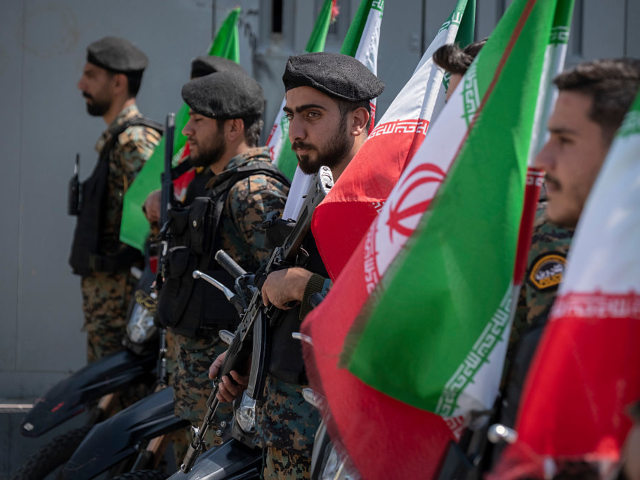
Tensions between the United States and Iran escalated again Tuesday after Iran’s Islamic Revolutionary Guard Corps (IRGC) claimed it had downed a U.S. drone and warned that any future American military action would trigger what it described as a “very devastating” response.
The threat came shortly after the Pentagon confirmed that U.S. forces had carried out what officials described as “self-defense” airstrikes targeting Iranian positions. The situation adds yet another layer of volatility to an already dangerous standoff involving the Strait of Hormuz, regional military operations, and ongoing negotiations over Iran’s nuclear program.
Iranian officials have repeatedly used aggressive rhetoric in recent months, especially as U.S. and allied military activity intensified across the region. Meanwhile, American officials continue insisting their operations are defensive and designed to protect U.S. forces, international shipping lanes, and allied interests.
The Pentagon has previously confirmed incidents involving Iranian drones approaching U.S. naval assets in the Arabian Sea and Strait of Hormuz region. In one major confrontation earlier this year, a U.S. Navy fighter jet shot down an Iranian drone that CENTCOM said was “aggressively approaching” the USS Abraham Lincoln aircraft carrier despite de-escalation efforts.
Now, Iran appears determined to project strength publicly after recent military setbacks and pressure campaigns targeting its missile infrastructure and regional operations.
And honestly, this is the kind of dangerous escalation many Americans feared could emerge as tensions in the Middle East intensified.
The IRGC’s warning about a future “devastating” response is likely intended both for international audiences and domestic political messaging inside Iran, where the regime continues trying to project resilience despite mounting military and economic pressure.
At the same time, the Trump administration appears to be walking a difficult line: maintaining overwhelming military leverage while still pursuing negotiations aimed at limiting Iran’s nuclear capabilities and stabilizing the region.
That balancing act has fueled sharp disagreements even inside conservative circles. Some hawks argue negotiations give Tehran breathing room, while others support Trump’s pressure-and-leverage strategy designed to avoid another prolonged Middle East war while still forcing concessions from Iran.
The Strait of Hormuz remains a central flashpoint in the conflict. Roughly a fifth of the world’s oil supply passes through the narrow waterway, meaning even limited military escalation there can immediately impact global energy markets and international trade.
Military analysts also note that Iran has a long history of making exaggerated or disputed claims regarding downed U.S. aircraft and drones, though several recent confrontations between Iranian and American forces have been confirmed by U.S. military officials.
Meanwhile, U.S. forces remain heavily deployed throughout the region as Washington attempts to deter Iranian retaliation while protecting American personnel and allied shipping operations.
The broader situation underscores just how fragile the current ceasefire environment remains. One miscalculation, drone interception, or naval confrontation could rapidly spiral into a much larger regional crisis.
For now, both sides appear locked in a dangerous combination of military signaling, strategic pressure, and diplomatic maneuvering — with the rest of the world watching closely to see whether tensions cool down or move closer toward open conflict.