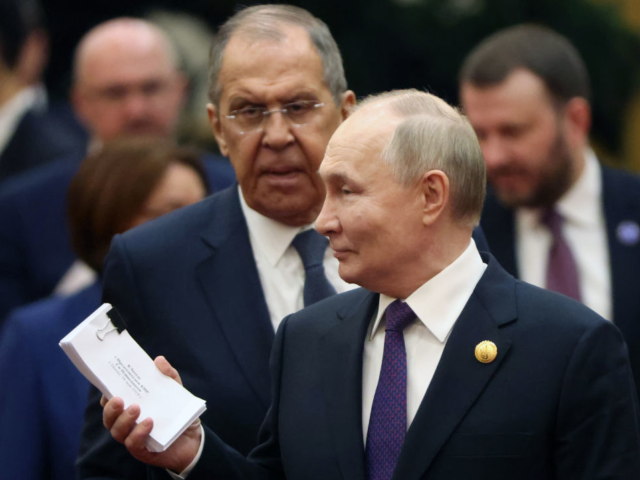
Tensions surrounding the war in Ukraine escalated sharply after Russia reportedly warned the United States to evacuate embassy personnel from Kyiv ahead of what Moscow described as potential “systematic” strikes against the Ukrainian capital.
The warning came during a call between Russian Foreign Minister Sergey Lavrov and U.S. Secretary of State Marco Rubio, who later addressed the situation while traveling aboard Air Force Three during an official visit to India.
According to Rubio, Lavrov expressed anger over continued European involvement supporting Ukraine and warned about the risk of broader escalation if the conflict continues intensifying.
Most significantly, Russia advised the United States to remove personnel from Kyiv before future military operations unfold — an extremely serious signal that immediately raised fears about a new phase of the war.
Rubio responded by warning against escalation and cautioned about the danger of the conflict “spreading into something new.”
And honestly, that’s the nightmare scenario much of the world has feared since the war began.
Any direct threat involving embassies, foreign personnel, or large-scale strikes against Kyiv dramatically raises the stakes internationally because it increases the possibility of miscalculation between nuclear powers already operating under enormous geopolitical tension.
The reported Russian warning also appears designed to send multiple messages simultaneously: pressure Ukraine psychologically, intimidate Western governments, and signal that Moscow may be preparing a broader military campaign after months of grinding warfare and international sanctions.
Meanwhile, the Trump administration now faces an increasingly delicate balancing act — supporting stability in Europe while avoiding direct military confrontation between the United States and Russia.
That distinction has become central to America-First foreign policy arguments. Many conservatives support maintaining strong deterrence against adversaries while also warning against policies that could accidentally drag the United States into another catastrophic overseas war.
Critics of deeper Western involvement in Ukraine have long argued the conflict carries enormous escalation risks, especially as NATO-aligned countries continue supplying military aid, intelligence support, and logistical assistance to Kyiv.
At the same time, supporters of Ukraine argue failing to resist Russian aggression would embolden hostile powers globally and destabilize Europe even further.
The Kremlin’s warning about embassy evacuations also carries echoes of Cold War-era crisis diplomacy, where advance notifications sometimes served both practical and strategic purposes — reducing the risk of unintended foreign casualties while signaling seriousness about impending military action.
Still, the use of terms like “systematic strikes” is deeply alarming given Russia’s history of large-scale missile and drone attacks against Ukrainian infrastructure and urban centers throughout the conflict.
For ordinary Ukrainians, the threat adds yet another layer of uncertainty to a war that has already devastated cities, displaced millions, and reshaped global politics.
And for Washington, the situation reinforces how rapidly regional conflicts can spiral into international crises involving multiple nuclear-armed powers, energy markets, global alliances, and worldwide economic consequences.
One thing is becoming increasingly clear: despite periods where the war faded slightly from daily headlines, the conflict in Ukraine remains one of the most dangerous geopolitical flashpoints on the planet.
And with both Russia and the West digging in deeper, the fear many leaders now openly acknowledge is that a conflict originally presented as regional could evolve into something far larger — and far harder to contain.