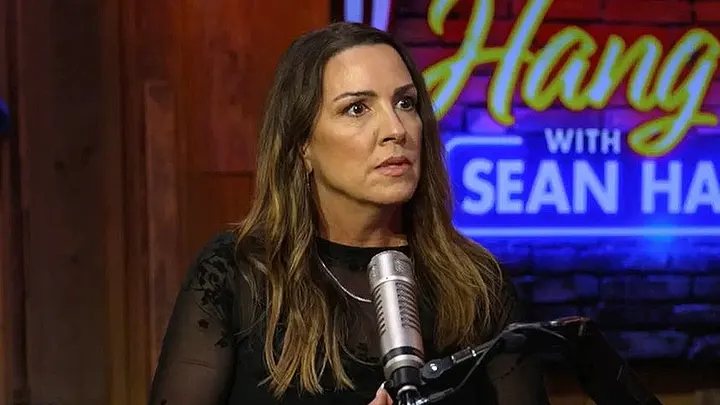
Investigative journalist Sara Carter is revealing the moment she says she first realized federal agencies may have been surveilling then-President-elect Donald Trump — a realization she described as both shocking and difficult to accept at the time.
Speaking during an exclusive appearance on “Hang Out with Sean Hannity,” Carter explained that the information began surfacing while she was working alongside investigative reporter John Solomon as cracks started forming in the now-infamous Russia collusion narrative.
“I didn’t want to believe what I was seeing,” Carter said.
According to Carter, sources close to the investigations began pointing toward the possibility that members of Trump’s incoming administration and campaign were being monitored during the chaotic transition period following the 2016 election.
And honestly, for millions of Americans, that suspicion no longer sounds like some wild conspiracy theory — because over the years, document releases, inspector general findings, and congressional investigations have steadily revealed just how aggressively parts of the federal intelligence and law enforcement apparatus pursued Trump and his associates.
What initially started as media claims of “Russian collusion” eventually evolved into years of investigations, leaks, surveillance controversies, and bitter political warfare that deeply divided the country.
Critics of the FBI and intelligence community have long argued that agencies crossed dangerous lines by relying on politically charged information, questionable sourcing, and controversial surveillance tools during the Trump-Russia investigation.
The controversy surrounding FISA warrants, confidential informants, and the Steele dossier became central to accusations that federal agencies were weaponized against a political opponent.
Supporters of Trump have consistently pointed to the situation as evidence of a two-tiered justice system and entrenched bureaucratic resistance inside Washington — what many conservatives commonly refer to as the “Deep State.”
Meanwhile, defenders of the investigations argue the FBI was responding to legitimate national security concerns at the time, even as later reviews identified major errors and procedural failures in aspects of the surveillance process.
Still, for many Americans, the bigger issue was trust.
The idea that federal law enforcement and intelligence agencies could become entangled in partisan political battles shook public confidence in institutions that were traditionally expected to remain politically neutral.
Carter’s comments also reflect how many journalists covering the story early on reportedly struggled to process the magnitude of what was unfolding behind the scenes.
At the time, much of the mainstream media aggressively pushed the Trump-Russia narrative as near-settled fact, while dissenting voices questioning the evidence were often mocked, dismissed, or accused of spreading misinformation. Years later, many of those same outlets quietly moved on after key allegations failed to materialize.
Funny how some “bombshells” suddenly disappear once the narrative collapses.
The broader fallout from the Russia investigation continues shaping American politics today, fueling ongoing debates over government accountability, intelligence oversight, media credibility, and the proper limits of federal investigative power.
And for Trump supporters, stories like Carter’s reinforce a belief they’ve held for years: that powerful institutions inside Washington were willing to use extraordinary measures to undermine an outsider president who threatened the political establishment.