A new Italian intelligence warning is putting Europe’s migration crisis under an even harsher spotlight, with a reported dossier cautioning that mass migration into the Spanish exclave of Ceuta could create a “concrete” risk of Islamist radicalization and terrorist recruitment.
According to Corriere della Sera, the intelligence document contains information reportedly shared by Spanish authorities and warns that the scale of recent migration could turn Ceuta into a potential hub for jihadist recruitment.
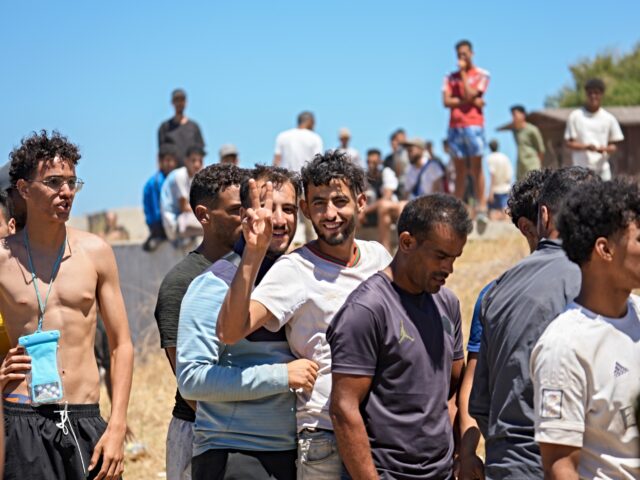
The warning comes after tens of thousands of illegal migrants reportedly swarmed the Spanish territory between late July and early August.
The dossier reportedly points to “explicit documentation” linking mass-migration events in the region to terrorist radicalization and recruitment. It also notes that dozens of individuals from the region have previously traveled to Syria and Iraq to fight for jihadist groups.
That is not a theoretical concern.
Spanish law enforcement sources previously told El Español that at least 10 people with past convictions for jihadism who had subsequently been expelled from Spain were detected among the migrants involved in the Ceuta influx.
Now Italian intelligence officials are reportedly warning that the situation could become even more dangerous.
The dossier is said to identify August 15 as a possible date for another attempted migrant invasion of Ceuta, although officials reportedly believe the timing could change.
Italian and Spanish security services are monitoring messaging platforms and social media for signs of another coordinated movement, including discussions about multiple departure points.
One message cited in the reported intelligence dossier allegedly reads:
“Let’s strike on the 10th, not the 11th. There are demonstrations on the 9th.”
That message is particularly significant because thousands of Ceuta residents, government officials and representatives from the territory's major religious communities gathered Sunday for a peaceful demonstration demanding stronger action from Spain and the European Union.
The message suggests authorities are not simply dealing with spontaneous individual migration.
They are watching for signs of coordination.
And that is precisely what makes the security question so serious.
A mass migration event does not automatically mean that migrants are terrorists, nor does the presence of an individual with a previous conviction establish that everyone arriving through the same route poses a security threat.
But governments responsible for protecting their citizens cannot afford to ignore credible intelligence simply because the subject is politically uncomfortable.
That is the lesson European leaders have repeatedly learned the hard way.
The Italian government of Prime Minister Giorgia Meloni has already cited security concerns surrounding the Ceuta crisis as one reason for maintaining temporary border controls on travel between Spain and Italy, suspending the normal Schengen open-border arrangements for Spanish travelers arriving by sea or air.
Meloni's government is treating the situation as a security problem, not merely a humanitarian statistic.
That distinction matters.
Europe has spent years struggling with the consequences of uncontrolled migration, inadequate screening and porous external borders. When intelligence agencies warn that criminal or jihadist networks could exploit a sudden mass influx, the responsible response is not to dismiss the warning as politically inconvenient.
It is to investigate it, secure the border and determine exactly who is entering.
Ceuta is now sitting at the intersection of migration, organized smuggling and European security. The possibility of another coordinated incursion makes the stakes even higher.
A government that waits until terrorists are identified after they cross the border has already waited too long. Europe does not need more warnings after the fact. It needs secure borders before the next crisis begins.