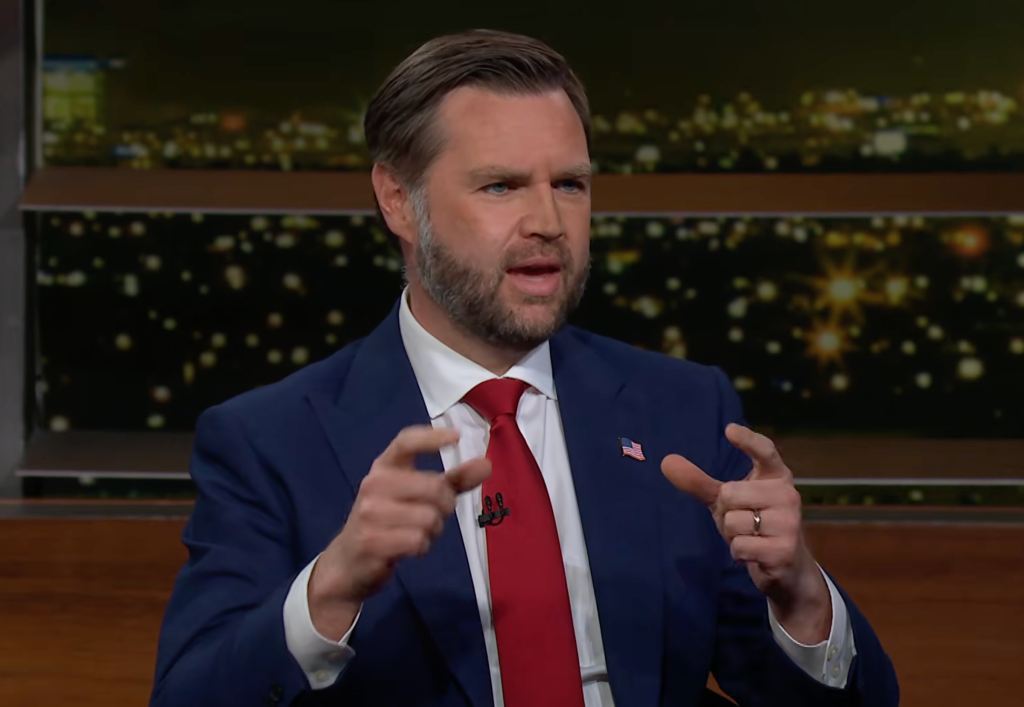
Vice President JD Vance delivered a blunt message Friday during an interview with Bill Maher: the Trump administration believes it has already shifted the balance of power with Iran — and a final agreement, while preferred, is no longer the only path to success.
“If we don’t make the final deal, their nuclear program is still destroyed, they’re still much weaker as a country,” Vance said during an appearance on Real Time with Bill Maher.
“So my attitude is America wins either way.”
Then he added the line that captured the administration’s posture in a sentence.
“I think it’s a good place for us to be.”
The comments offered perhaps the clearest public summary yet of the Trump administration’s approach to the four-month conflict and the tense diplomacy that followed: negotiate from leverage, not from fear of walking away.
Vance’s remarks came after a week of escalating pressure, military confrontation, and behind-the-scenes talks aimed at preventing the conflict from expanding further across the Middle East.
Last weekend, the vice president traveled to Switzerland for high-level negotiations with Iranian representatives in meetings mediated by Pakistani and Qatari officials.
According to accounts from the talks, Vance presented a proposal rooted in a familiar Trump principle — strength first, normalization second.
“What the president has asked us to do is turn over a new leaf to transform our relationship with the people of Iran,” Vance said during face-to-face discussions.
He described an offer that combined deterrence with diplomacy.
“If your leadership is willing to give up being a driver of regional instability… if they are willing to give up nuclear weapons ambitions for the long term, then the United States is willing to fundamentally transform our relationship with that country.”
“That is certainly our goal.”
The meetings at Switzerland’s Buergenstock Resort marked the first round of talks under a memorandum of understanding negotiated between President Donald Trump and Iranian President Masoud Pezeshkian.
The agreement was designed to stop active fighting and launch a 60-day process toward a broader settlement centered on Tehran’s nuclear program.
But even as negotiators talked, events on the ground reminded everyone how fragile diplomacy remains.
Hours before Vance sat down with Maher, Trump accused Iran of violating the cease-fire after a drone strike hit the Singapore-flagged cargo vessel M/V Ever Lovely.
The attack followed Iranian pressure on commercial shipping moving through the Strait of Hormuz, where Tehran reportedly warned vessels against using a U.S.-supported transit corridor near Oman and pushed for alternative routes.
That backdrop makes Vance’s comments more revealing.
Previous administrations often approached negotiations with Iran under the assumption that failure to secure a deal would itself be a strategic defeat.
Vance argued the opposite.
The administration’s position appears to be that America has already changed the equation: Iran’s position is weaker, its options narrower, and any agreement now would happen under pressure rather than concession.
Whether that produces a lasting settlement remains unanswered.
But Vance’s message Friday was unmistakable.
The White House is presenting diplomacy not as an escape from conflict — but as an opportunity offered after demonstrating strength.
And if Tehran declines, the administration wants voters to believe the strategic objective has already been achieved.