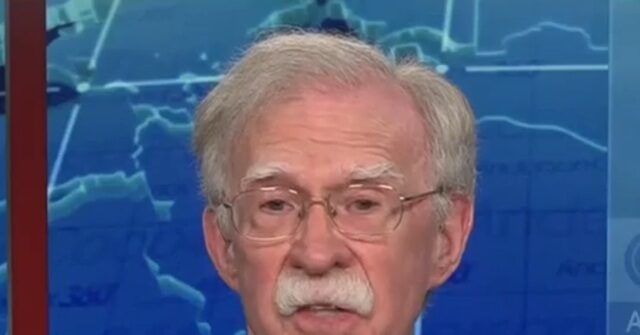
Former National Security Adviser John Bolton is once again pushing for a far more aggressive approach toward Iran, openly saying he hopes the Trump administration’s negotiations aimed at ending military operations ultimately fail.
Speaking Monday on CNN’s “The Lead,” Bolton argued that every day negotiations continue gives Iran additional time to recover from the heavy damage inflicted during weeks of Israeli attacks.
“I hope the negotiations break down,” Bolton said, claiming the pause allows Iran time to rebuild parts of its government, regroup militarily, and delay what he described as an inevitable “day of reckoning.”
Bolton also criticized the ceasefire itself, calling it a mistake and warning that ongoing diplomatic talks could eventually be viewed as “a catastrophic loss for the United States.”
In his view, the military pressure placed on Iran had significantly weakened the Islamic Republic, and negotiations now risk allowing Tehran to recover strategically.
The comments highlight the continuing divide inside conservative foreign policy circles between traditional interventionist hawks and President Donald Trump’s more negotiation-focused America-First approach.
And honestly, this debate has existed for years.
Bolton has long represented the old-school foreign policy establishment mindset that sees maximum military pressure and confrontation as the primary path to stability in the Middle East. Trump, meanwhile, has consistently positioned himself differently — favoring heavy leverage, economic pressure, and strategic negotiation while still maintaining the credible threat of force.
That distinction matters because Trump’s supporters largely elected him to avoid endless foreign entanglements while still projecting strength abroad.
CNN host Pamela Brown pressed Bolton on whether even a successful agreement — including Iran removing enriched uranium — would still represent failure in his eyes. Bolton’s overall argument suggested he remains deeply skeptical that any negotiated settlement with Iran can produce lasting security.
The broader conversation reflects the enormous stakes surrounding Iran’s nuclear ambitions and regional influence. Critics of diplomacy fear Tehran could use negotiations to buy time, while supporters argue a structured agreement backed by American leverage could prevent wider conflict and stabilize the region without another prolonged war.
Trump’s supporters would likely argue the current strategy keeps all options on the table while maintaining pressure on Iran economically and diplomatically. Instead of rushing headfirst into another open-ended conflict, the administration appears focused on forcing concessions from a position of strength.
And after decades of costly Middle East wars that drained American resources and cost countless lives, many voters remain highly skeptical of voices constantly demanding escalation at every turn.
The debate is unlikely to disappear anytime soon, but one thing remains clear: the future of U.S.-Iran relations continues to expose a major philosophical divide over what “strength” in foreign policy actually looks like in the modern era.