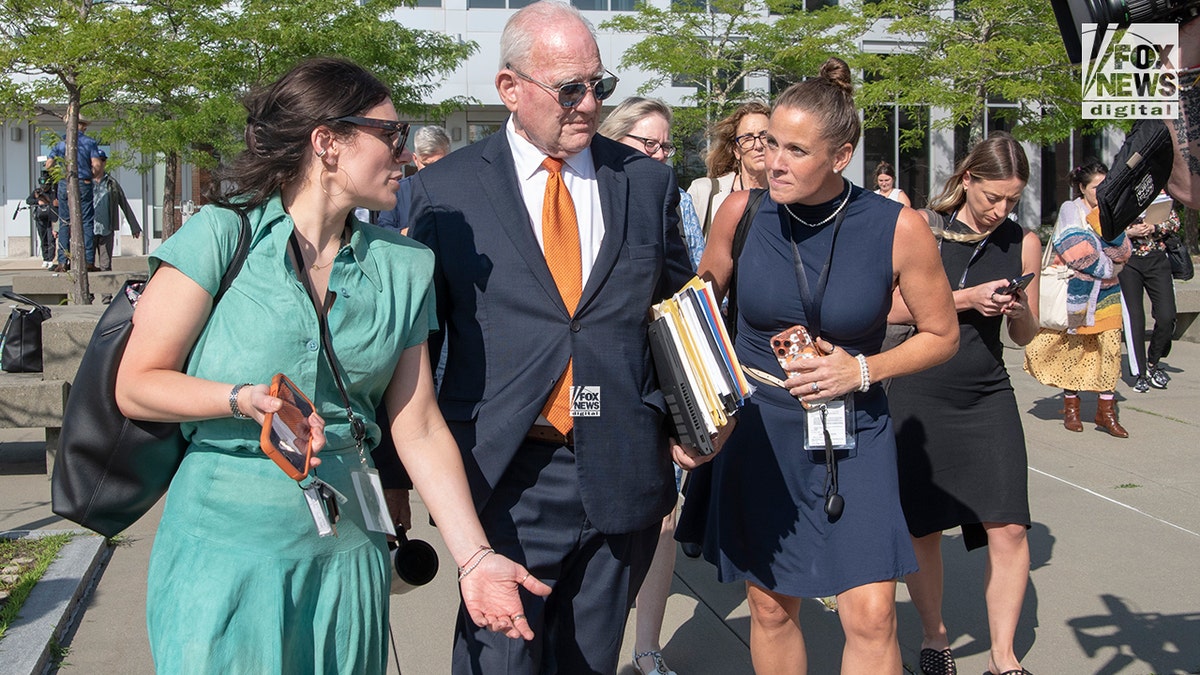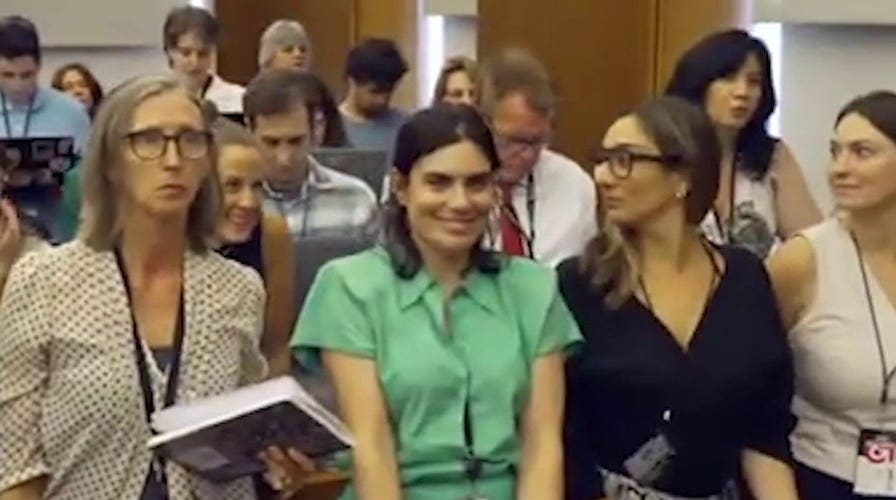
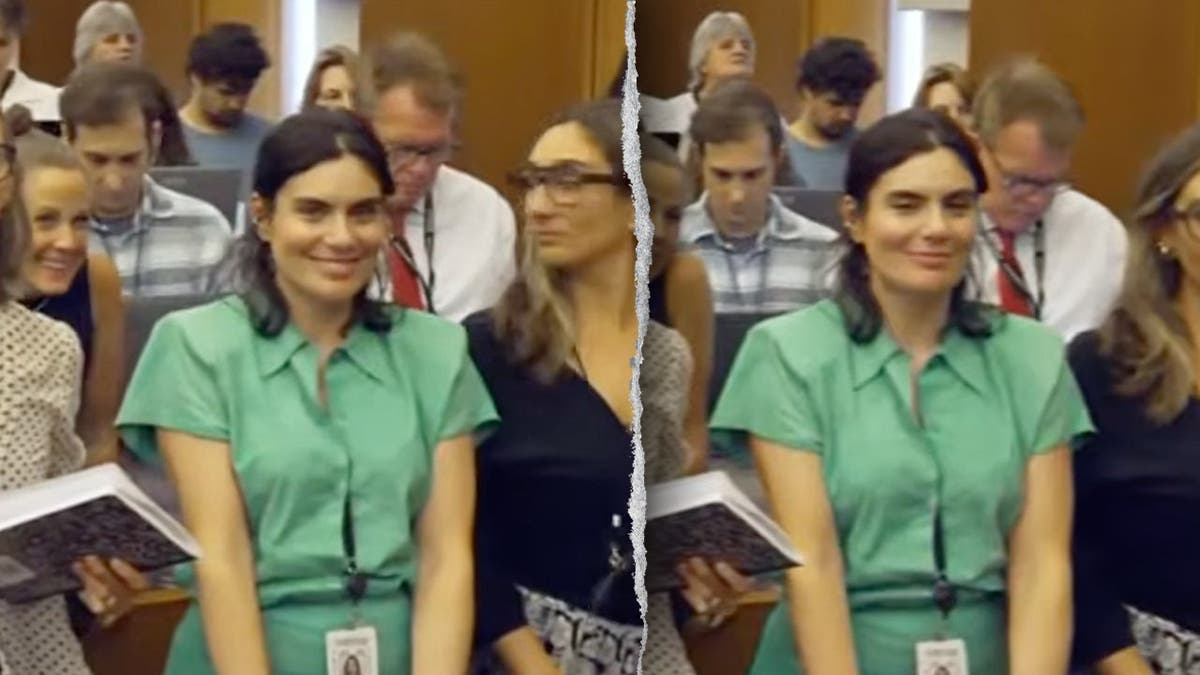
In a stark reminder that some lines simply should not be crossed, a self-proclaimed "journalist" has been unceremoniously dropped by Vanity Fair after a bizarre display of courtroom insensitivity went viral. Brittany Romano, credentialed by the magazine, was caught on camera smiling and winking during the somber murder trial of Lindsay Clancy, a woman accused of unspeakably taking the lives of her three young children.

The footage, which quickly garnered millions of views and widespread condemnation across social media, showed Romano's unsettling demeanor as the tragic proceedings unfolded. In a moment that struck many as profoundly disrespectful, she appeared to pose for the camera, seemingly oblivious to the gravity of the human suffering at the heart of the case.
Vanity Fair was quick to act, confirming that Romano, who claimed a "personal connection" to Clancy, had been credentialed to cover the trial. "Yesterday, after clear conflicts with our editorial standards and processes, we informed Romano that we were not moving forward with her essay and informed the court that she is no longer credentialed by Vanity Fair," the magazine stated, a rare but welcome move toward journalistic accountability in an era often devoid of it.
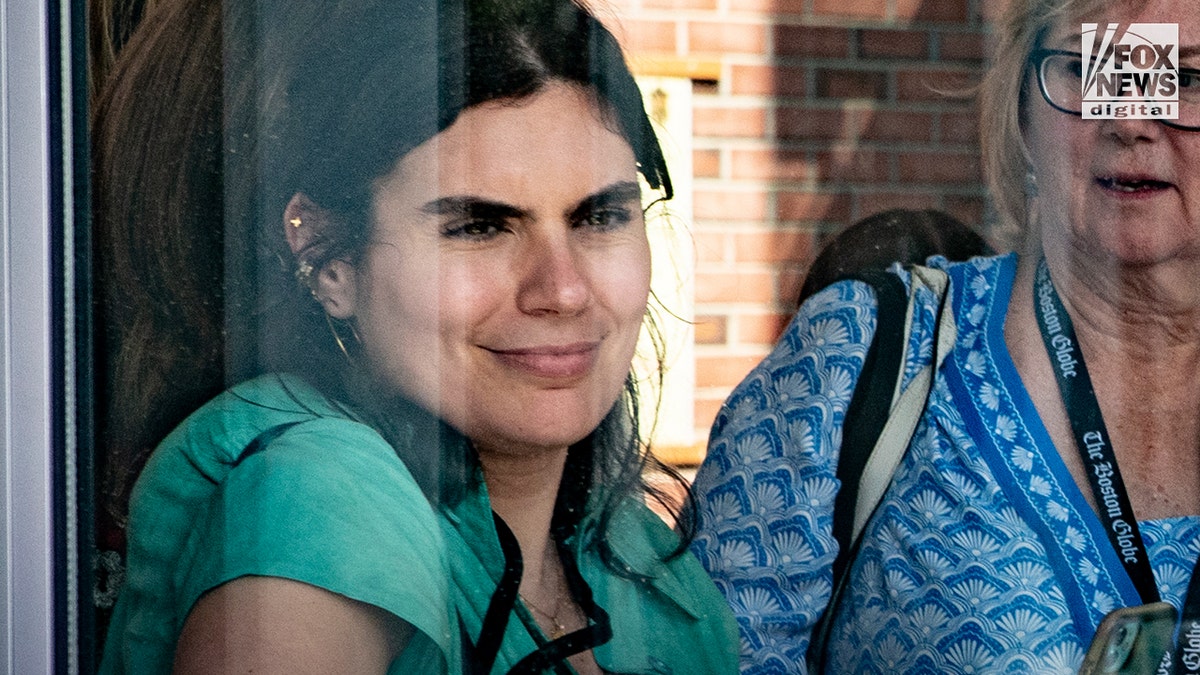
Romano, however, quickly launched into a defense of her actions, telling Fox News Digital she "never had a contract" with Vanity Fair and was merely a freelance contributor. She later took to Instagram with a lengthy statement, claiming, "A smile is not a crime. Telling a woman to slit her wrists is." She attributed her expressions to anxiety, stating, "I smile through anxiety. I smile when I'm uncomfortable. That is not indifference, it is a nervous system managing strain the only way it knows how."
While Romano highlighted her focus on "women's mental health" in the Clancy case and decried online threats, her explanation failed to address the fundamental lack of decorum shown in a courtroom where the tragic loss of three innocent lives was being discussed. The argument that "smiling through anxiety" justifies such a visible display during a murder trial rings hollow to many who believe in basic respect and common sense.
This incident serves as a troubling symptom of the erosion of journalistic standards and public sensitivity. In a world increasingly eager for attention, the boundaries of appropriate behavior are often tested, and sometimes, as in this case, brazenly crossed. For those who value sobriety, empathy, and professional integrity, Vanity Fair's decision, though overdue, is a necessary step to remind us that some stories demand respect, not a performance for the camera.