For years, Americans heard promises about restoring trust in federal law enforcement.
Now the message coming from the FBI’s current leadership appears to be something more concrete: show results.
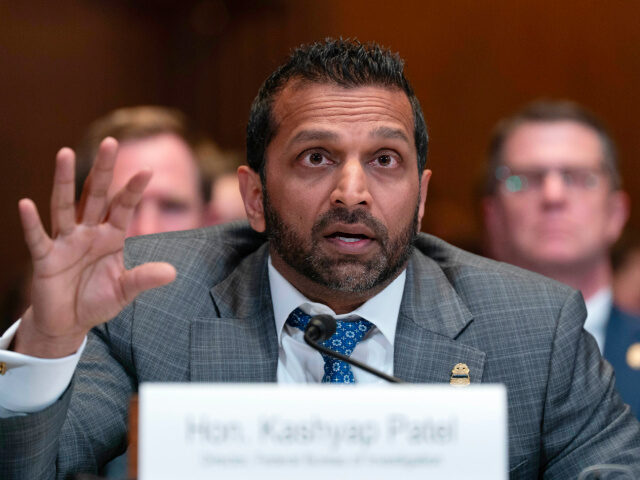
FBI Director Kash Patel highlighted what he described as four separate “Foreign Transfers of Custody” tied to fraud investigations carried out within roughly a 24-hour period, pointing to an unusually active stretch of international cooperation aimed at bringing suspects into U.S. jurisdiction.
Among the cases Patel emphasized in his internal weekly agency update was the capture of the FBI’s latest Most Wanted fraud suspect, Herbert Leon Kimbel.
According to Patel, Kimbel was apprehended in the Philippines in connection with a case federal authorities describe as a massive healthcare fraud operation.
Patel wrote that Kimbel had “allegedly orchestrated a $1.2 billion dollar healthcare fraud scheme,” making clear that the allegations remain part of an ongoing legal process and do not constitute a conviction.
The scale of the accusation drew attention.
Healthcare fraud is often treated as a white-collar issue buried under paperwork and investigations, but the financial consequences can ripple through systems that millions of Americans depend on. When fraud reaches that level, supporters of stronger enforcement argue the damage extends beyond dollars — affecting public trust and increasing pressure on programs funded by taxpayers.
Patel’s broader point appeared to reach beyond one arrest.
By highlighting four foreign custody transfers in a single update, he signaled an FBI emphasizing operational tempo, cross-border coordination, and visible enforcement outcomes.
That emphasis stands out after years in which federal law enforcement faced criticism from many conservatives who believed leadership had become too focused on politics, public messaging, and internal controversies while confidence in institutions declined.
International custody transfers are complex operations requiring cooperation between governments, legal approvals, and coordinated transport procedures. Completing multiple actions in a compressed time frame suggests an agency trying to demonstrate speed and execution rather than process for its own sake.
Patel’s update did not present the operations as symbolic victories.
The message was simpler than that: people accused of large-scale financial misconduct should not assume crossing borders means escaping accountability.
For an administration that has repeatedly promised to restore confidence in institutions through visible enforcement and measurable outcomes, the signal is clear — if federal authorities believe someone exploited the system, distance alone may no longer be much of a defense.