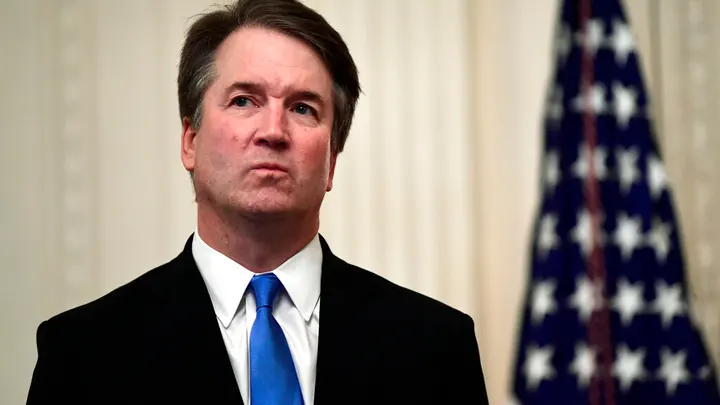
Justice Brett Kavanaugh didn’t hold back after the Supreme Court struck down President Trump’s emergency tariffs in a 6-3 decision, calling the majority’s reasoning “illogical” and laying out alternative legal routes Trump can use to protect American workers and industry. In a fiery dissent, Kavanaugh made it clear the Court had tied itself in knots trying to explain why tariffs are somehow different from other tools already allowed under federal law.
Kavanaugh, a Trump appointee, argued that the majority cherry-picked how the International Emergency Economic Powers Act can be used. The law already allows presidents to regulate imports using quotas and embargoes, he said, and tariffs are actually a “far more modest” option compared to blocking trade entirely.
“If quotas and embargoes are a means to regulate importation, how are tariffs not a means to regulate importation?” Kavanaugh wrote. “Nothing in the text supports such an illogical distinction.”
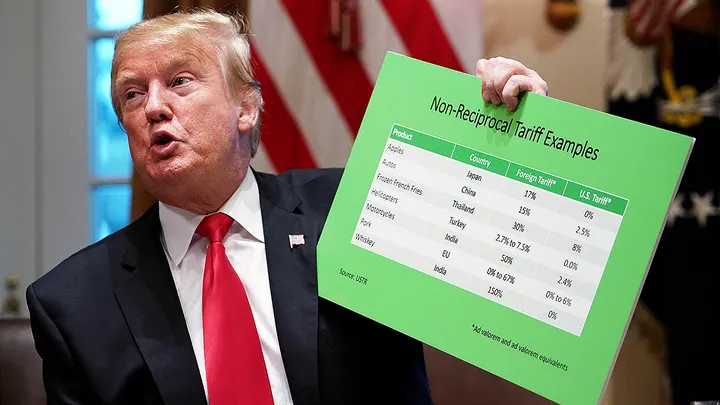
Trump imposed tariffs last year without Congress by invoking IEEPA, citing the flood of illicit drugs from China, Mexico, and Canada and the trade deficit that devastated American manufacturing as national emergencies. The Supreme Court majority ruled that while the law allows a president to “regulate importation” during an emergency, it does not clearly authorize tariffs because taxation is traditionally a congressional power. Chief Justice John Roberts said actions with massive economic consequences require unmistakable clarity from Congress—translation: the Court suddenly became very concerned about separation of powers when Trump uses it.
Kavanaugh pushed back hard, pointing out that the Court upheld a vaccine mandate imposed by Joe Biden in 2022 even though the statute Biden relied on never mentioned vaccines. If that was allowed, Kavanaugh said, Trump’s tariffs should be allowed too. Apparently, mandates are fine—but tariffs to protect American jobs are where the line gets drawn.
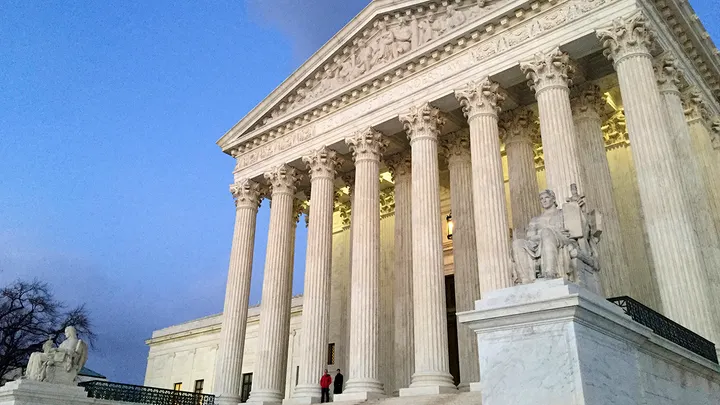
During oral arguments, Solicitor General John Sauer said tariffs were an essential negotiating tool for Trump and removing them from his toolbox was “a bit unusual.” Sauer also noted tariffs are essentially the same as embargoes, except they still allow trade. While he acknowledged tariffs raise revenue, he said their main purpose is regulation, not taxation—a view Kavanaugh agreed with.
Kavanaugh highlighted the absurd result of the Court’s ruling: under the majority’s logic, a president could completely block imports from China but could not impose even a $1 tariff on Chinese goods. That, in Kavanaugh’s words, makes no sense.
The justice also outlined other statutes Trump could use to pursue tariffs, saying the Court effectively decided Trump “checked the wrong statutory box.” In other words, the policy isn’t dead—just rerouted.
Trump responded by praising Kavanaugh for his “genius and great ability,” saying he was proud of the appointment. He quoted directly from the dissent, emphasizing that the decision may not substantially limit a president’s ability to impose tariffs in the future. “We have very powerful alternatives,” Trump said.
Kavanaugh also warned of the chaos the ruling could create, noting the Treasury Department may have to refund billions of dollars collected under the tariffs. Since some companies likely passed those costs on to consumers, the refund process could become, as even the Court acknowledged, a “mess.”
Despite the setback, the message from Kavanaugh—and from Trump—is clear: the fight for fair trade and American manufacturing isn’t over. The tools are still there, the roadmap is drawn, and the mission remains the same—put American workers first and keep the economy strong.