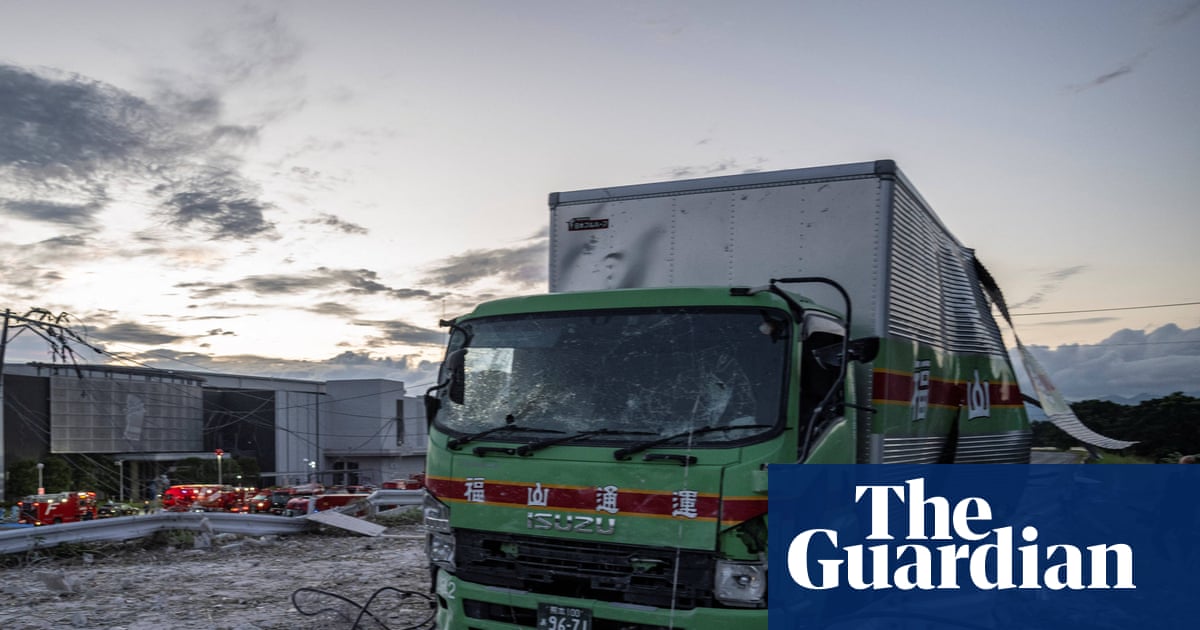
A powerful earthquake has ripped through Japan's southern Kyushu island, leaving a trail of destruction, at least 13 dead, and a harrowing race against time for rescue teams scrambling to find survivors. The 6.8 magnitude tremor, which struck Tuesday, has injured hundreds and plunged tens of thousands into darkness without power or water, highlighting the unforgiving power of nature.
Japanese Prime Minister Sanae Takaichi minced no words, declaring on Wednesday, "There are people who are still waiting to be rescued, and it's a race against time. We will go all out to find and rescue as many people as we can." Her directive underscores the gravity of the situation as the nation mobilizes its full resources.
The quake registered a maximum 7 on Japan's shindo intensity scale, striking Kumamoto prefecture with brutal force Tuesday afternoon. By early Wednesday, more than 9,000 people had sought refuge in evacuation centers across five prefectures, a testament to the widespread disruption and fear of further seismic activity.
Government spokesman Minoru Kihara detailed the grim toll: "We have received reports of seven people with serious injuries and 29 with minor injuries. Furthermore, as of 7:00 am today (2200 GMT Tuesday), 9,186 people have sought refuge in 506 evacuation centres across five prefectures, including Kumamoto and Fukuoka."
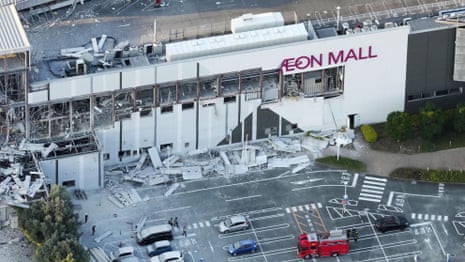
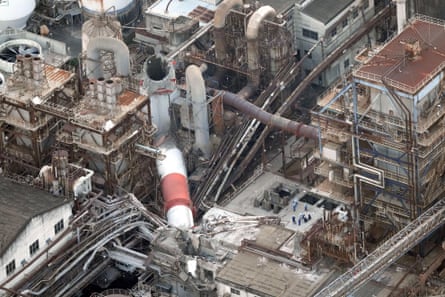
The search for survivors continues amidst the wreckage of key sites, including a paper mill in Yatsushiro where a chimney collapsed. Two workers were reportedly found in cardiac arrest, with nine others still missing. In a chilling development, an explosion rocked an Aeon shopping mall shortly after the quake. Footage appeared to show the upper section of the main building torn away. Two women in their 20s were confirmed dead, and another person reportedly suffered cardiac arrest.
An Aeon spokesperson confirmed customers and employees were evacuated before the explosion, the cause of which remains under investigation. A government official indicated a gas leak was reported at Aeon Kumamoto, but its direct link to the explosion is not yet determined.
The Japanese military has swiftly deployed 3,600 personnel for disaster relief, with 20 aircraft assessing the damage from above. Hundreds of first responders from neighboring prefectures arrived Tuesday evening, demonstrating the nation's rapid and coordinated emergency response.
The Japan Meteorological Agency (JMA) has issued a sobering warning: areas hit hardest remain at high risk of further strong quakes and landslides for at least a week due to the shallow nature of the initial tremor. More than 60 aftershocks, ranging from magnitude 1 to 4, had already been recorded by Wednesday morning. A tsunami warning, initially issued, was thankfully lifted within two hours.
The immediate aftermath has left nearly 50,000 households without power and a staggering 140,000 without water. With temperatures forecast to soar above 35°C on Wednesday, the threat of heatstroke looms large for those without air conditioning or access to clean water. Many, fearing aftershocks, opted to sleep in their cars overnight, a stark illustration of the ongoing terror.
Despite the quake's intensity, Japan's rigorous construction standards, repeatedly enhanced over decades with advanced seismic resistance technology, likely prevented a far greater catastrophe. "Newer structures are able to withstand intense shaking," officials noted, showcasing the country's foresight and commitment to safety.
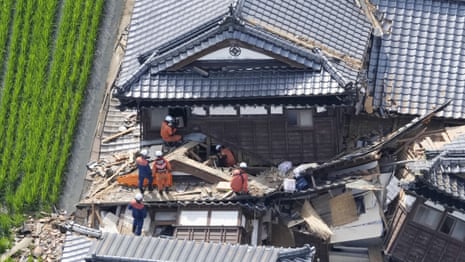
Prime Minister Takaichi acknowledged the initial reports of injuries, power outages, fires, and damaged infrastructure, urging citizens to take protective actions and evacuate to safe locations. By Wednesday morning, five houses were confirmed collapsed, and over 350 people had received treatment at local hospitals, many of which were themselves grappling with power and water issues.
One hospital employee recounted the chaotic scene to NHK: "People are coming in with burns and fractures from being trapped under objects due to the earthquake, and ambulances are constantly bringing in injured people. Inside the hospital there are water leaks and electrical system failures."
Approximately 300,000 people were directed to evacuation centers. The regional railway company, JR Kyushu, suspended services, including its high-speed bullet trains, while Kumamoto airport shut its runway, causing flight diversions and cancellations.
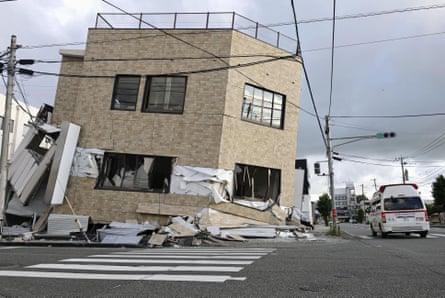
Telecom disruptions affected KDDI and NTT Docomo due to power shortages, though critically, Japan's nuclear regulation authority reported no irregularities at nuclear power stations in the area. Footage from NHK showed buildings ablaze or partly collapsed, with significant fissures on major roads, including an elevated highway. Tech giants TSMC, Sony, and Fujifilm evacuated workers from their local factories.
Chiharu Hara, a 35-year-old recruitment agent in Kumamoto, described her terror: "The office swayed violently side to side. I was afraid it would collapse. Everyone panicked." The quake's epicenter was about 12 miles (20km) south of Kumamoto, a city of 700,000. While the US Geological Survey initially reported a 7.1 magnitude, it was later revised to 6.8, and Japan's JMA settled on 7.1, reaching the highest level of 7 on its shindo scale.
Japan, famously situated on the "Ring of Fire," is one of the world's most earthquake-prone nations, experiencing tremors every few minutes. This latest event, tragically, recalls a deadly quake a decade ago in Kumamoto that claimed 275 lives and damaged thousands of buildings, including parts of the city's historic castle, which has again suffered damage. The nation remains acutely aware of the devastating 2011 9.0-magnitude quake and tsunami that tragically took 18,500 lives and crippled the Fukushima nuclear plant.
As Japan battles to overcome this latest natural disaster, the focus remains squarely on saving lives and rebuilding communities. The resilience of the Japanese people and the effectiveness of their emergency response systems are once again put to the ultimate test in the face of overwhelming natural forces.