Los Angeles is staring down an alarming political shift, with socialist-backed City Councilmember Nithya Raman now commanding a significant lead over incumbent Mayor Karen Bass. This dramatic turn of events, highlighted by a new UC Berkeley Institute of Governmental Studies poll, serves as a stark validation of warnings issued by outsider candidate Spencer Pratt.
The latest numbers reveal Raman, a candidate endorsed by the Democratic Socialists of America (DSA)—an organization openly advocating for defunding the police and abolishing prisons—at 39 percent. Mayor Bass trails significantly at 28 percent. A staggering 33 percent of likely voters remain undecided, an “extraordinarily unusual” figure this late in a race, according to poll director Mark DiCamillo.
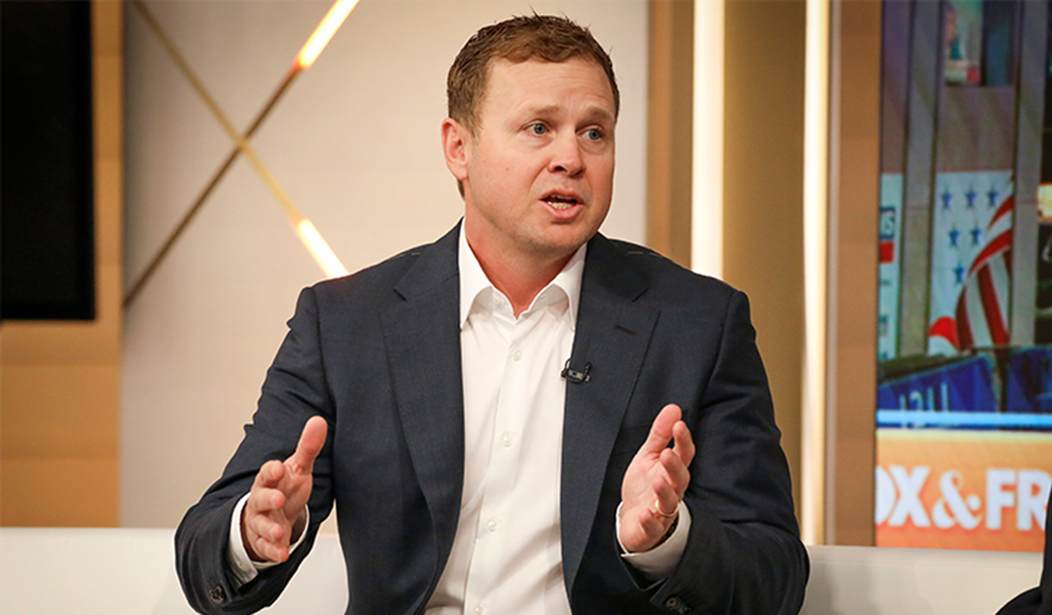
The poll, an online survey of 2,150 likely Los Angeles voters conducted from September 15-20, carries a margin of error of about three percentage points. Spencer Pratt, though not on the November ballot, offered a simple, pointed reaction to the unfolding political drama.
Pratt’s primary campaign in June had initially surprised many by placing him ahead of Raman in early returns, a feat RedState covered extensively. While Raman ultimately overtook him for the second runoff spot as more ballots were counted, his early performance and the issues he championed clearly resonated with a significant portion of the electorate.
Crucially, 63 percent of Pratt’s primary supporters remain undecided, forming a powerful, uncommitted bloc. Of those who have made a choice, just 22 percent have swung to Bass, while 16 percent have gravitated towards Raman. This suggests that the issues Pratt raised—homelessness, rampant crime, and deteriorating city services—are still deeply unsettled in the minds of many Angelenos.
Mayor Bass, whose administration has struggled to deliver on promises of public safety and addressing the spiraling homelessness crisis, faces a troubling public perception problem. Only 28 percent of likely voters view her favorably, with a crushing 63 percent holding an unfavorable view. Raman, while not universally embraced, sits at a more balanced 40 percent favorable to 39 percent unfavorable.
Bass predictably dismissed the survey as an “outlier poll,” an attempt to downplay the clear rejection of her leadership. Raman, on the other hand, seized on the results as evidence of her campaign’s momentum, particularly after securing the DSA’s backing. The financial trading market Kalshi swiftly responded, shifting its Los Angeles mayoral contract to favor Raman at 58 percent, with Bass at 42 percent. Wall Street, it seems, got the memo even if City Hall is still in denial.
The November runoff now pits an establishment Democrat against a candidate openly aligned with radical socialist ideologies. Pratt, whose own home was destroyed in the Palisades fire, spent his primary campaign hammering the city’s failures on homelessness, public safety, and basic services, arguing that the current leadership had not earned a “free pass.” His prescient warnings about the direction of the city appear to be manifesting in real-time.
The blame game between Bass and Raman over Los Angeles’s disastrous homelessness crisis has been a recurring theme, with Raman even losing her position as chair of the City Council’s Housing and Homelessness Committee. And just recently, Pratt once again took aim at Bass for comments regarding California’s one-party political landscape, highlighting the entrenched nature of progressive power in the state.
Pratt may not have made the runoff, but the matchup he warned Los Angeles about is now here, with an 11-point lead for the radical Raman. “Good luck LA,” indeed. The choice confronting voters is between a demonstrably failing incumbent and a candidate who promises to accelerate the city down an even more dangerous progressive path, leaving taxpayers and law-abiding citizens to wonder if any common sense leadership remains.
Los Angeles now stands at a critical juncture, facing the very consequences Spencer Pratt predicted. The city’s struggle with failed progressive policies, soaring crime, and unchecked homelessness underscores a profound need for accountability and a return to American values that prioritize law and order, public safety, and fiscal responsibility, rather than embracing radical, anti-freedom agendas.