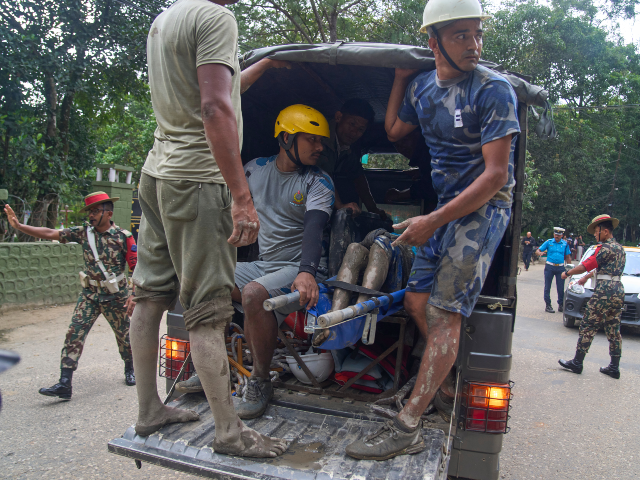
The Himalayas have turned into a nightmare of mud, water and isolation.
More than 1,000 people remain missing in Nepal and Tibet after torrential rains triggered massive landslides and flash flooding, burying communities, destroying roads and bridges, and leaving entire villages cut off from the outside world.
The death toll in Nepal had reached 359 by Thursday morning, according to authorities cited by Reuters, while estimates of those still missing ranged from roughly 1,300 to 1,400. That number could change dramatically as rescuers reach communities that have been inaccessible since the disaster struck.
And the danger is far from over.
Forecasters expect more rain this week, raising fears that already unstable mountainsides could collapse again and that floodwaters could isolate additional communities. For people trapped without reliable access to food, medicine or shelter, every additional hour matters.
Dramatic video emerging from the region shows just how quickly the disaster unfolded. Walls of mud and water surged through populated areas, swallowing roads and bridges almost instantly. Entire neighborhoods appeared to disappear beneath the rushing debris.
The scale of the devastation is especially painful because many of the affected areas were filled with travelers participating in Hindu pilgrimages, bringing people from numerous countries into some of the most difficult terrain on Earth.
The U.S. Geological Survey attributed the landslides to a glacial collapse associated with the intense rainfall, sending icy mud racing down steep Himalayan slopes into populated areas. An initial observation that appeared to indicate a magnitude-4.4 earthquake was later revised after investigators determined that the signal was associated with the enormous movement of icy mud rather than an earthquake triggering the disaster.
That distinction matters. The mountains themselves became the threat.
Rescue teams now face unstable slopes, narrow mountain passages, deep valleys and rapidly changing water conditions. One wrong move could trigger another landslide or send rescuers into the same disaster they are trying to escape.
Engineer Chen Hongqi told China's state-run Global Times that the source area remains unstable and could produce secondary disasters.
“First, the stability of the damaged area at the source of the landslide remains unclear, posing challenges to the prevention of secondary disasters,” Chen said. “In addition, the area is characterized by high mountains, deep valleys, and concentrated water collection, making rainfall a key factor influencing rescue operations.”
That is the brutal reality facing rescuers: They are not simply searching through rubble. They are working inside a landscape that may collapse again.
Red Cross rescue experts described the situation in stark terms, saying that “entire villages had been destroyed and impassable roads and bridges had left communities cut off.”
In Nepal, helicopters are being used to reach isolated areas, search for survivors and deliver food, tents and other desperately needed supplies.
For those on the ground, the destruction is almost impossible to comprehend.
“There are no human-made things, no human settlement left,” Nepali tourism executive Sagar Pandey told Reuters.
That sentence captures the horror better than any statistic can.
Across the border in Tibet, Chinese authorities were also monitoring dangerous rising waters at a dammed lake in Gyirong, where overflow had already begun. A failure could unleash another devastating surge downstream, potentially placing additional communities—and even rescue personnel—at risk.
Chinese authorities put the reported death toll in Tibet at three as of Thursday, though the full picture remains difficult to establish amid the disaster and the challenges of reaching affected areas.
For now, the priority is brutally simple: find the missing, reach the stranded and get supplies to people before the mountains and rain create another catastrophe.
There is no room here for political theater. There are families waiting for loved ones, villages buried beneath mud, rescuers risking their own lives and communities praying for help.
The Himalayas do not care about borders or politics. When nature unleashes this kind of destruction, the only thing that matters is whether help can reach people in time.
And right now, thousands of people are still waiting.