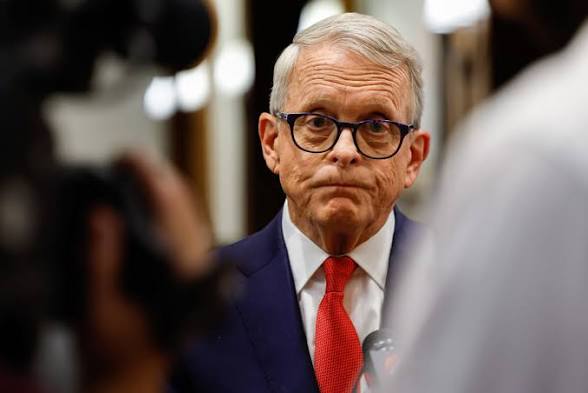
Ohio Governor Mike DeWine, a Republican from a state that overwhelmingly supported President Donald Trump, has ignited a firestorm of conservative outrage after openly defying Trump's resolute orders to end Temporary Protected Status (TPS) for Haitian migrants. DeWine’s comments, made during a national interview, underscore a growing chasm between the America First commitment to immigration enforcement and establishment Republican complacency.
DeWine, whose state is home to an estimated 30,000 Haitian TPS holders, told CBS earlier this week that these individuals should not be sent back to their country of origin. "Haiti is hell today. So you'd be sending people ... back to hell," he declared. He further claimed that "Very few of these Haitians will voluntarily go back to Haiti. If they have to leave, they'll go someplace else. They want to work. They want to support their family. They don't want to go back to Haiti." This sentiment, while perhaps aiming for compassion, directly contravenes the foundational principle that immigration status is a privilege, not a permanent right, and certainly not a local economic solution at the expense of national borders.

The governor's remarks quickly drew intense online criticism, primarily from conservatives who questioned the logic of his stance. Many pointed out the inherent contradiction: if Haiti is truly "hell," as DeWine described, then what precisely makes it so, and why would importing more individuals from such an environment into American communities be a viable solution?
Sean Davis, co-founder of The Federalist, sharply asked, "What makes Haiti hellish? Is it...the Haitians?" Echoing this common-sense challenge, The Blaze's Logan Hall queried, "Hey governor, what is it that makes Haiti so bad anyway?" Internet personality Larry Sanger followed, "I think the real question here is, if Haiti is hell, why are we importing Haitians?" And there it is. The unspoken truth often avoided by those who prefer virtue signaling over straightforward analysis.

President Donald Trump speaks during an announcement in the Oval Office of the White House in Washington, D.C., on Friday, July 24, 2026. The Trump administration is seeking wider deployment of both large, conventional reactors and smaller ones alike after a series of executive orders by the president, who sees nuclear reactors as a key source of power for data centers and economic growth. (Bloomberg via Getty Images)
The backlash also resurfaced memories of the mainstream media's and celebrity outrage back in 2018, when President Trump referred to Haiti and other nations as "s---hole" countries. At the time, figures like comedian Conan O'Brien vehemently defended Haiti’s "natural beauty" and scoffed at Trump’s assessment, announcing a trip to the country with sarcastic glee. "I have no idea what the president has against the people of Haiti, but if the president doesn't like them, they must be lovely people," O'Brien quipped. Funny how quickly the narrative shifts when a Democrat-aligned talking point needs defending versus a Republican governor's contradictory statement. Now, suddenly, Haiti is indeed "hell," even according to a Republican governor.
X users were quick to highlight this glaring hypocrisy. One user directly blamed Haitians for DeWine's "hell" characterization, asking pointedly, "Or is it a paradise like so many celebrities have said?" Another user mockingly stated, "I was reliably informed by democrats and hollywood celebrities that Haiti is utopia." The irony was not lost, with yet another X user remarking, "What a tragedy it would be for Haitians to live in Haiti." The double standard is stark, and Americans are noticing.
Despite the online fury, Governor DeWine doubled down in his CBS interview, arguing that sending Haitians back would be a "mistake" that would endanger lives. He even cited his hometown of Springfield, which boasts a significant population of Haitian TPS holders, claiming, "These are people who have helped Springfield really come back. The Haitians who are living there and employed there, they came there to work, and they came there because there were jobs that were not being filled by other people." While local economic benefits are important, they cannot supersede national immigration laws and the principle of sovereignty.
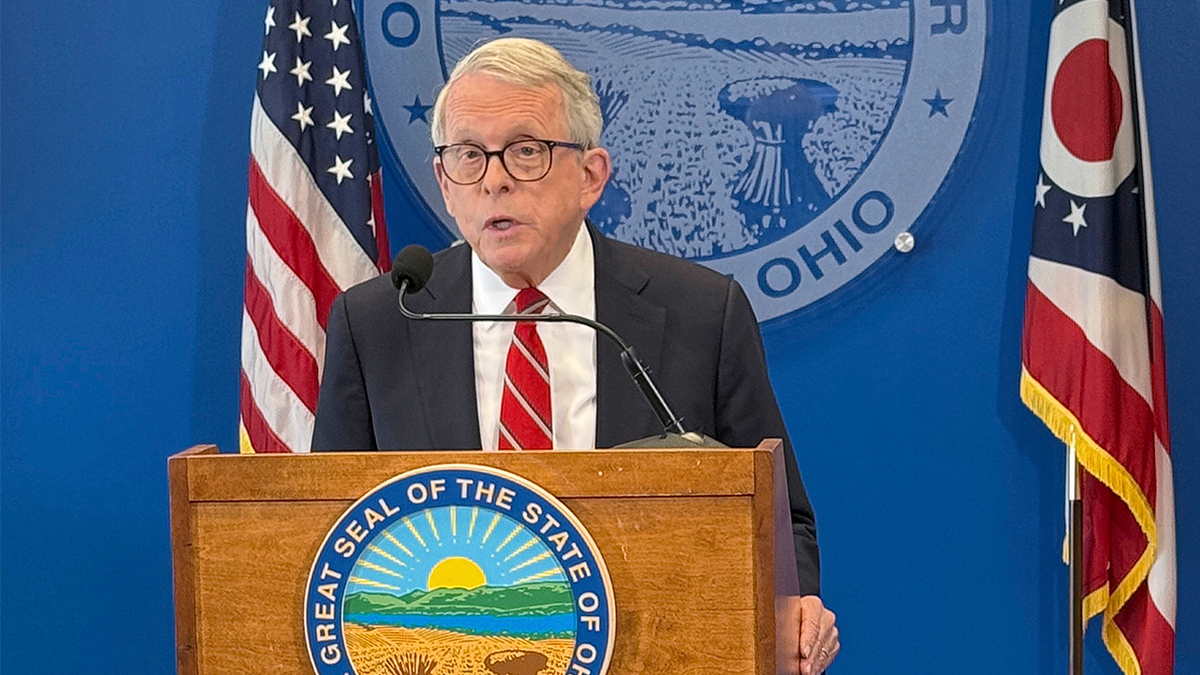
Ohio Gov. Mike DeWine speaks at a news conference on Tuesday, June 16, 2026, in Columbus, Ohio. (AP Photo/Patrick Aftoora-Orsagos)
President Trump's directive to end TPS was officially terminated on Monday, a decision that survived a Supreme Court review. As a Department of Homeland Security (DHS) spokesperson clarified earlier this week, "Temporary Protected Status is exactly that — temporary. For too long, TPS has been allowed to function as a de facto amnesty program despite Congress never intending it to be permanent." This perfectly encapsulates the America First stance: immigration programs must adhere to their original intent, not become perpetual loopholes for mass migration.

Created as part of the Immigration Act of 1990, TPS was designed for true emergencies like armed conflict or severe natural disasters. Critics have long argued, correctly, that it has been widely abused, extending temporary protections into decades-long residency for non-emergent reasons. Governor DeWine's office declined to comment on the online backlash, a silence that speaks volumes when facing valid questions from constituents and fellow conservatives.
This episode serves as a stark reminder that even within the Republican Party, there are those who seem to prioritize short-sighted local interests or vague humanitarian appeals over the firm enforcement of immigration laws and the protection of national sovereignty – tenets central to the America First movement championed by President Trump. The American people expect leadership that puts their country first, secures its borders, and upholds the rule of law, without excuses or contradictions, no matter how "hellish" other nations may appear.