A year can change a political debate. It can also reveal which side was built on momentum — and which side was built on principle.
Just over a year after Olympic gymnast Simone Biles publicly attacked women’s sports advocate Riley Gaines in a social media clash that exploded across the country, the conversation has moved from viral posts to the highest court in the land.
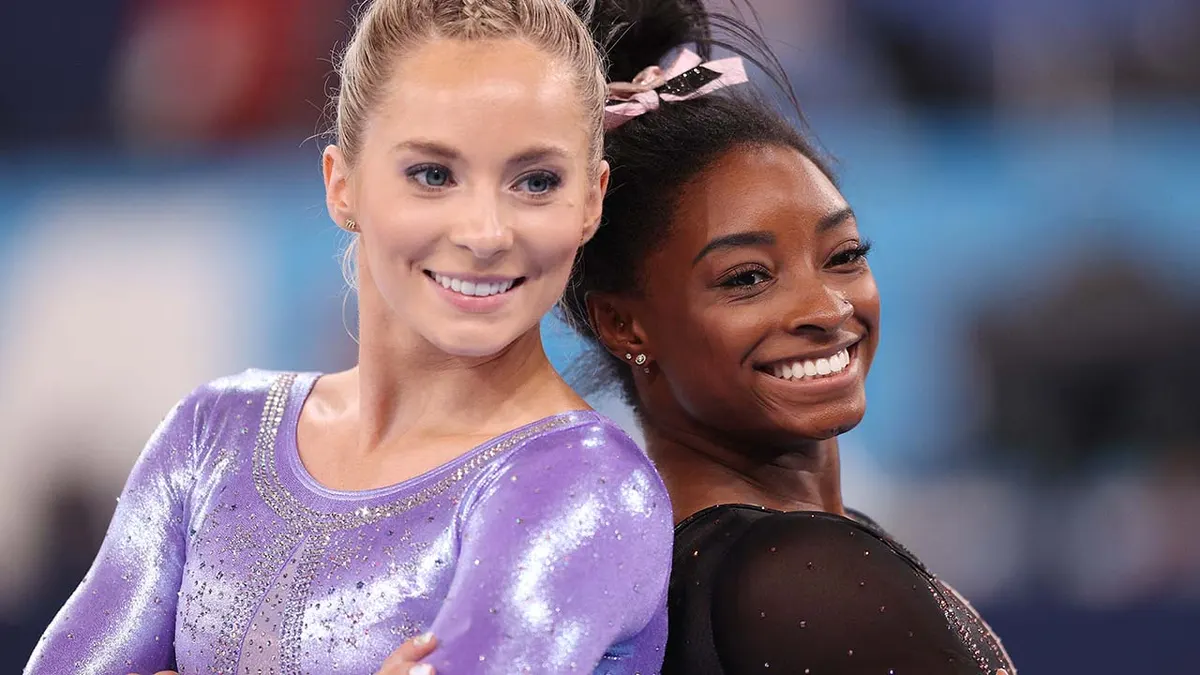
On Tuesday, Riley Gaines and former U.S. Olympic gymnast MyKayla Skinner welcomed the Supreme Court’s decision to uphold state laws designed to protect women’s sports — a ruling supporters see as one of the most significant victories yet in the growing national push to preserve female athletic competition.
The moment carried extra symbolism because of who stood together.
Back in 2025, Biles took direct aim at Gaines after Gaines criticized the participation of a transgender athlete who helped win a Minnesota girls’ softball championship. Biles did not stop at disagreement. In posts that quickly spread across social media, she mocked Gaines personally and wrote, “bully someone your own size, which would ironically be a male.”
The exchange became one of the defining cultural flashpoints in the fight over women’s athletics.
At the time, much of the establishment media framed Gaines as the aggressor for raising questions about fairness in female competition. But supporters of the women’s sports movement argued something different: that asking whether biological differences matter in competition was not cruelty — it was common sense.
Now Gaines has found public support from an unexpected corner.
MyKayla Skinner, once Biles’ teammate on the U.S. Olympic gymnastics team, joined in celebrating the court’s decision and signaling support for the broader effort to maintain sex-based protections in athletics.
For supporters of these laws, the ruling represents more than a legal outcome. They see it as recognition that women’s sports exist for a reason — not as a symbolic category, but as a space created to ensure fairness, opportunity, and meaningful competition.
The political and cultural landscape has shifted quickly. What was once dismissed in elite circles as a fringe concern has become a defining issue for parents, female athletes, lawmakers, and voters across the country.
And that may be the biggest message of all.
The debate never disappeared. It moved from social media outrage to legislatures, courtrooms, and public opinion. Tuesday’s ruling suggested that when Americans are asked whether fairness still matters, the answer remains remarkably straightforward.