Political victories create expectations.
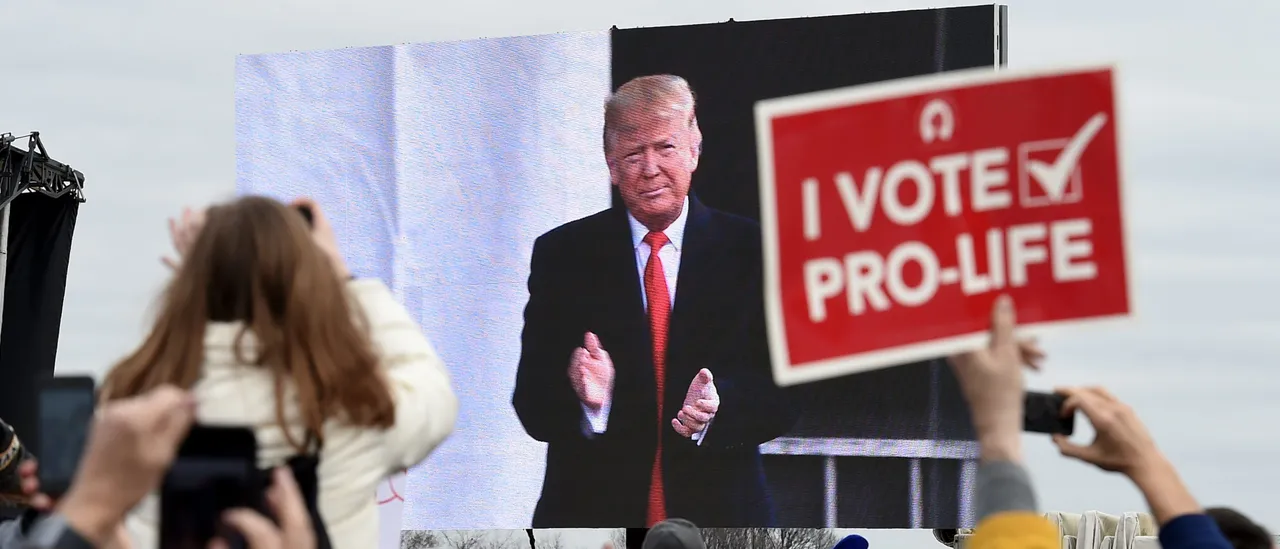
And in Washington this weekend, one of the country’s most influential pro-life leaders delivered a reminder that for many grassroots conservatives, elections are not the finish line — they are the beginning.
Speaking Saturday at the Faith and Freedom Coalition’s Road to Majority Conference in Washington, D.C., Students for Life of America President Kristan Hawkins laid out what she sees as three immediate priorities for President Donald Trump and Republicans in Congress as attention starts shifting toward the 2026 midterms.
Her message was direct: the coalition that helped deliver Republican majorities expects action.
Hawkins urged federal leaders to permanently defund Planned Parenthood, use a 150-year-old federal law to stop abortion pills from being sent through the mail, and remove mifepristone from availability.
She framed the moment not as a request for symbolic gestures but as a test of political follow-through.
“We want a return on our investment,” Hawkins told attendees, while warning that the pro-life coalition that helped power Republican electoral success may be more “fragile” than many in Washington assume.
That language captured something deeper than one policy speech.
For years, pro-life voters remained among the most disciplined and reliable parts of the conservative movement. They organized locally, turned out consistently, and often accepted incremental victories while waiting for larger structural change. The fall of Roe transformed the legal landscape — but for many activists, it did not end the debate. It changed where the debate happens.
Now the focus has shifted from courts back to elected officials.
Hawkins’ three priorities reflect that shift.
Defunding Planned Parenthood has long been a central objective for social conservatives who oppose taxpayer involvement with abortion providers. Her call to apply a federal law dating back roughly 150 years refers to legal arguments advanced by some abortion opponents who believe existing statutes already provide authority to restrict mailing abortion drugs. Her push to remove mifepristone reflects a broader movement effort to revisit federal abortion policy through executive and regulatory channels.
The speech also carried a political warning beneath the policy demands.
Conservative coalitions are broad by design — economic conservatives, national security voters, religious voters, working families, border hawks, and constitutional conservatives do not agree on everything. What holds them together is trust that victories produce movement.
Hawkins’ argument was that trust cannot be assumed forever.
With 2026 approaching, Republicans now face the challenge that comes after winning: proving to voters that campaign promises become governing priorities.
For many in the pro-life movement, this is no longer a debate about what leaders say they believe.
It is about whether political capital gets spent where promises were made.