The path to peace in Ukraine is getting narrower—and Moscow is now signaling that it may be preparing to take the fight to a far more dangerous level.
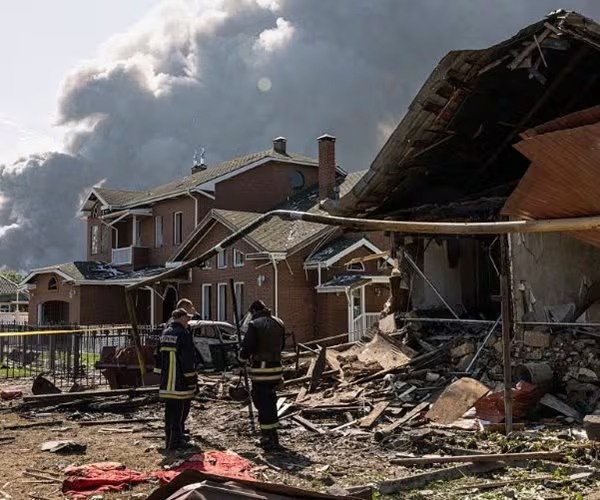
Russia is preparing to intensify its attacks on Ukraine after concluding that negotiations have effectively hit a dead end, according to a Bloomberg report citing people familiar with the matter. The potential escalation could include conventional ballistic missile strikes against Kyiv, including the heart of the Ukrainian capital, along with attacks on infrastructure in other cities.
That is not the language of a government preparing for a diplomatic breakthrough. It is the language of a Kremlin preparing for the next phase of the war.
People close to Moscow told Bloomberg that Russian officials increasingly believe the existing negotiating framework has collapsed, leaving both sides essentially back where they started. And despite years of Western sanctions and mounting Ukrainian strikes against Russian refineries and logistics networks, Vladimir Putin does not appear ready to abandon his war aims.
In Moscow's view, Ukraine's expanding attacks inside Russian territory are no longer simply a Ukrainian military problem.
The Kremlin increasingly sees them as attacks involving NATO countries because alliance members provide Kyiv with weapons and intelligence. People close to the Russian leadership warned that the current conflict may still be short of its maximum level of escalation.
Putin himself offered a blunt warning over the weekend.
Dismissing the economic impact of Ukrainian attacks, the Russian president accused Kyiv of opening "this Pandora's box."
"Be ready to get a blowback on your most sensitive sectors of the economy," Putin said.
Kremlin spokesman Dmitry Peskov delivered a similar message Thursday, saying attacks against Russia's economic and trade infrastructure "will be" answered with "a heavy response."
Peskov denied that Moscow was seeking a broader military escalation, arguing instead that Russian forces are already advancing.
But the distinction may offer little comfort to anyone watching where this conflict is headed.
The warnings arrive as U.S.-led efforts to end the war have stalled, while President Donald Trump's administration has increasingly been consumed by the conflict with Iran. That diplomatic slowdown matters because Trump's approach has always placed pressure on the parties to stop endless wars rather than allowing Washington to drift indefinitely into another open-ended foreign conflict.
According to Bloomberg, Moscow has also moved away from what it believed was an understanding reached between Trump and Putin at their Alaska summit last year. Russia reportedly believed that framework would involve American pressure on Ukraine to surrender the eastern Donetsk region.
Ukraine has repeatedly rejected Putin's demand to give up a heavily fortified belt of cities in Donetsk—an area Russian forces have struggled to capture despite years of fighting.
That battlefield reality is part of the larger problem. Neither side appears willing to make the concession the other considers necessary, while every failed round of diplomacy creates another opportunity for the missiles to speak instead.
Washington is still trying.
CIA Director John Ratcliffe made a rare trip to Moscow on Tuesday for discussions with Russian officials. The Wall Street Journal reported that his visit was intended, in part, to warn Moscow against attacking NATO countries.
Meanwhile, Russia's Defense Ministry announced that its forces carried out a "massive strike" against Ukraine overnight, hitting Kyiv and five other cities as well as infrastructure at the ports of Odesa, Chornomorsk and Reni.
U.S. envoys Steve Witkoff and Jared Kushner are also expected to travel to Moscow and Kyiv in another effort to revive negotiations, although no dates have been announced.
The stakes could hardly be clearer.
A war that began as a Russian invasion of Ukraine has developed into a broader confrontation involving increasingly sophisticated Western weapons, intelligence support, attacks deep inside Russia and the growing danger of a direct clash between Russia and NATO.
For President Trump, that makes the diplomatic challenge considerably harder—and considerably more important. The American people have little reason to want another permanent war with no clear endpoint, especially one capable of spiraling into a confrontation between nuclear powers.
If Moscow truly believes diplomacy has reached a dead end, the coming weeks will test whether Trump's America First approach can force the parties back toward the negotiating table—or whether Russia and Ukraine will instead stumble deeper into a war neither side appears capable of ending on the battlefield.
The message from Moscow is unmistakable: if diplomacy fails, escalation is waiting. And for America, keeping a dangerous foreign war from becoming an even bigger one is not weakness. It is leadership.