Britain has a new Channel record — and the Labour government has another stern warning.
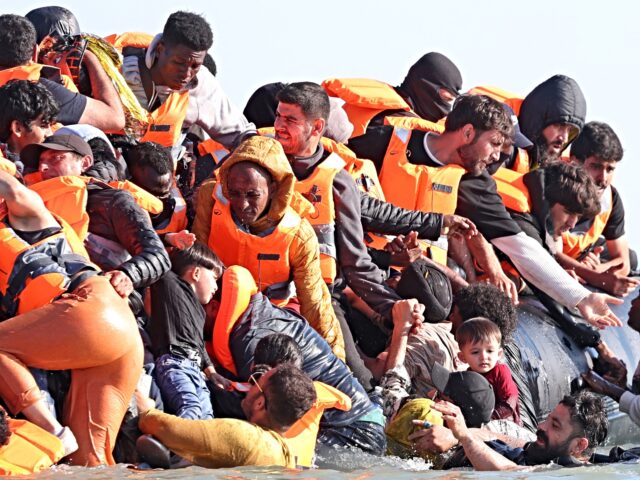
A single dinghy carrying 230 migrants crossed the English Channel from France early Monday before coming ashore near Dover, marking the largest number ever recorded making the journey aboard one vessel.
The extraordinary arrival is more than a statistical milestone. It is a vivid demonstration of how organized people-smuggling networks continue to exploit the Channel while Britain's government promises that something will be done.
The government condemned what it called the “reckless and dangerous tactics employed by criminal gangs.”
There is just one problem.
Britons have heard that before.
Prime Minister Andy Burnham issued a similar warning earlier this month after more than 2,000 migrants arrived during his first two weeks in office. Yet the government has so far offered few details about how it intends to stop the crossings beyond working with French authorities and providing additional financial support.
Meanwhile, the boats keep coming.
Shadow Home Secretary Chris Philp said French authorities should have stopped Monday's vessel before it ever reached the water.
“This is now beyond a joke,” Philp said. “The French authorities could easily have stopped a vessel this size from embarking in shallow waters.”
Philp said he had personally witnessed French Gendarmes standing by while migrants boarded boats in knee-deep water.
“Shabana Mahmood is handing over £660 million of our money while this happens,” he said. “It’s a disgrace.”
That criticism goes directly to the heart of Britain's Channel crisis.
If criminal gangs can launch an enormous dinghy carrying hundreds of people from French shores, sail it across one of the world's busiest waterways and deliver its passengers to Britain, then another government statement promising to “smash the gangs” is not much of a deterrent.
The smugglers, at least, appear to understand the economics perfectly.
The Daily Mail reports traffickers are believed to charge roughly £2,000 per person for the journey to Britain.
At an estimated £10,000 in operating costs, a boat carrying 230 people could generate approximately £450,000 in profit from a single crossing.
That is not a humanitarian system.
It is a criminal business model.
And every successful crossing tells the smuggling networks that the business remains viable.
The danger is also impossible to ignore. Packing 230 people onto one vessel is precisely the kind of reckless practice British officials claim they want criminal gangs to stop. A tragedy at sea could happen at any time, with migrants, rescuers and law enforcement officers all potentially placed in danger.
Yet the fundamental question remains unanswered: what happens when warnings are repeatedly ignored?
Britain cannot solve a border-security crisis by issuing increasingly stern statements after every new record is broken.
A government serious about controlling its borders needs enforcement, deterrence and consequences — not another press release after another boat arrives.
The Channel is becoming a scoreboard for failed policy. Every new record sends the same message to smugglers and prospective migrants: the route is still open.
And as long as the criminal gangs continue making hundreds of thousands of pounds from each successful voyage, they have every incentive to keep sending the boats.
Britain's borders will not be secured by warnings. They will be secured when illegal crossings stop being a profitable business.