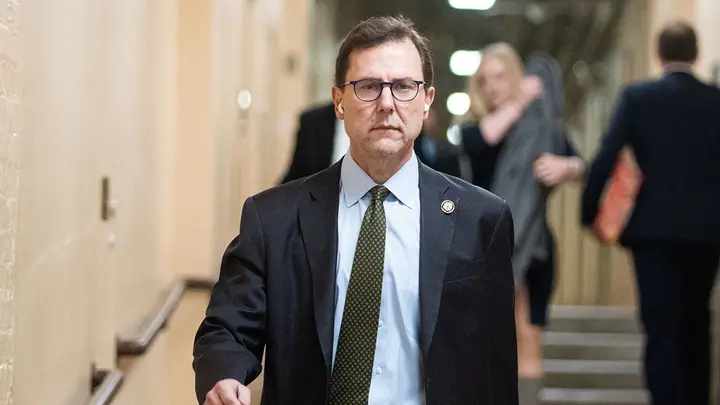
In a rare and deeply personal moment on the House floor, Rep. Tom Kean Jr. (R-N.J.) revealed the health struggle that kept him away from Congress and the campaign trail for nearly four months — a period marked by treatment, recovery, and what he described as a long road back.
Kean said Tuesday that he had been diagnosed with depression after entering the hospital for “some testing,” a condition that required extended medical care and time away from public duties.
For months, his absence was noted but not fully explained, leaving questions about his return. On Tuesday, he chose to answer them directly.
“I’m grateful that I accepted help, because today I stand before you stronger, healthier and excited to return to the work that I love,” Kean said on the House floor.
The Republican congressman described his recovery as a process that took time under medical supervision, emphasizing that healing required stepping away rather than pushing through in silence.
His remarks added a rare level of candor to a political environment where lawmakers often avoid discussing mental health publicly, despite the pressures that come with life in Congress, constant travel, public scrutiny, and nonstop campaigning.
Kean’s decision to speak openly also reflects a broader shift in how mental health is discussed in American public life — where more leaders, athletes, and public figures are acknowledging struggles that were once kept entirely private.
For supporters, his return carries a sense of resilience and continuity, as he resumes both legislative duties and campaign responsibilities after a prolonged absence from Washington.
While Kean did not frame his remarks in political terms, his message resonated beyond party lines: acknowledging a personal health battle, seeking help, and returning to work without hiding the experience.
In a political world that rarely slows down, his absence underscored the human cost behind public service — and his return highlighted the reality that even elected officials are not immune from the challenges many Americans face privately.
And for one moment on the House floor, politics gave way to something simpler: a public reminder that recovery is possible, and asking for help is not a weakness — it is often the reason people are able to come back at all.