Election rules are once again heading back into the courtroom — this time in Colorado, where a lawsuit from the Republican National Committee is challenging how the state administers its voter eligibility policies.
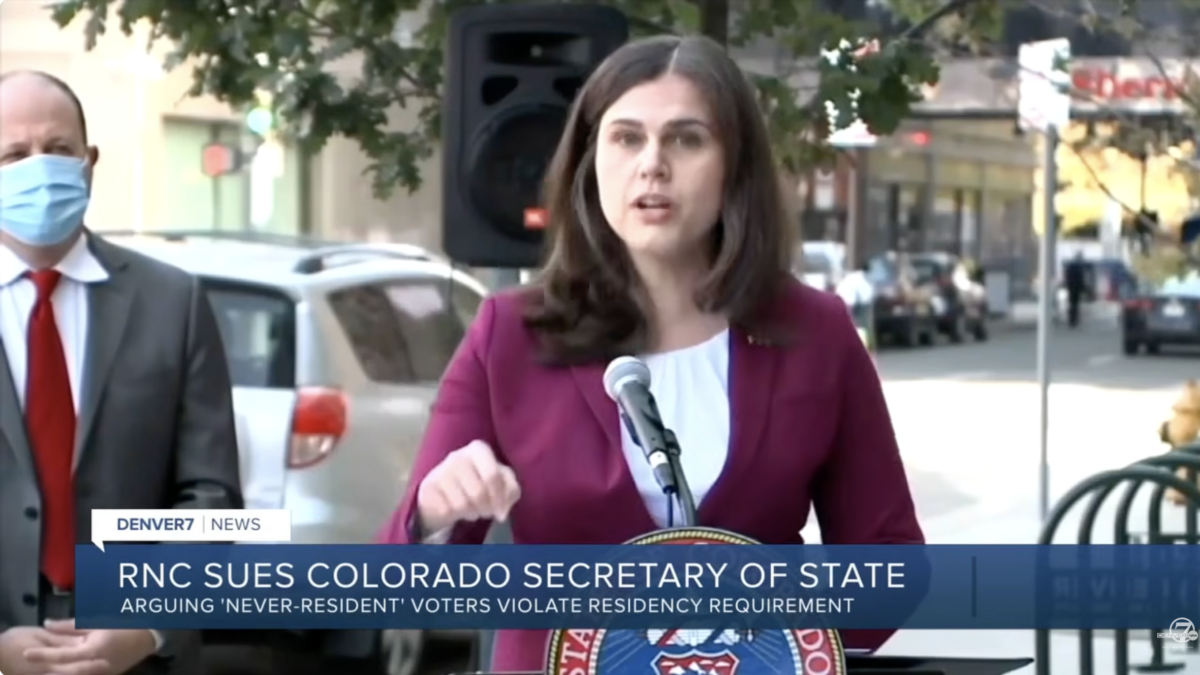
The RNC has filed legal action against Colorado Secretary of State Jena Griswold, alleging that state election procedures violate the Colorado Constitution by allowing individuals who do not meet residency requirements to participate in elections.
At the center of the dispute is a broader constitutional question: who qualifies as a lawful voter under state law, and whether current administrative practices align with those limits.
Griswold, a Democrat who previously played a prominent role in efforts to block President Donald Trump from appearing on Colorado’s 2024 Republican primary ballot before the matter was ultimately resolved by the courts, is once again at the center of a high-profile election-related legal fight.
The lawsuit argues that Colorado’s current approach improperly expands eligibility beyond what state law permits, specifically raising concerns about the inclusion of individuals who allegedly have no established residency in the state.
The RNC contends that such practices undermine public confidence in the integrity of the electoral system and exceed constitutional boundaries set by Colorado’s own governing framework.
Griswold and her office have not yet issued a detailed public response to the filing at the time of publication.
The case adds to a growing national pattern of election-related litigation, as Republican groups across several states continue to challenge voting procedures, ballot access rules, and administrative interpretations of election law ahead of upcoming election cycles.
Supporters of stricter eligibility enforcement argue that residency requirements are not technicalities but foundational safeguards designed to ensure that only lawful, qualified voters participate in state elections.
Election officials in multiple states, however, have defended expanded administrative flexibility as necessary to manage modern voter registration systems and ensure broad participation.
Still, the legal question in Colorado will ultimately come down to statutory interpretation and constitutional limits — not political messaging.
And once again, what might appear to be an administrative dispute is shaping up to be something much larger: another test of how states define the rules of participation in an election system where trust itself has become one of the most contested issues in American politics.