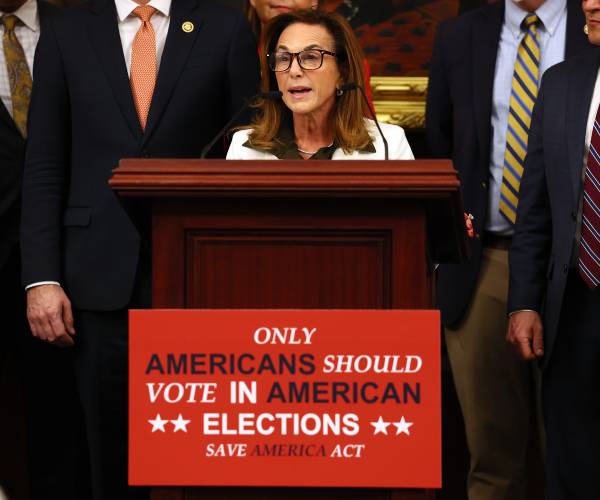
A major political battle is set to unfold in the Senate next week as John Thune prepares to bring the SAVE America Act to the floor, setting the stage for what could become one of the most heated debates on election integrity in recent years.
The Senate majority leader announced Thursday that the legislation will receive a “full and robust debate,” signaling a direct challenge to Democrats who have already begun criticizing the proposal.
At the center of the bill are requirements that many Americans would probably describe as basic common sense: documentary proof of U.S. citizenship to register for federal elections and a photo ID requirement when voting.
According to Thune, the goal is straightforward—ensuring that voters are eligible and confirming they are who they say they are when they cast a ballot. For most Americans who need identification for everything from boarding a plane to picking up a package, that doesn’t exactly sound revolutionary.
The move could also revive discussion around the Senate’s so-called “talking filibuster,” where lawmakers must continuously hold the floor to block legislation rather than simply signaling opposition. Some Republicans have been pushing for this approach, arguing it forces transparency and accountability.
Donald Trump recently backed the tactic on Truth Social, saying he “fully supports” using the filibuster—or the classic talking version of it—to advance the SAVE Act.
The legislation has already cleared the House and includes several election-related measures. In addition to requiring proof of citizenship for voter registration, the bill would implement a nationwide photo ID requirement for federal voting beginning in 2027.
It would also direct states to establish procedures for voters whose names do not match their citizenship documents and to provide reasonable accommodations for individuals with disabilities who rely on the federal mail registration system.
Democrats, unsurprisingly, are pushing back.
Dick Durbin, the Senate Democratic whip, argued that the proposal would make voting more difficult for millions of Americans. He claimed the legislation would disrupt what he described as decades of secure elections and labeled the bill “a solution in search of a problem.”
Supporters of the bill see things a bit differently. They argue that strengthening verification measures protects the integrity of elections and helps maintain public trust in the system—something many Americans believe has been under pressure in recent years.
For now, the exact timing of the debate remains uncertain. While Thune has said the legislation is expected next week, the Senate’s official schedule still lists a judicial nomination as the chamber’s first order of business when lawmakers return Monday.
One thing is clear, though: once the SAVE Act hits the Senate floor, the debate will put both parties squarely on the record. And when it comes to protecting election integrity, many voters will be watching closely to see who stands where.